
Bambu Lab H3C: Nine Tools, US$2,499 and What It Means for India
Nuho India Team
Nuho Creative Team
Key Takeaways & TL;DR
- The Bambu Lab H3C went on sale on 3 November 2026 in a single configuration, the H3C AMS Combo, at US$2,499 before tax in the United States [1].
- Nine independent print tools each carry their own filament path and heating system, so a material change finishes in less than six seconds [1].
- The AMS 3H holds nine spools in a sealed airtight chamber and dries them at up to 85 °C while printing, which is the specification that matters most in Indian humidity [2].
- The Xe converter put the mid-market rate at 94.0835 Indian rupee per US dollar on 6 Nov 2026, which puts US$2,499 at about ₹2,35,115 before duty and tax [4].
- A hands-on review published on the launch day awards the machine 9 out of 10 and notes that only two of the nine slots dry filament at a time [3].
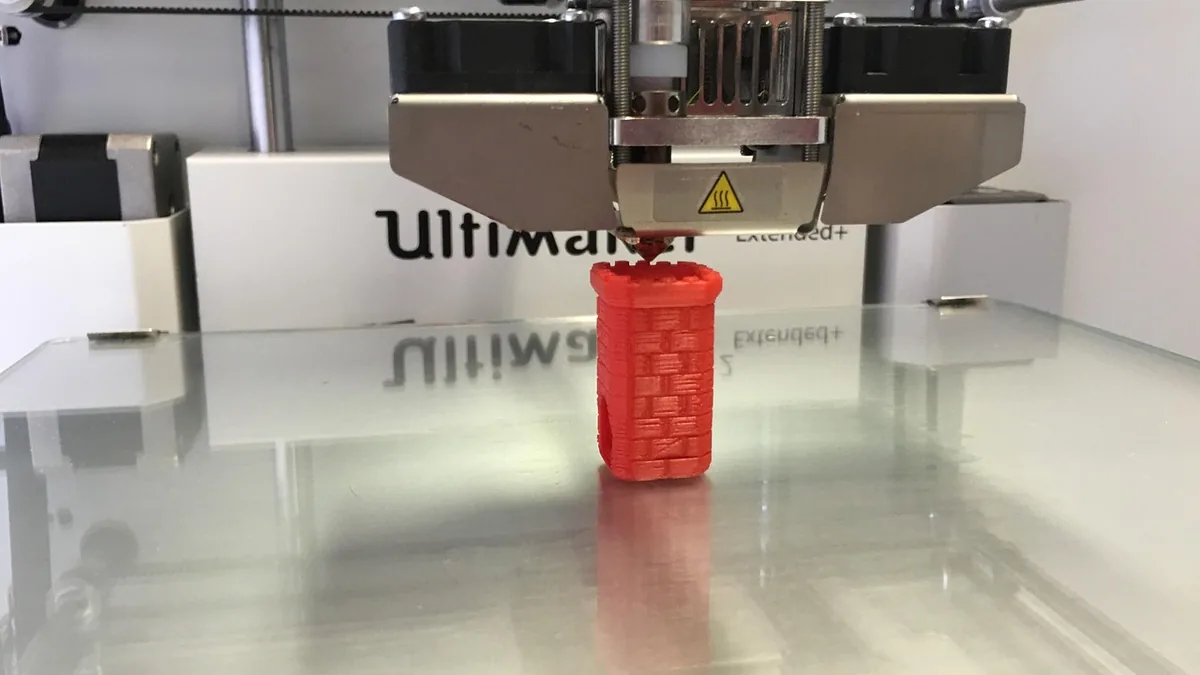
3D printer printing a small red object on the build plate
Bambu Lab H3C: Nine Tools, US$2,499 and What It Means for India
On 3 November 2026 Bambu Lab launched the H3C, a nine-tool desktop 3D printer built around its Swaptek tool changer, priced at US$2,499 for the AMS Combo. Each tool keeps its own filament loaded and pre-heated, so a material change takes under six seconds [1].
Key Takeaways
- The Bambu Lab H3C went on sale on 3 November 2026 in a single configuration, the H3C AMS Combo, at US$2,499 before tax in the United States [1].
- Nine independent print tools each carry their own filament path and heating system, so a material change finishes in less than six seconds [1].
- The AMS 3H holds nine spools in a sealed airtight chamber and dries them at up to 85 °C while printing, which is the specification that matters most in Indian humidity [2].
- The Xe converter put the mid-market rate at 94.0835 Indian rupee per US dollar on 6 Nov 2026, which puts US$2,499 at about ₹2,35,115 before duty and tax [4].
- A hands-on review published on the launch day awards the machine 9 out of 10 and notes that only two of the nine slots dry filament at a time [3].
What Bambu Lab actually launched
Bambu Lab describes the H3C as its first third-generation printer and builds it around three systems: Swaptek handles the tool changes, the FlexFeed extruder deals with flexible materials, and the AMS 3H stores, dries and feeds the filament [2]. It goes on sale as one configuration, the H3C AMS Combo, which bundles the printer, the AMS 3H and the nine print tools [1].
The company's own framing is that two generations of machines made multi-colour printing routine, while multi-material printing was still the part that stayed hard [2]. Independent coverage sets the machine against its obvious rival: the launch-day review compares the H3C with the Prusa CORE One+ (Gen 2) INDX eight-tool printer, which is listed at $2,249 pre-assembled, and argues that the extra $250 buys a camera, advanced filtration, a ninth head and native 2.85 mm support [3].
One honest caveat belongs up front. That reviewer writes that the machine was in testing for a month before the article was published, and that Bambu's claim of a switch under six seconds held up in practice, so the figures below are a mixture of published specifications and hands-on observations [3].
Specifications that matter after the launch noise
Bambu Lab's specification list and the table published by 3Dnatives agree on the headline numbers: a 330 × 320 × 325 mm build volume, a maximum nozzle temperature of 350 °C, a 120 °C bed, active chamber heating up to 65 °C and a machine mass of 36.28 kg including the AMS 3H [1][2]. The table below pairs each published figure with what it means for a reader in India.
| Specification | Published figure | Why it matters in India |
|---|---|---|
| Printing process | Fused filament fabrication (FFF) | The same process behind most PLA+ keychains and desk parts |
| Build volume | 330 × 320 × 325 mm | Larger than the 256 × 256 × 256 mm build envelope Nuho prints on, but still a desktop footprint |
| Tool changer | Swaptek with nine print tools | Nine materials stay loaded instead of one spool being swapped by hand |
| Maximum nozzle temperature | 350 °C | Opens ABS, PC, PA-CF and PET-CF, not only PLA and PETG |
| Active chamber heating | Up to 65 °C | A warm chamber helps engineering filaments cool without warping |
| Maximum bed temperature | 120 °C | Hot enough for ABS and ASA style materials |
| Nozzle sizes | 0.2, 0.4, 0.6 and 0.8 mm | A detail nozzle and a structural nozzle can run inside one job |
| Filament diameters | 1.75 mm and 2.85 mm | The 2.85 mm path exists mainly to keep soft TPU rigid |
| Maximum speed and acceleration | 1,400 mm/s, 25,000 mm/s² | Published maximums, not a promise about finished-part speed |
| External dimensions | 493 × 571 × 587 mm | Measure the desk before ordering, not after delivery |
| Air purification | HEPA filter grade H11 | Useful when the machine sits in a closed room |
| Weight | 36.28 kg including AMS 3H | Two people and a solid table, not a chair. |
How the nine-tool system works
The H3C is a fused filament fabrication machine, and fused filament fabrication is a 3D printing process that uses a continuous filament of a thermoplastic material, fed from a spool through a heated extruder head [5]. What changes here is how many of those material paths exist at once: each of the nine print tools has its own filament path and its own heating, so the filament stays loaded and ready, and no material has to be retracted to feed the next one [2].
Bambu Lab's Active Pre-Heat system warms the next tool while the current one is finishing, which is what takes the print-to-print material switch under six seconds with low priming [2]. The launch-day review reports that Bambu's sub-six-second claim held up in practice and that the printer simply parks, picks up and goes [3]. 3Dnatives independently describes the same architecture and the same sub-six-second figure, adding that the approach reduces the material purged during transitions [1].
The FlexFeed extruder handles both 1.75 mm and 2.85 mm filament and switches between them on the fly. Bambu Lab says the dedicated 2.85 mm path prints TPU as soft as 75A at up to three times the flow rate of a classic printer, while 3Dnatives reports flow up to five times higher than the company's previous solutions for those materials [1][2]. A 0.2 mm nozzle can take the fine detail of a part while a 0.4 mm nozzle handles the bulk, and both can run in the same job [1].
The AMS 3H is the part with the clearest Indian relevance. Every spool sits in a sealed, airtight chamber that protects filament from moisture, two dedicated slots dry most filaments at up to 85 °C while printing continues, and an older AMS connected through print tool number 1 extends the system to 24 materials in a single print [2]. The review reaches the same limit from the other side, listing the fact that only two of the nine slots dry filament among its cons [1][3].
What it costs, and what that is in rupees
Bambu Lab publishes prices by region for four configurations, and the base H3C + AMS H3 combination is the US$2,499 machine quoted everywhere else [2]. The independent review confirms the buying position: the H3C is available only as the H3C AMS Combo with the AMS 3H for $2,499 directly from Bambu [3].
| Configuration | United States | Europe | United Kingdom |
|---|---|---|---|
| H3C + AMS H3 | US$2,499, before tax, free shipping | €2,499, including tax | £2,199, including tax |
| + filament bundle (PLA Palette and TPU) | US$2,589, before tax | €2,579, including tax | £2,269, including tax |
| Station bundle with open Bambu Station | US$2,799, before tax | €2,789, including tax | £2,469, including tax |
| Station bundle with enclosed station and E1 purifier | US$3,049, before tax | €3,039, including tax | £2,699, including tax. |
The published list also carries Canadian, Australian, Korean and Japanese prices plus a global figure of US$2,499 before tax, and it carries no India line item at all [2]. Xe's live converter showed 1 USD = 94.0835 INR at 07:41 UTC on 6 Nov 2026 [4]. At that mid-market rate, US$2,499 converts to about ₹2,35,115 before import duty, GST and shipping, and the rate moves by the minute, so treat the rupee figure as a conversion of the US list price rather than a landed cost.
The Indian angle: humidity, heat and who needs this
Humidity is the first Indian condition this machine speaks to. Filament stored in a coastal flat or a closed godown during the monsoon picks up moisture, and the AMS 3H answers that with a sealed chamber plus drying at up to 85 °C that keeps running while the printer works [1][2]. Our earlier note on filament drying and storage in Indian humidity covers what that moisture does to a print job and what to do about it.
Heat is the second condition. Nine tools reaching 350 °C inside a 65 °C chamber make ABS, PC, PA-CF and PET-CF practical on a desktop [2], and the material you choose still governs the result: Nuho's published material table lists PLA+ at 55 °C heat deflection, PETG at 75 °C, ABS at 85 °C, TPU 95A at 60 °C and Tough Resin at 65 °C. A part that sits on a dashboard in direct sun is a material decision long before it is a machine decision, which is the limit we looked at in our piece on 3D printed lamps and PLA+ heat.
Price is the third condition, and the honest one: before duty and GST the base combo alone lands near ₹2.35 lakh, which places the H3C in capital-equipment territory for an Indian small business rather than in the hobbyist bracket. The conversion uses the current mid-market rate of 94.0835 Indian rupee per US dollar [4]. Our roundup of 3D printer prices in India shows what each budget actually buys, and our note on what 3D printing costs shows how the maths changes when you buy prints instead of hardware.
What this means if you sell custom products in India
A printer like the H3C changes what an owner can make in-house; it does not change what a customer needs. Most custom orders are driven by a name, a registration number or a logo, and those are data you already have. Nuho prints in PLA+, PETG, ABS, TPU 95A and Tough Resin on a 256 × 256 × 256 mm build envelope to a dimensional tolerance of ±0.2 mm or ±0.2 percent, accepts STL, STEP, OBJ and 3MF files, manufactures standard orders in 24 to 48 hours and ships pan-India through Delhivery and Bluedart across roughly 27,000 serviceable pincodes.
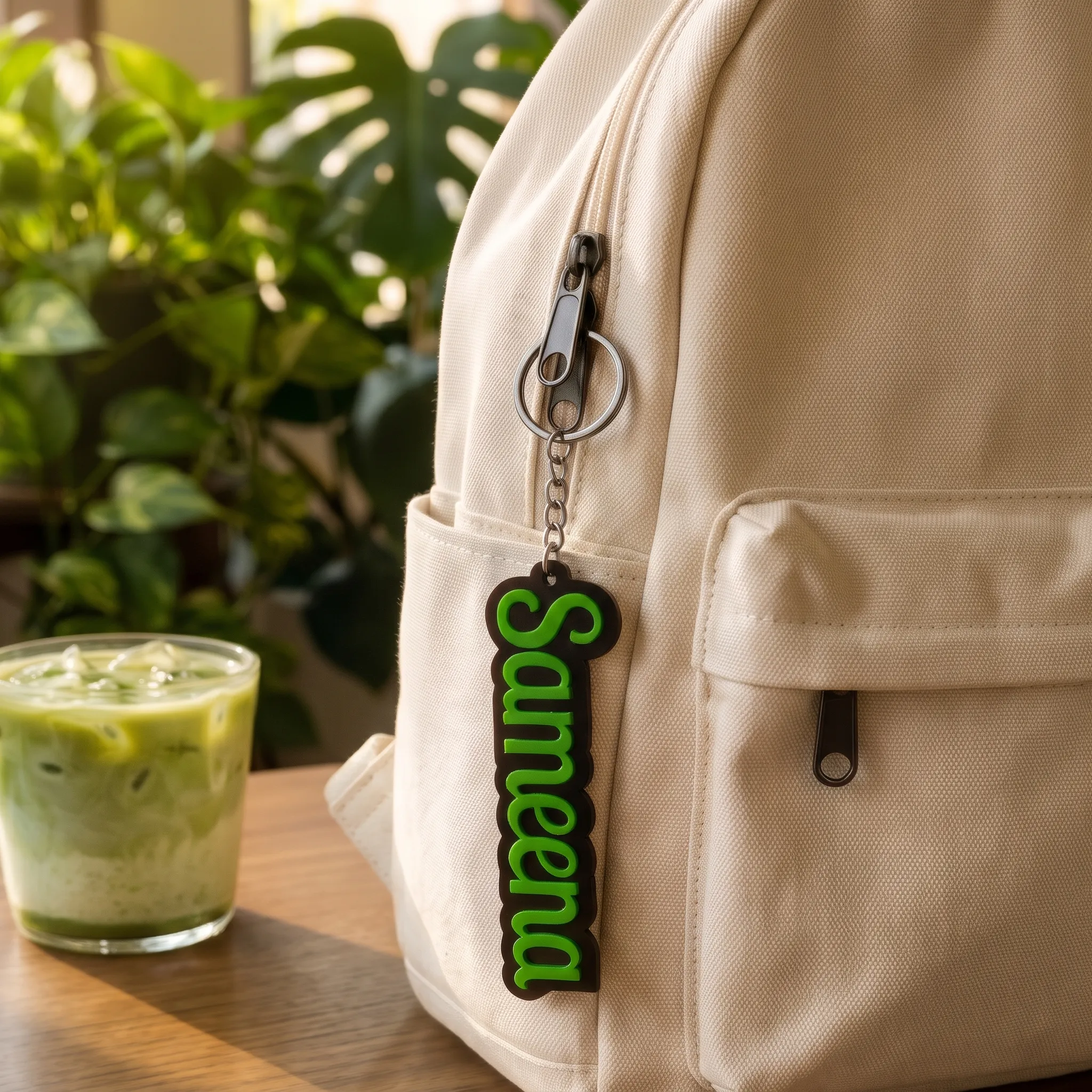
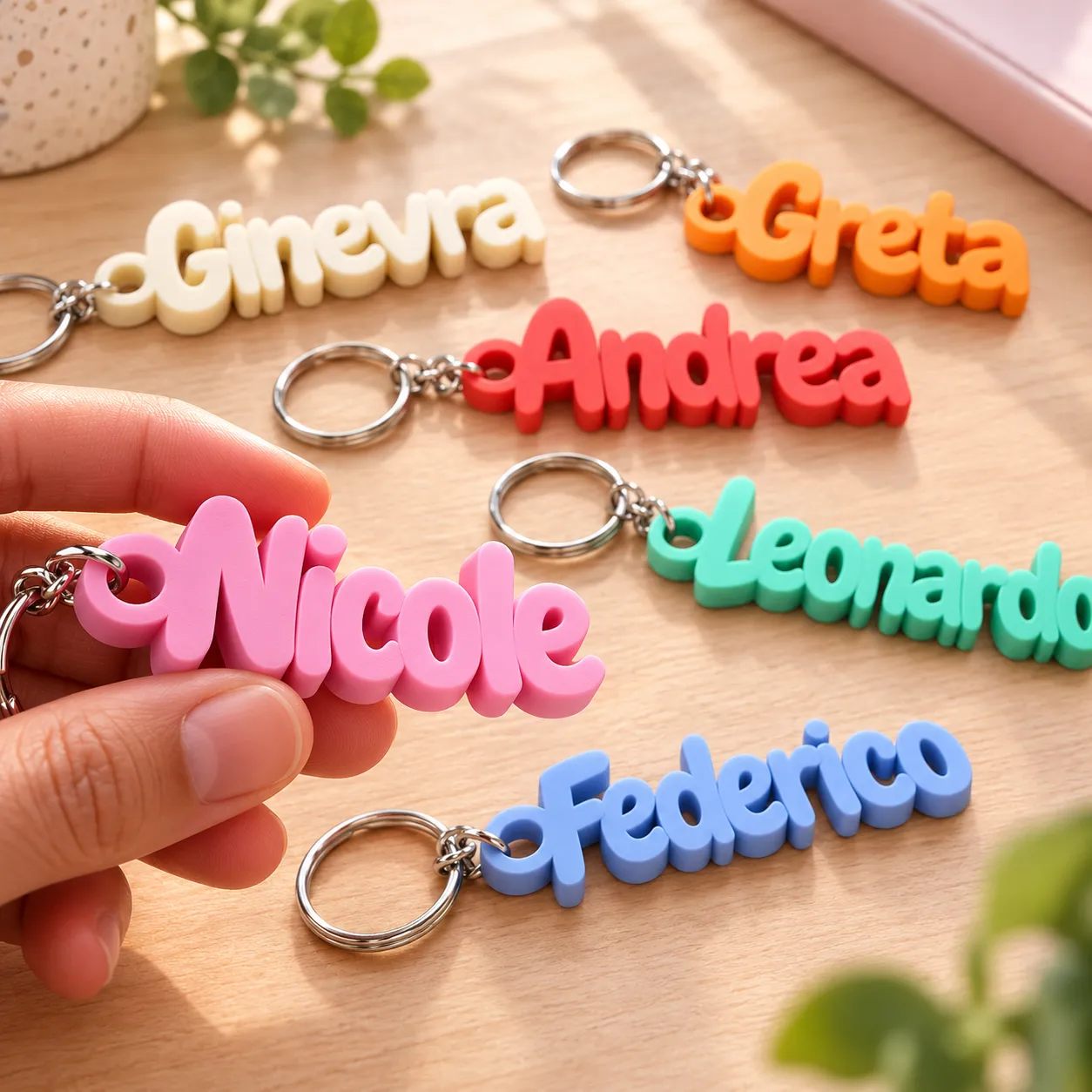
That is the practical answer for most readers: decide what you need to produce, then decide whether it is worth owning a machine. A custom name keychain in PLA+ is listed at ₹129, the parametric name keyring version at ₹79, and a mini car number plate keychain at ₹99 — quantities small enough to test a design before anyone talks about tool changers. For the hardware side of the decision, our guide to the ELEGOO M1 Ultra runs through the same launch-versus-reality test on a different piece of equipment.
Frequently Asked Questions
Is the Bambu Lab H3C available in India?
Bambu Lab's launch price list covers the United States, Europe, the United Kingdom, Canada, Australia, Korea, Japan and a global price, and it does not publish an India price [2]. Read that as a US list price plus duty, GST and shipping if you are ordering from India, and confirm the landed figure before committing.
What is Swaptek on the Bambu Lab H3C?
Swaptek is the nine-tool architecture at the centre of the machine: each print tool has its own filament path and its own heating, so filaments stay loaded and a switch takes under six seconds [2]. 3Dnatives describes it as a tool changer that lets you swap nine PrintTools without unloading one filament to load another [1].
How fast does the H3C change materials?
Bambu Lab puts the print-to-print material switch under six seconds with Active Pre-Heat and low priming, and 3Dnatives reports the same sub-six-second figure [1][2]. The launch-day review says the claim held up in the writer's own testing [3].
Does the AMS 3H dry filament while printing?
Yes. The AMS 3H is a sealed airtight chamber with two dedicated slots that reach 85 °C, and drying runs while printing continues; simultaneous drying covers two slots [1][2]. That combination is the most monsoon-relevant part of the announcement for Indian buyers.
How much does the Bambu Lab H3C cost in rupees?
The base H3C + AMS H3 configuration is US$2,499 before tax in the United States and €2,499 including tax in Europe [2]. The Xe converter puts the mid-market USD to INR rate at 94.0835 Indian rupee per US dollar [4], which is about ₹2,35,115 before duty.
Conclusion and the next step
The H3C is a genuine architectural shift: nine heated tools, six-second switches and a drying chamber in a desktop footprint, at a price that only makes sense for a business with multi-material work already queued [2]. The independent verdict so far is 9 out of 10, with the caveats that only two slots dry at once and the machine stands nearly 50 inches tall with the AMS lid open [3].
Next step: before comparing hardware again, write down what you actually need to produce this quarter. If the answer is keychains, tags or stickers, order a single custom name keychain at ₹129 first and let the sample tell you whether you need a printer at all.
Sources
- Bambu Lab H3C Launches With 9 PrintTools for $2,499 - 3Dnatives
- Tool changer. Game changer. Bambu Lab presents H3C - Bambu Lab Blog
- Bambu Lab H3C review: Nine toolheads and six-second swaps make multicolor printing practical - HowToGeek
- US Dollar to Indian Rupees Exchange Rate - Xe
- Fused filament fabrication - Wikipedia
Featured Custom Products

Frequently Asked Questions
More Articles You Might Like

3D Printed Tablets: PharmaTher's Colon-Release Dose in India
PharmaTher is 3D printing oral tablets of two peptides, KPV and BPC-157, designed to pass through the stomach and release their dose in the colon using Craft Health's...
Additive Manufacturing Defects: Euler's Layer-Camera Fix Explained
Euler de-risks metal additive manufacturing by reusing the layer camera that laser powder bed fusion machines already have. Its software-only platform watches the images each...
3D-Printed Beams in Space: What Orbital Matter Proved for India
Short answer: Orbital Matter's Replicator 2 satellite 3D-printed a half-meter rigid beam in the vacuum of orbit, the first structural print by a free-flying spacecraft outside a...