
3D Printed Tablets: PharmaTher's Colon-Release Dose in India
Nuho India Team
Nuho Creative Team
Key Takeaways & TL;DR
- PharmaTher's first two products are oral tablets of the peptides KPV and BPC-157, printed to release their dose in the colon instead of the stomach [1].
- The U.S. policy behind them covers six peptides, but only KPV and BPC-157 are cleared for oral use, and neither is FDA-approved [1][2].
- The proof so far is early: a 2023 in vitro study delivered up to 75% of a budesonide dose to a simulated colon, while the peptide evidence is mostly mouse studies [1].
- For India the story is regulatory and technical: CDSCO approves new drugs, and an IIT Madras project is already simulating 3D tablet printing of polypills [4][6].
pill, medicine, tablet, medical, medication, packing
3D Printed Tablets: PharmaTher's Colon-Release Dose in India
PharmaTher is 3D printing oral tablets of two peptides, KPV and BPC-157, designed to pass through the stomach and release their dose in the colon using Craft Health's patent-pending CORR3CT pill-in-pill shell. A U.S. HHS policy published on 30 October 2026 lets Section 503A pharmacies compound six named peptides. Neither peptide is FDA-approved and nothing here is approved in India.
Key takeaways
- PharmaTher's first two products are oral tablets of the peptides KPV and BPC-157, printed to release their dose in the colon instead of the stomach [1].
- The U.S. policy behind them covers six peptides, but only KPV and BPC-157 are cleared for oral use, and neither is FDA-approved [1][2].
- The proof so far is early: a 2023 in vitro study delivered up to 75% of a budesonide dose to a simulated colon, while the peptide evidence is mostly mouse studies [1].
- For India the story is regulatory and technical: CDSCO approves new drugs, and an IIT Madras project is already simulating 3D tablet printing of polypills [4][6].
What PharmaTher is actually building
PharmaTher Holdings is building a range of 3D printed peptide products for a new U.S. compounding pathway, and the first two are oral tablets of KPV and BPC-157 designed to release their dose in the colon [1].
Both products are built on PharmaTher's M3DICINES platform and use CORR3CT, a patent-pending technology from Singapore-based Craft Health [1]. The tablets are designed to pass through the stomach intact and release the peptide in the colon, aimed at gastrointestinal conditions where delivering the drug to a specific site may make a difference [1].
A second dosage form is already in the pipeline: the initial portfolio includes colon-targeted KPV and BPC-157 tablets and a BPC-157 chewable or orally disintegrating tablet designed for the upper gastrointestinal tract [3]. Peptide products are printed at room temperature without heat or UV, in patient-specific strengths from a validated digital recipe and in economical small batches [3].
How a colon-release tablet works
CORR3CT is a 3D printed pill-in-pill tablet with a drug-loaded core inside a shell that responds to pH [1]. Extra printed layers shift the release point further toward the colon, which is how the design aims the dose at the lower intestine rather than the stomach [1].
The mechanism is not the hard part. What changed is the rulebook: on 30 October 2026 the Secretary of Health and Human Services published an enforcement discretion policy for compounding certain peptide bulk drug substances under section 503A of the Federal Food, Drug, and Cosmetic Act [2].
The conditions attached to that tolerance are specific, and PharmaTher says it is designing its products around them from the start [1].
| What the policy requires | What that means in practice |
|---|---|
| Peptide supply | Must come from an FDA-registered manufacturer with the required documentation |
| Named patient | Each prescription must be for a named patient |
| Safety reporting | Serious adverse events must be reported |
| Oral formulations | Need documentation showing adequate absorption in humans |
| Approval status | Neither KPV nor BPC-157 is FDA-approved |
The full policy text is published as a PDF on the HHS website, and the Federal Register notice invites written comments for two weeks after publication [2].
The six peptides named in the policy are listed below, and only two of them are cleared for oral use [1].
| Peptide | In the policy's Appendix A | Cleared for oral use | FDA-approved |
|---|---|---|---|
| KPV | Yes | Yes | No |
| BPC-157 | Yes | Yes | No |
| Epitalon | Yes | No | Not stated in these sources |
| MOTS-c | Yes | No | Not stated in these sources |
| Semax | Yes | No | Not stated in these sources |
| TB-500 | Yes | No | Not stated in these sources |
Two of those six are the whole point of the story, because oral use is what makes a printed tablet possible at all.
What the evidence actually shows
The strongest published result is still laboratory work. In a peer-reviewed in vitro study published in 2023, CORR3CT tablets loaded with the steroid budesonide delivered up to 75% of the dose to a simulated colon, while a commercial comparator released more than 90% of its dose before reaching the same point [1].
The peptide data is thinner. KPV has shown anti-inflammatory activity in mouse models of colitis, and in one colon-targeted study it worked as well as free KPV at a concentration 12,000 times lower, while BPC-157 has limited early experience in human ulcerative colitis given rectally [1].
Independent work points the same direction. Triastek has completed a First-in-Human study of T21, a 3D printed drug for moderate to severe ulcerative colitis, and imaging showed accurate delivery and controlled release in the colon [1].
What this means in India
India's pharmaceutical industry was valued at an estimated US$50 billion in FY 2023-24 and is estimated to reach $130 billion by 2030, and the country is often described as the pharmacy of the world, supplying around one-fifth of global demand for generic medicines [5]. As of 2023 the industry is the world's 13th largest by value and third largest by volume, producing over 60,000 generic drugs across 60 therapeutic categories [5].
Regulation, though, sits with the Central Drugs Standard Control Organisation. CDSCO is the National Regulatory Authority of India under the Ministry of Health and Family Welfare, and under the Drugs and Cosmetics Act it is responsible for approval of New Drugs, conduct of Clinical Trials and laying down the standards for Drugs [6].
India is not starting from zero on printed dosage forms either. A government-listed project at IIT Madras aims to develop a numerical framework for analyzing 3D tablet printing of polypills and disintegration processes [4]. It runs from 2024 to 2027 with a total budget of ₹35,63,043 funded by the Anusandhan National Research Foundation, and it uses selective laser sintering printing technology to achieve patient-centered polypills [4].
The same layer-by-layer discipline shows up at a completely different scale in Coimbatore. Nuho India is a digital manufacturing and 3D printing studio in Coimbatore, Tamil Nadu, printing in PLA+, PETG, ABS, TPU and tough resin inside a 256 mm build volume, with a published dimensional tolerance of ±0.2 mm or ±0.2% whichever is greater, and standard orders manufactured in 24 to 48 hours before they ship across India through Delhivery and Bluedart.
What this means if you order 3D printed goods in India
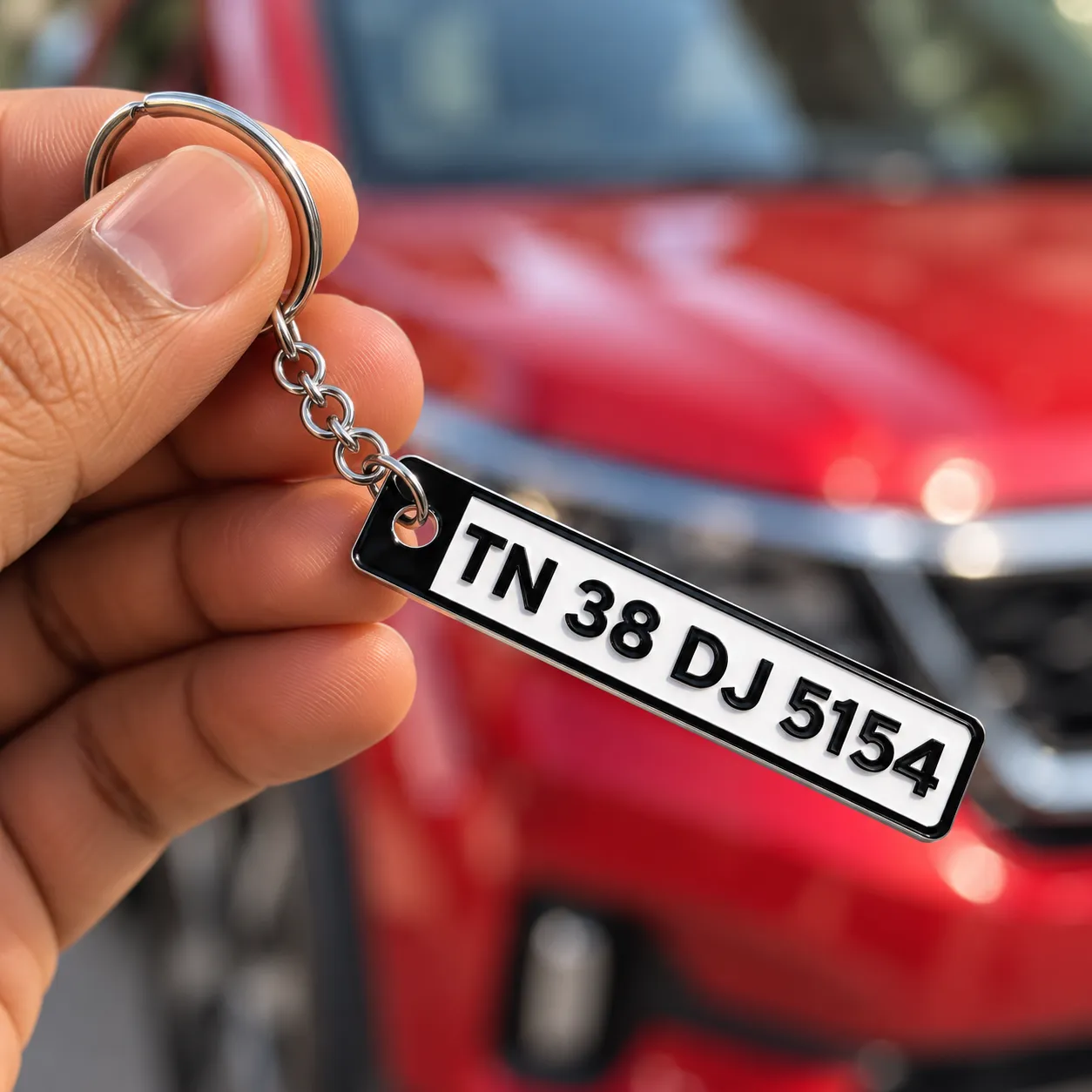
A custom name keychain printed in 3D is listed at ₹79 and a custom car numberplate keychain at ₹99, small items where a fraction of a millimetre decides whether the lettering clips cleanly onto a ring. If your artwork is flat rather than solid, a custom shape sticker uploaded from your own design is listed at ₹79.
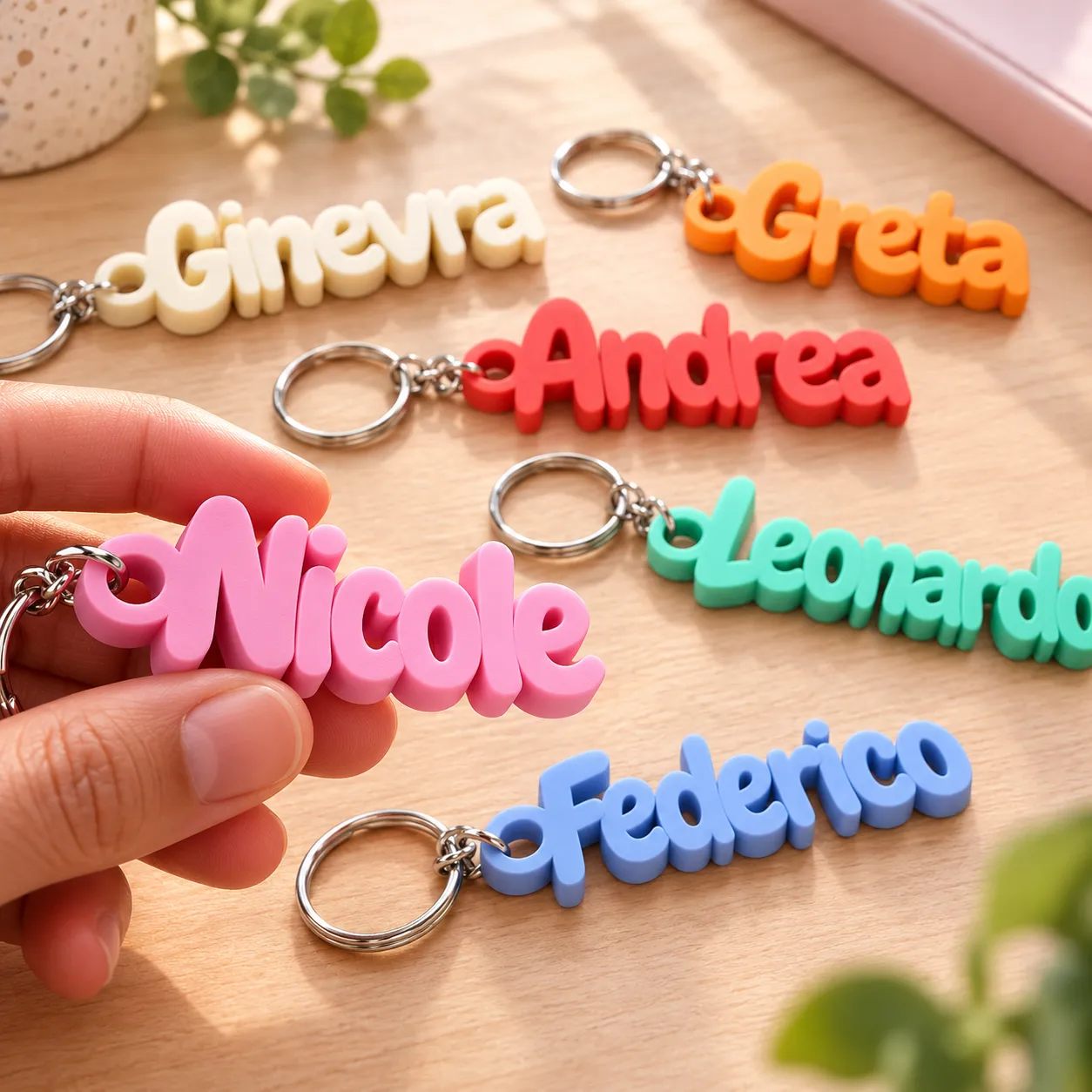 Personalised name keychains printed in PLA+ resting on a wooden table
Our guide to 3D printing tolerances and keychain fit explains what ±0.2 mm means for a part that has to clip onto a ring, and how a 3D printed keychain is made walks from artwork to finished print. The 3D printing layer height comparison covers the 0.12 mm, 0.20 mm and 0.28 mm options Nuho quotes.
Frequently asked questions
What are 3D printed tablets?
They are tablets whose geometry is built up by a printer layer by layer instead of being pressed in one go, which lets a designer control where the dose is released. PharmaTher's version is a pill-in-pill tablet with a drug-loaded core inside a pH-responsive shell [1].
Is PharmaTher's colon-release tablet approved by the FDA?
No. Neither KPV nor BPC-157 is FDA-approved, and the HHS policy is an enforcement discretion notice that lets Section 503A pharmacies compound them under conditions [1][2].
Does this U.S. policy apply in India?
No. It covers State-licensed pharmacies, Federal facilities and licensed physicians in the United States, while in India new drugs are approved by CDSCO under the Drugs and Cosmetics Act [2][6].
Can I buy 3D printed tablets in India?
Not from this pipeline. PharmaTher's strategy is to sell through healthcare companies, telehealth platforms and pharmacies rather than directly to consumers [1], and in India any new drug would need CDSCO approval first [6].
What has this to do with 3D printed keychains?
Only the manufacturing logic: geometry is specified before anything is printed, and tolerance decides whether the part fits. Nuho publishes a ±0.2 mm tolerance and prints keychains in Coimbatore for delivery across India.
Conclusion and next step
3D printed colon-release tablets are real, but they are early: the policy is published, the design is patented and tested in the lab, and the human evidence for the two peptides is thin [1][2]. For Indian readers the position is unchanged, because CDSCO approves new drugs and the IIT Madras work shows printed dosage forms are a research question in India rather than a shelf product [4][6]. Your next step is one question to ask of any 3D printing supplier, medical or otherwise: what tolerance do you publish, and how do you verify the geometry before the batch is finished.
Sources
- PharmaTher targets new U.S. peptide pathway with 3D printed colon-release tablets
- Enforcement Discretion Policy Regarding 503A Compounding Using Certain Peptide Bulk Drug Substances
- PharmaTher Builds Portfolio of Personalized, 3D-Printed Peptide Products for New U.S. Peptide Pathway
- Process simulation and Analysis of Pharmaceutical Tablet Printing and Disintegration (IIT Madras)
- Pharmaceutical industry in India
- Central Drugs Standard Control Organisation (CDSCO)
Featured Custom Products

Frequently Asked Questions
More Articles You Might Like
Additive Manufacturing Defects: Euler's Layer-Camera Fix Explained
Euler de-risks metal additive manufacturing by reusing the layer camera that laser powder bed fusion machines already have. Its software-only platform watches the images each...
Bambu Lab H3C: Nine Tools, US$2,499 and What It Means for India
On 3 November 2026 Bambu Lab launched the H3C, a nine-tool desktop 3D printer built around its Swaptek tool changer, priced at US$2,499 for the AMS Combo. Each tool keeps its own...
3D-Printed Beams in Space: What Orbital Matter Proved for India
Short answer: Orbital Matter's Replicator 2 satellite 3D-printed a half-meter rigid beam in the vacuum of orbit, the first structural print by a free-flying spacecraft outside a...