
3D Printed Lamps and Lampshades in India: Heat, Light and PLA+ Limits
Nuho India Team
Nuho Creative Team
Key Takeaways & TL;DR
- PLA+ glass transition is 60-65 C, so a printed shade is only safe with an LED bulb of 9-12 W.
- Wall thickness between 1.6 mm and 2.0 mm is the practical range for a PLA+ lampshade; 0.8 mm vase mode warps.
- Keep 30-40 mm of air between the bulb glass and the nearest plastic, and vent the crown.
- An incandescent bulb turns more than 95% of its power into heat; a typical white LED lamp reaches about 100 lm/W.
- A 150 g shade uses about a sixth of a 1 kg PLA+ spool and 6-9 hours of printer time.
Are 3D printed lampshades safe? The short answer
A 3D printed lampshade is safe in an Indian home with an LED bulb and unsafe with an incandescent one. PLA+ softens at roughly 60–65 °C, and an incandescent bulb converts more than 95% of its power into heat. An LED of the same brightness runs far cooler, so a 1.6–2 mm PLA+ wall kept 30–40 mm from the bulb stays rigid for years.
That single trade-off explains almost every failed printed lamp you have seen online: the design was fine, the bulb was wrong.
How much heat does a lamp bulb actually produce?
Bulb efficiency is the whole argument, and the numbers are not close. A 230 V incandescent bulb delivers about 13 lumens per watt, with less than 5% of its energy leaving as visible light — the rest is heat rejected into the shade, the holder and the ceiling, as documented on the incandescent lamp reference. A typical white LED lamp reaches about 100 lm/W, with the best commercial units exceeding 200 lm/W.
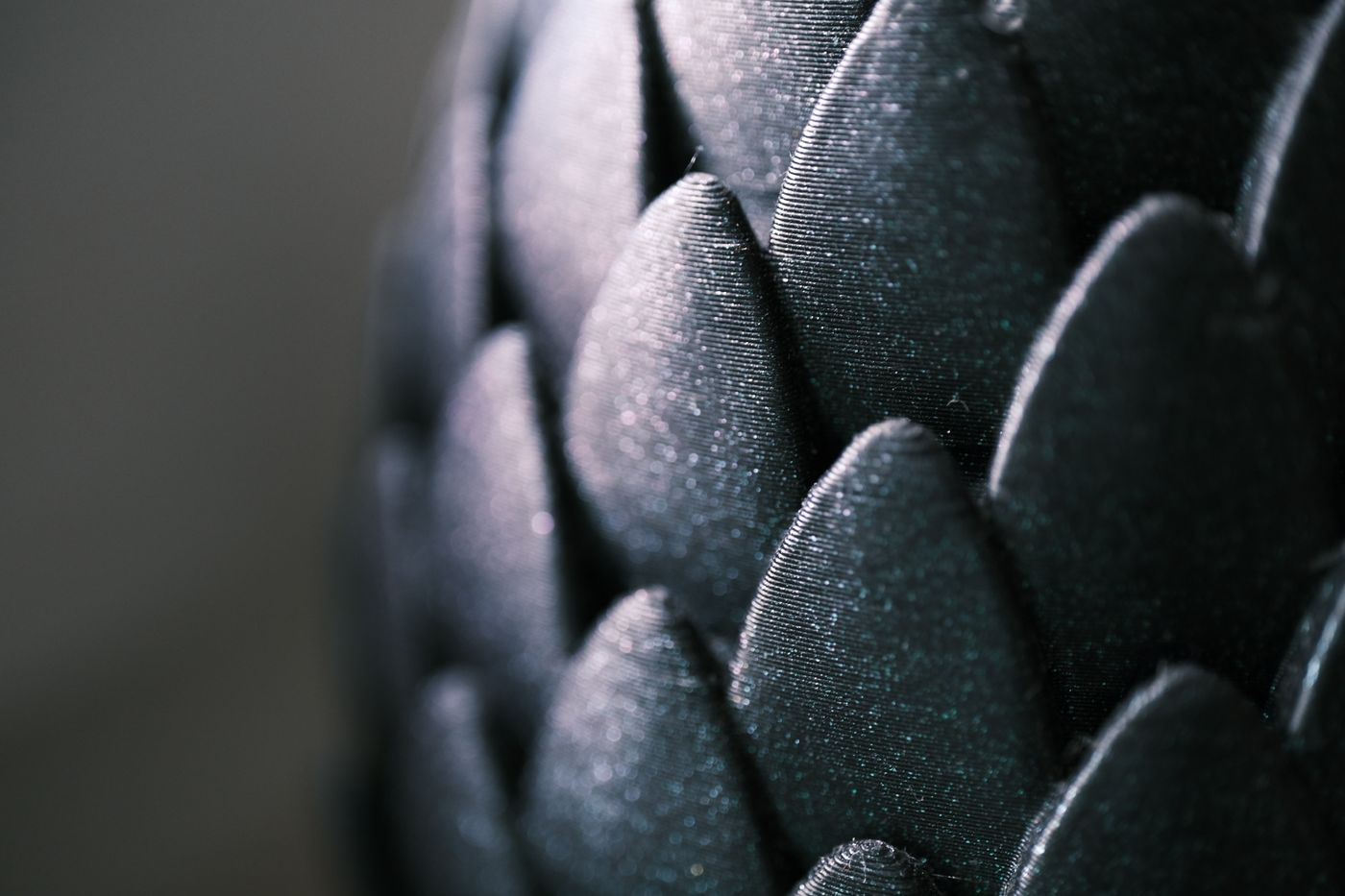 3d printed lamp — Intricate close-up of glossy black scale-like pattern with a captivating texture and shimmer
Photo: Tess h. / Pexels
Put practically: a 60 W incandescent bulb is a 57 W room heater inside a small plastic cone. A 9 W LED producing comparable light is a 9 W load, and most of that heat leaves through the driver and the base rather than the glass. That is why the same printed shade can be a sensible product or a slowly sagging bowl, depending only on what you screw into it.
What PLA+ can and cannot take
PLA is a thermoplastic polyester with a glass transition of 60–65 °C and a melting range of 130–180 °C, per the material reference for polylactic acid. Glass transition is the number that matters here, not melting. Below it, a printed part is stiff and springy. Above it, it stops being glassy and starts behaving like a soft rubber — it creeps under its own weight, droops toward the bulb, and never returns to shape.
Heat-stabilised and annealed PLA grades can push usable temperatures higher, but the PLA+ we print at Nuho India is standard grade, extruded at 215 °C and cooled in room air. It is tough, dimensionally accurate and waterproof; it is not a high-temperature engineering plastic. No honest printed-shade listing should pretend otherwise.
| Bulb type | Typical load for ~800 lm | Heat into the shade | Verdict for a PLA+ shade |
|---|---|---|---|
| Incandescent | 60 W | Very high, >95% of input | No — sags within weeks |
| Halogen | 42–50 W | High, similar mechanism | No unless heavily ventilated and distant |
| CFL | 11–15 W | Moderate, mostly at the base | Possible, keep 40 mm clearance |
| LED (standard) | 8–10 W | Low | Yes — the intended use case |
| LED filament (decorative) | 4–6 W | Low | Yes, best for enclosed shapes |
Lampshade thickness: where light and strength trade off
Thin walls pass more light. Thick walls resist heat distortion and hold their shape. In PLA+ the sweet spot for a domestic shade sits between 1.6 mm and 2.0 mm, printed as three or four perimeters at a 0.4 mm nozzle.
- 0.8 mm single-wall (vase mode) — beautiful translucency, but it warps at the slightest warmth and cracks at the rim. Decorative only.
- 1.2 mm — acceptable ceiling-shade territory with a 5 W LED. Still flexible when handled.
- 1.6 mm — the practical floor for a table lamp you will actually touch.
- 2.0 mm — rigid, safe with a 9–12 W LED, noticeably dimmer at the same bulb.
- 2.4 mm and above — structurally overkill for a shade and it eats light; better used on the base and the collar.
Layer height changes the look more than the strength: 0.2 mm gives the classic horizontal banding that reads as intentional texture, while 0.12 mm is smoother but roughly doubles print time on a 180 mm-tall shade.
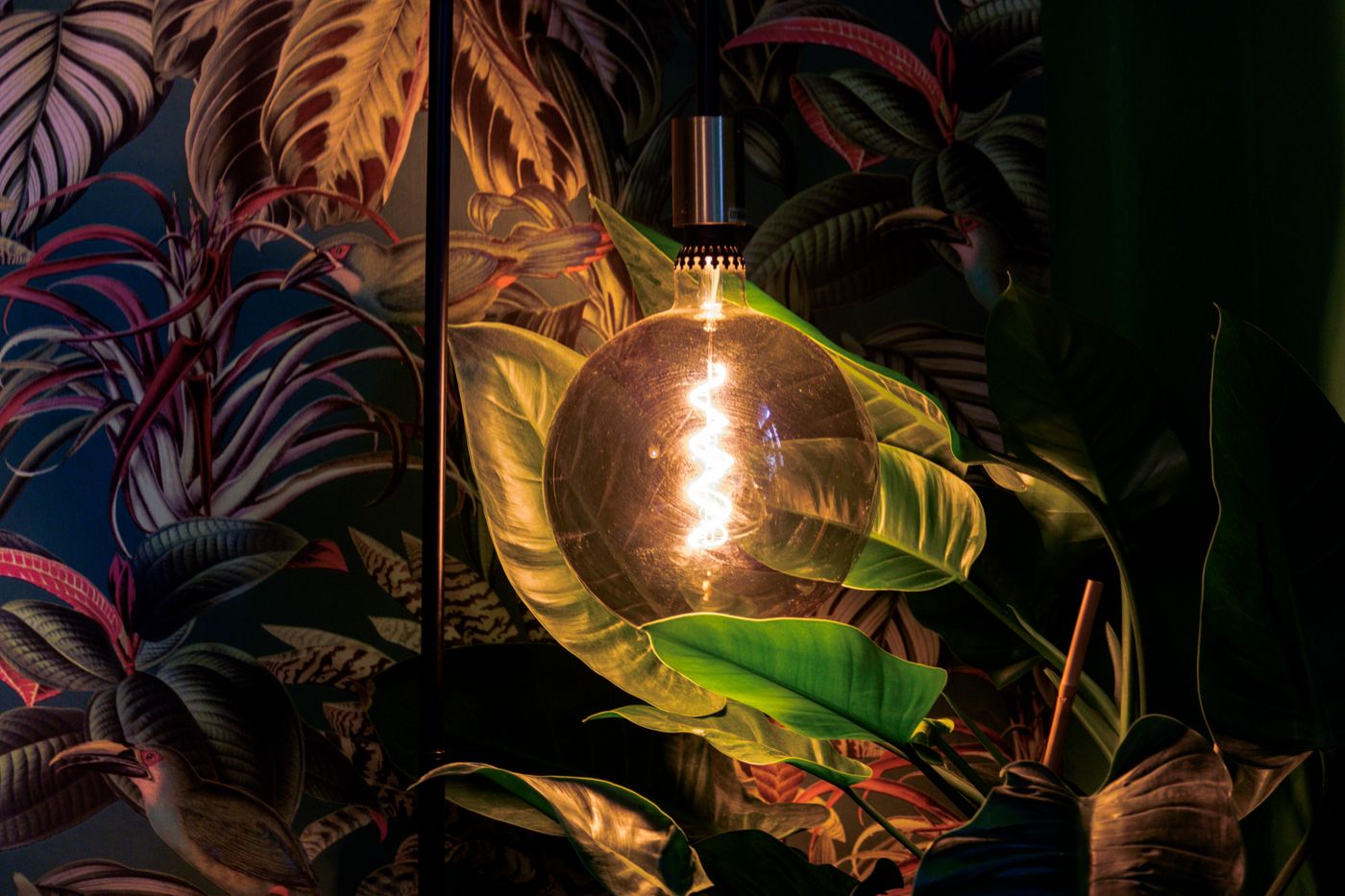 3d printed lamp — Decorative vintage light bulb glowing amidst lush tropical leaves for a warm ambiance
Photo: Evan Kalogirou / Pexels
Why print direction matters more than wall thickness
FDM parts are weakest across layers. A shade printed upright has its layer lines running horizontally around the circumference, which is exactly the direction hoop stress pushes when the plastic warms and sags. A shade printed as a cone lying on its side gains strength along the sag path but needs supports on the inner surface, and support scars on the light-facing side are unforgivable.
The practical compromise most makers land on: print upright, no supports, with a flared foot and a thicker collar ring at the top where the fitter clamps. The collar takes the mechanical load, the thin wall only carries light. If the design needs a screw-on ring, print that ring separately in the same material at 100% infill — a ring that splits under a warm bulb is the single most common print-in-place failure we see photos of.
Fitting the shade to an Indian bulb holder
Indian homes run two holder standards: E27 screw holders and B22 bayonet holders. The shade does not touch either — it clamps to a shade ring on the holder, or slides over a harp.
- Top opening: 40 mm clears an E27 holder body with room for the ring; 42–44 mm is safer if your holder has a wide skirt.
- Bulb clearance: keep at least 30 mm of air between the widest point of the bulb and the nearest plastic. With a 9 W LED that is generous; with anything hotter it is the minimum.
- Ventilation: leave the top open, or cut 6–8 slots. Convection is doing most of the cooling work in a closed drum.
- Bottom opening: at least the bulb's diameter, so you can change the bulb without dismantling the shade.
Shade shapes themselves follow a long-established vocabulary — drum, empire, bell and coolie — classified in the standard lampshade description. Printed shades work best as drums and cones, because both are support-free and both hide layer lines well.
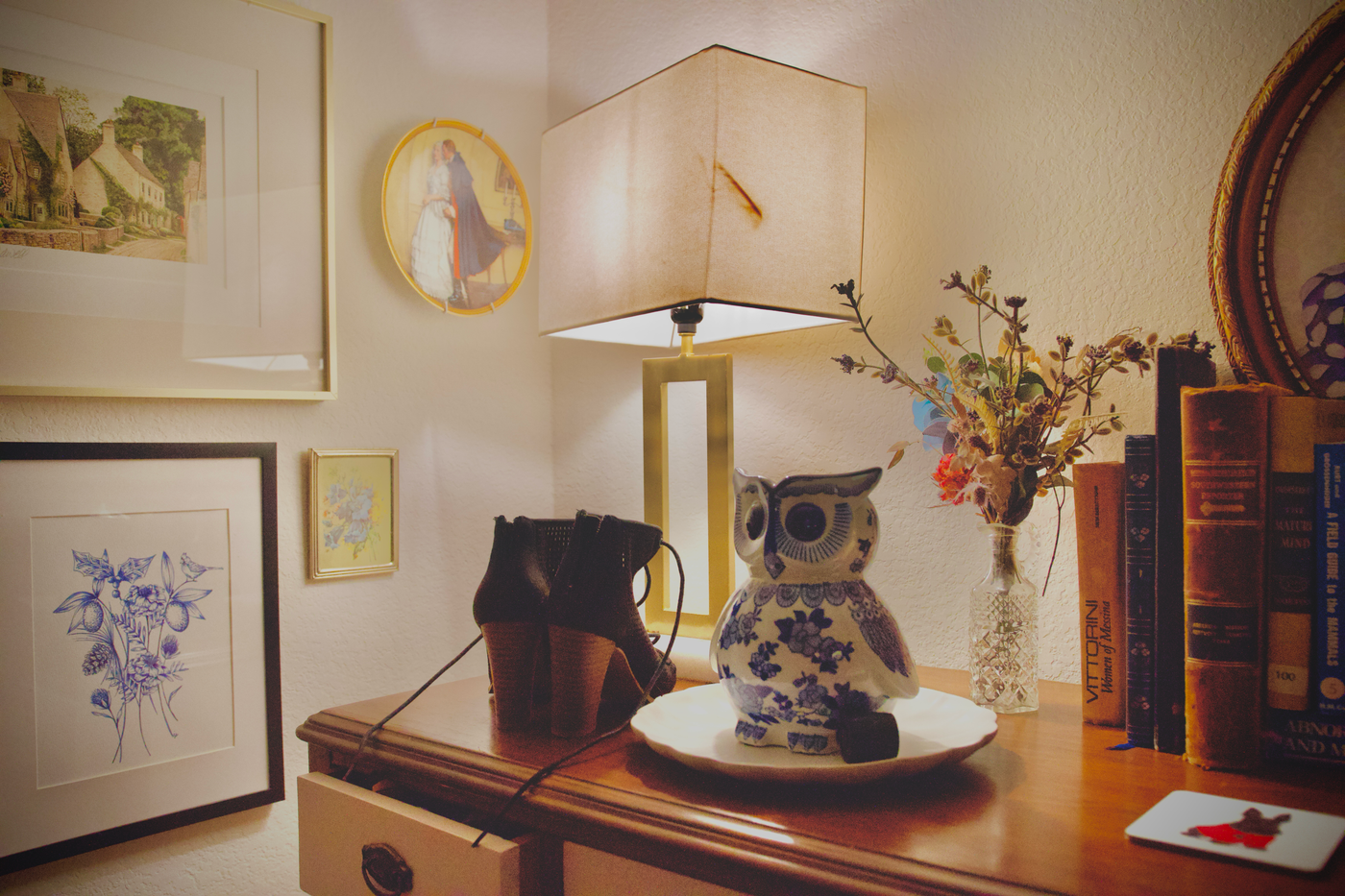 3d printed lamp — A vintage desk with artistic decor, featuring a lamp, owl figurine, and framed art prints
Photo: S. A. MADISON / Pexels
Shapes that print well and light well
| Shape | Filament (1.8 mm wall) | Print time at 0.2 mm | Best for |
|---|---|---|---|
| Drum, 150 × 120 mm | 110–140 g | 5–7 h | Bedside lamps, broad even light |
| Empire cone, 200 mm tall | 150–190 g | 7–9 h | Table lamps, upward glow |
| Coolie cone, 180 mm tall | 90–120 g | 4–6 h | Pendant fittings, tight ceilings |
| Bell, 160 mm | 130–170 g | 6–8 h | Floor lamps, softer downward spread |
Every one of those is a single-piece print on a 220 × 220 mm bed. Anything wider than about 210 mm needs splitting and a joint ring, and a joint ring in a warm shade is a weak point — better to scale the design down than to glue a seam.
What a printed lamp costs to make in India
Material is the honest line item. A 150 g shade consumes roughly a sixth of a 1 kg PLA+ spool, so at Indian spool prices the plastic is typically ₹200–₹350 per shade depending on grade and colour, before electricity and machine time. Add 6–9 hours of printer occupancy, and the reason printed lamps are priced well above printed keychains becomes obvious: you are buying hours, not grams.
That is also why you should treat any "3D printed designer lamp" listing far below that floor with suspicion — either the wall is a single 0.8 mm pass, or the filament is regrind, or the shade is not actually printed.
The four ways PLA+ shades fail
- Thermal sag. The classic. An incandescent or halogen bulb heats the crown past 60 °C and the shade folds inward.
- Collar split. The clamping ring is the highest-stress part; printed at low infill it cracks along a layer line.
- Rim curl. A thin bottom rim absorbs ambient heat from the bulb and lifts, so the shade no longer sits square.
- UV and yellowing. White PLA near a bright window discolours over a season or two. Keep white shades out of direct sun.
None of these are design failures you can fix by adding material everywhere. They are bulb and clearance failures, and they are preventable before the first print.
A practical safe build: LED, clearance, vent
- Choose an LED bulb of 9 W or less for a drum, 12 W maximum for an open cone.
- Keep 30–40 mm between bulb glass and plastic at the tightest point.
- Print the wall at 1.6–2.0 mm, four perimeters, collar at 100% infill.
- Cut 6–8 vent slots near the crown, or leave the top fully open.
- Test with the lamp on for two hours and feel the crown. Warm is fine; hot enough to be uncomfortable means change the bulb, not the shade.
Where printed decor belongs in an Indian home
The honest framing is that printed decor shines where heat is not part of the job. Desk organisers, name plates, photo frames, bookends, gift boxes and keychains all live at room temperature, where PLA+ is genuinely excellent: rigid, waterproof, dimensionally accurate to a fraction of a millimetre, and manufacturable in 24–48 hours from our workshop in Coimbatore, Tamil Nadu. Our printed decor and personalised gifts range is built on exactly that logic.
If you are furnishing a desk rather than a lamp, the same reasoning applies at smaller scale — see our guide to 3D printed home decor for desks, shelves and walls and the desk accessories we make for home offices. And if you are comparing materials for a warm spot, PLA versus PETG durability under real use explains where PETG's extra heat tolerance actually earns its messier print.
Buying printed decor in India: what to ask before you order
Ask four questions of any printed-lamp seller, and the answers separate a workshop from a reseller. What wall thickness is the shade? Which bulb did you test it with, for how long? Is the collar printed solid? Is the material PLA+, PETG or a blend? A seller who can answer all four in numbers is a seller who has actually run the print.
For lamps specifically, the safest purchase is a shade sold as an LED-only product, with the maximum wattage printed on the listing. For everything else in printed decor, the constraint is design taste rather than physics — and that is a much easier problem to solve.
Frequently Asked Questions
More Articles You Might Like
3D Printed Phone Stands in India: Desk Risers and Car Docks
3D printed phone stands in India: desk risers and car docks, PLA+ design rules, the 15-25° angle rule and the 60-65 °C heat limit, honestly explained.
3D Printer Keychain Price: What a Home Print Really Costs
What a 3D printer keychain really costs in India: ₹25–₹45 per tag in filament, power and machine time — plus why buying a finished tag at ₹129–₹149 often wins.
Name Keychains on a Cricut: What Vinyl Can and Cannot Do
A name keychain on a Cricut is a vinyl label on a blank. See what it does well, where it fails, and when a 3D printed PLA+ tag lasts longer.