
ELEGOO M1 Ultra 3D Scanner: Specs, Price and What It Means in India
Nuho India Team
Nuho Creative Team
Key Takeaways & TL;DR
- ELEGOO's first 3D scanner went on sale on 29 October 2026 at USD 1,699, with early-bird pricing of USD 1,599 until 12 November 2026.
- Five scanning modes cover objects from 5 mm parts to 4-metre assemblies, and the scanner reads black and metallic surfaces without coating powder.
- Converted at the rate published by X-Rates, USD 1,699 is about ₹1.60 lakh before import duty, GST and shipping.
- Most Indian buyers of custom keychains, stickers and small batches never need a scanner, because an STL, STEP, OBJ or 3MF file is enough to get a part made.
- Scanning outdoors in Indian sunlight is the fastest way to get distorted data, so scan indoors and keep the setup still.
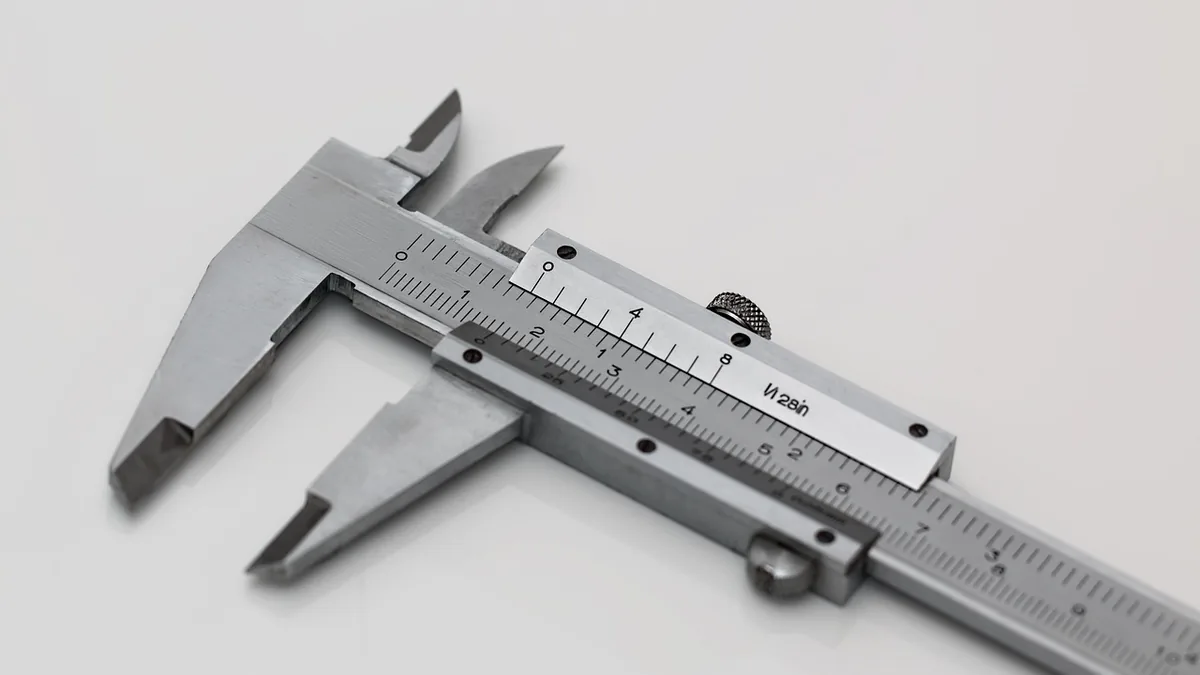
technical drawing, calipers, workshop, mechanical engineering, technical device, drawing
ELEGOO M1 Ultra 3D Scanner: Specs, Price and What It Means in India
The ELEGOO M1 Ultra is an all-in-one smart 3D scanner launched on 29 October 2026 at a retail price of USD 1,699, with early-bird pricing of USD 1,599 through 12 November [1]. It captures objects from 5 mm to 4 metres at up to 0.02 mm accuracy and exports STL, OBJ, PLY and ASC files ready for CAD or 3D printing.
Key Takeaways
- ELEGOO's first 3D scanner went on sale on 29 October 2026 at USD 1,699, with early-bird pricing of USD 1,599 until 12 November 2026.
- Five scanning modes cover objects from 5 mm parts to 4-metre assemblies, and the scanner reads black and metallic surfaces without coating powder.
- Converted at the rate published by X-Rates, USD 1,699 is about ₹1.60 lakh before import duty, GST and shipping.
- Most Indian buyers of custom keychains, stickers and small batches never need a scanner, because an STL, STEP, OBJ or 3MF file is enough to get a part made.
- Scanning outdoors in Indian sunlight is the fastest way to get distorted data, so scan indoors and keep the setup still.
What the ELEGOO M1 Ultra actually is
ELEGOO has launched the M1 Ultra as its first all-in-one smart 3D scanner, aimed at customization, reverse engineering, education, digital archiving and other creative projects [1]. ELEGOO describes itself as a rapidly developing brand in the global smart manufacturing industry, founded in 2015 and located in Shenzhen [2]. ELEGOO presents the M1 Ultra as metrology-grade, with blue laser scanning accuracy of up to 0.02 mm and volumetric accuracy of 0.02 mm + 0.06 mm/m [2].
Two things are worth reading past the marketing language. The accuracy numbers are the company's own published figures rather than an independent test result, and the output of any scan is a mesh that still has to be cleaned up before a printer or a cutting machine can use it. Neither point makes the machine less useful; it just sets the expectation correctly for a small business in Coimbatore, Ludhiana or Rajkot that has never scanned anything before.
M1 Ultra specifications at a glance
ELEGOO's launch announcement lists five scanning modes, an object range of 5 × 5 × 5 mm to 4,000 × 4,000 × 4,000 mm, a 3-inch HD touchscreen, Wi-Fi 6 and a 4,800 mAh swappable battery [2]. The table below puts each published number next to what it means for a buyer in India.
| Specification | What the sources say | Why it matters in India |
|---|---|---|
| Blue-laser accuracy | Up to 0.02 mm | Tighter than the ±0.2 mm dimensional tolerance Nuho prints to, so a scan can confirm a part before you commit to a batch |
| Volumetric accuracy | 0.02 mm + 0.06 mm per metre | Error grows with the length of the scan, so keep small parts close to the scanner |
| Object size range | 5 × 5 × 5 mm to 4,000 × 4,000 × 4,000 mm | From a keychain blank to a full motorcycle panel |
| Scanning modes | 34-line, 7-line and single-line blue laser, infrared structured light, marker-free | One handheld covers small parts, deep gaps and body scans |
| Export formats | STL, OBJ, PLY and ASC | Nuho accepts STL, STEP, OBJ and 3MF for custom orders |
| Battery and wireless | 4,800 mAh, up to 1.5 hours wireless, Wi-Fi 6, 3-inch touchscreen | Work away from a desk, but plan for a charge between jobs |
| Announced price | USD 1,699, early bird USD 1,599 | About ₹1.60 lakh and ₹1.51 lakh at 94.476139 INR per US dollar |
Five scanning modes, and what each one is for
The five modes are a 34-line blue laser for medium-to-large objects, a 7-line blue laser for fine detail on small-to-medium parts, a single-line blue laser for deep holes and narrow gaps, an infrared structured light mode for face, body and object scanning, and a marker-free blue laser mode for surfaces where applying markers is not practical [2].
It can also scan black and metallic surfaces without coating powder [1]. That matters more than it sounds: replacement parts in Indian workshops are usually painted, greasy or chrome-finished, and a scanner that needs white powder sprayed over the part is a scanner people stop using after the first week.
What a 3D scanner does, and what it does not
3D scanning is the process of analyzing a real-world object or environment to collect three-dimensional data of its shape and possibly its appearance [3]. The result is usually a polygon mesh or a point cloud of samples on the surface of the subject, and several scans taken from different directions have to be aligned and merged before they become one usable model [3].
Common applications include industrial design, reverse engineering and prototyping, quality control and inspection, and the digitization of cultural artifacts [3]. What a scanner does not do is hand you a manufacturable file: a mesh captures the surface you pointed the scanner at, not the designer's intent, so a scanned part usually needs cleanup before it prints.
What it costs in Indian rupees
Standard retail prices are USD 1,699, EUR 1,699, GBP 1,399, CAD 2,399 and JPY 299,999, with early bird prices of USD 1,599, EUR 1,599, GBP 1,319, CAD 2,299 and JPY 284,999 [1]. The X-Rates currency exchange table lists one US dollar at 94.476139 Indian rupees [4].
At that rate USD 1,699 works out to about ₹1,60,515 and the early-bird USD 1,599 to about ₹1,51,067, which is roughly ₹1.60 lakh and ₹1.51 lakh before import duty, GST and shipping. That rate was captured on 5 November 2026 and moves by the minute, so treat the rupee figures as a conversion of the US list price rather than a quote, and note that neither launch source states an Indian price or an Indian launch date. For comparison, a personalised 3D printed keychain on Nuho is listed at ₹129, and a custom shape sticker upload at ₹79.
Scanning in Indian light and heat
Strong sunlight on one side of a scanner can make that side expand and slowly distort the scan data [3]. Small movements matter just as much, because changes in temperature can shift a scanner slightly while it is scanning [3]. Between March and June, a terrace or a factory floor with an open shutter is exactly the wrong place to set up a tripod.
Scan indoors, keep the tripod and the object still, and give the scanner a few minutes to settle before the first pass. If your scan ends up as a printed part, the other Indian condition worth planning for is humidity in the spool you print with — our note on filament storage in Indian humidity covers what that does to a print job.
Who in India actually needs a 3D scanner, and who does not
A scanner earns its keep when you own a physical object and have no drawing of it: a worn bracket, a broken plastic clip, an old mould, a college project digitising an artefact. In those cases the scan is the fastest route to a file you can edit, and that is the job ELEGOO is pointing at with customization, reverse engineering, education and digital archiving [1].
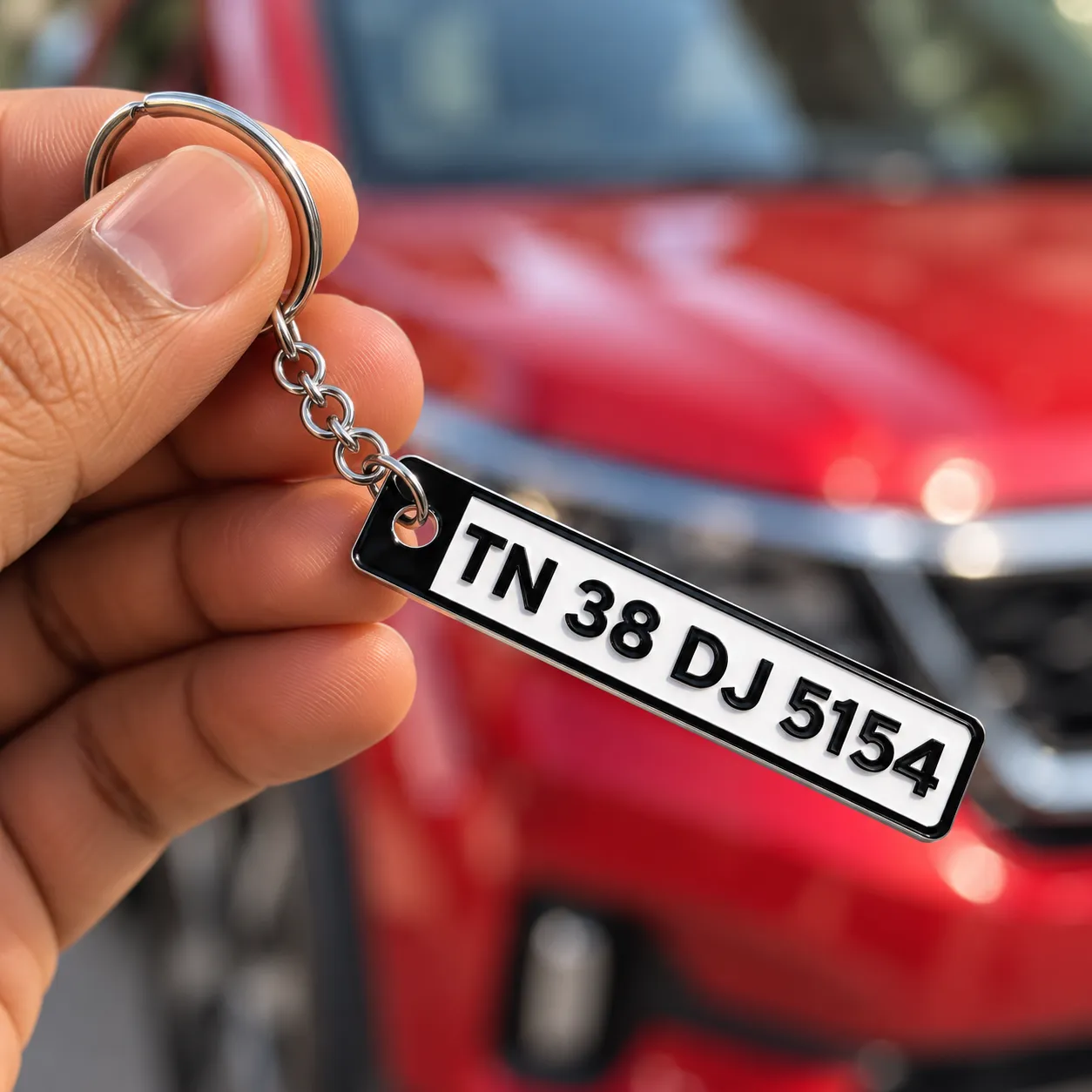
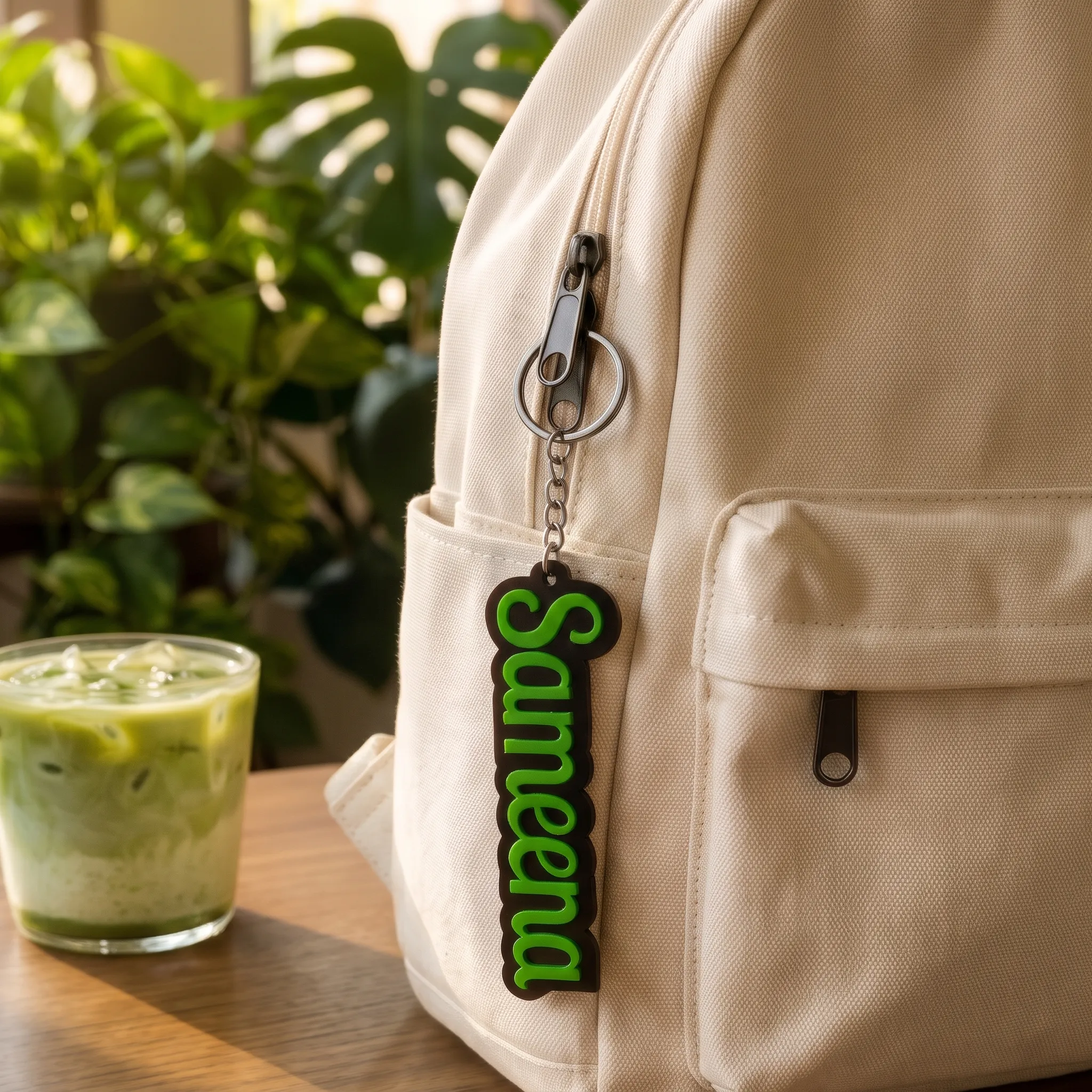
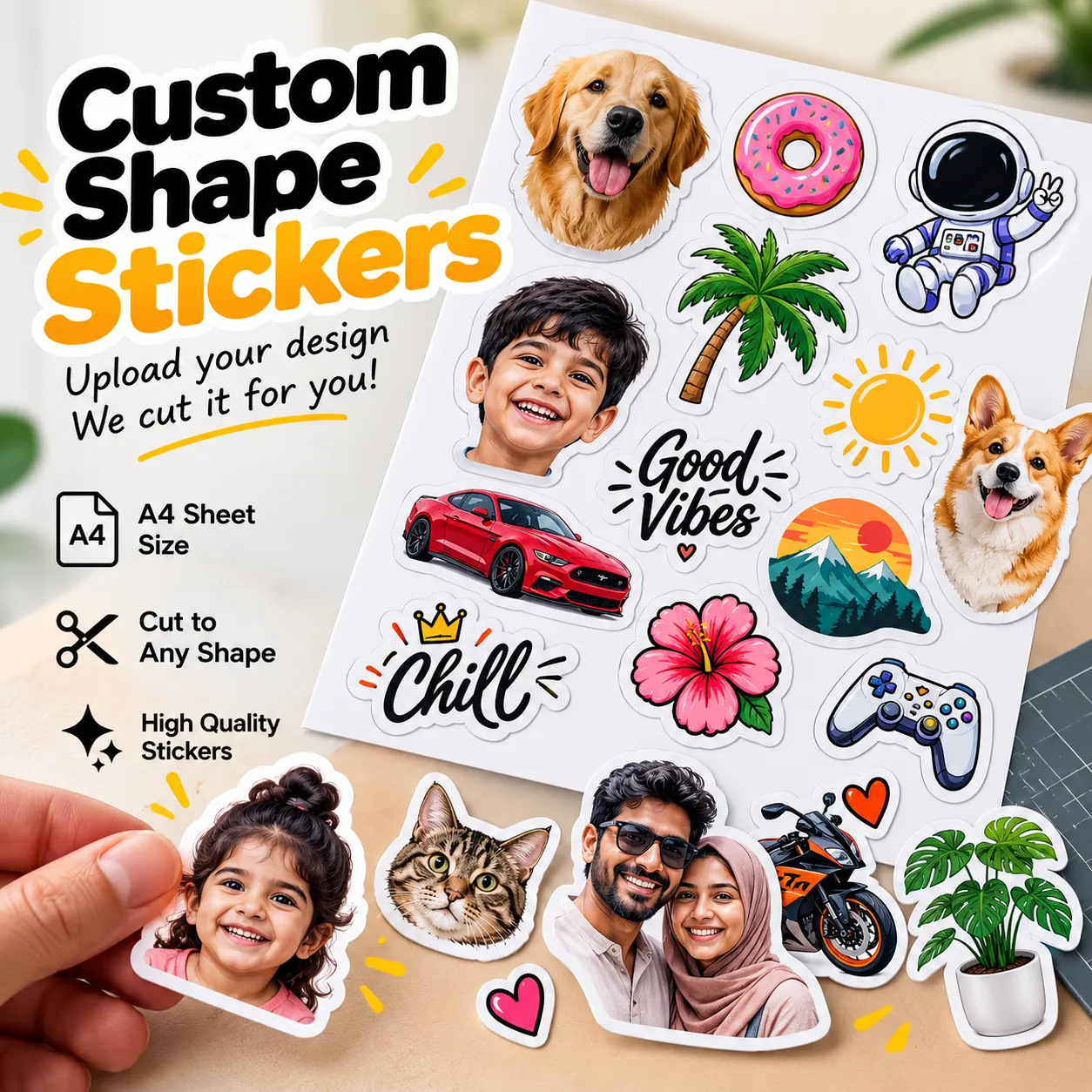
If you already have artwork, a name or a logo, you do not need one. A Custom Name Keychain is listed at ₹129 and is generated from the name you type, a Custom Shape Stickers upload is listed at ₹79 and needs only your artwork with cut lines, and a Custom 3D Printed Car Numberplate Keychain is listed at ₹99 and is built from a registration number. None of the three involves a scanner.
| Situation | What you actually need | Does a scanner help? |
|---|---|---|
| Custom name keychain or number-plate tag | A name and a registration number | No |
| Custom shape sticker or label | Vector artwork with cut lines | No |
| Spare part for an old machine with no drawing | A scanned mesh you can edit | Yes, this is the core use |
| Small batch of a brand-new product | A CAD model, or a physical prototype to copy | Only if you are copying an existing part |
| Corporate gifting run before Diwali | A logo file and quantities | No |
When a scan does turn into a print, the decisions that follow are the usual ones: how to design a part that prints first time, what ±0.2 mm tolerance actually means for fit, how a 3D printed keychain is made from artwork to print, and when a small run beats injection moulding. Nuho manufactures standard orders in 24 to 48 hours and ships across roughly 27,000+ pincodes with Delhivery and Bluedart.
Frequently Asked Questions
How much does the ELEGOO M1 Ultra cost in India?
The announced price is USD 1,699, or USD 1,599 under early-bird pricing until 12 November 2026. Converted at the X-Rates rate of 94.476139 Indian rupees per US dollar, that is about ₹1,60,515 and ₹1,51,067 before import duty, GST and shipping. No Indian price appears in the launch sources used for this article.
What accuracy do I need for a 3D printed part?
The M1 Ultra is specified at up to 0.02 mm, while Nuho prints to a dimensional tolerance of ±0.2 mm or ±0.2 percent, whichever is greater. Scanner accuracy is therefore not the limiting factor for a printed keychain or sticker; artwork quality and print settings are.
Can I scan my own keychain or sticker design?
You can scan a physical object, but a sticker is artwork, not a surface. Stickers need vector files with cut lines, and a scan of a printed sticker would only reproduce its outline with ragged edges.
Do I need a 3D scanner to order from Nuho?
No. Nuho accepts STL, STEP, OBJ and 3MF files for custom orders, and most products are configured from a name, a registration number or an uploaded design rather than from a scan.
Which file formats does the M1 Ultra export?
ELEGOO SCAN exports scan data in STL, OBJ, PLY and ASC for use in third-party software. Of those, STL and OBJ are the two you would send straight to a printing service.
Conclusion and the next step
The M1 Ultra pushes serious scanning hardware down to a price a small Indian workshop can genuinely consider, and for reverse engineering it is a real option. For custom merchandise it is not the tool: a name, a logo or a registration number is data you already have, and a scanner cannot improve it.
Next step: if you have artwork, skip the scanner entirely — upload your design to the Custom Shape Stickers page and order a single sample first, because one ₹79 sticker tells you more than an hour of reading specification sheets.
Sources
Featured Custom Products
Frequently Asked Questions
More Articles You Might Like
3D Printing Tolerances and Keychain Fit: What ±0.2 mm Actually Means
Short answer: 3D printing tolerances are the acceptable dimensional gap between the size you designed and the size that comes off the printer. Desktop FDM typically lands within...
3D Print Delamination: Why Layers Split and How to Stop It
Short answer: 3D print delamination happens when a new layer of plastic fails to weld itself to the layer beneath it, so the two separate along a layer line. The four usual causes...
What to Do With Failed PLA Prints and 3D Printing Scraps
A practical guide to sorting failed PLA prints, checking local recycling options and avoiding misleading composting assumptions.