
Can You Use a Vinyl Sticker on Bike Tank or Helmet?
Nuho India Team
Nuho Creative Team
Key Takeaways & TL;DR
- Outdoor-grade vinyl holds on a painted tank and on a helmet shell when the surface is clean, dry and free of wax or silicone.
- Cast vinyl conforms to compound curves; calendered film carries memory, shrinks back and lifts at the edges.
- Apply in shade at 15 to 30 degrees Celsius, then let the film cure for 24 hours before the first wash.
- Keep film off the visor, off the helmet's certification labels and off the registration plate.
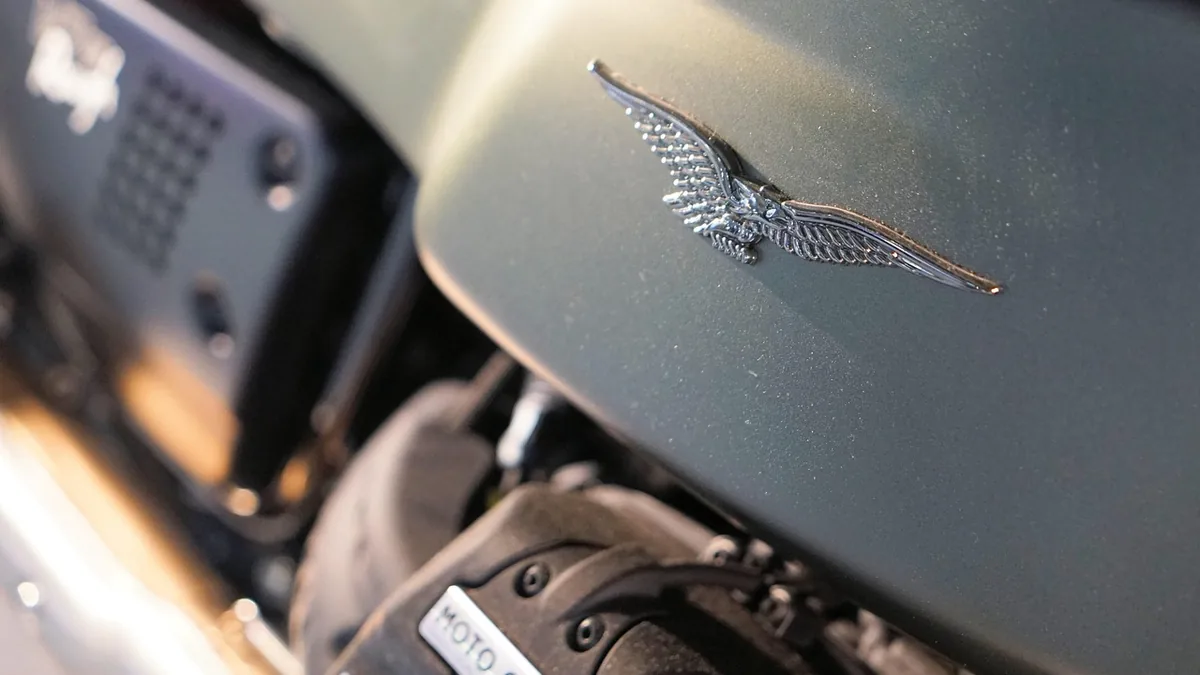
moto guzzi, eicma, logo, tank, moped, motorcycle
Can You Use a Vinyl Sticker on Bike Tank or Helmet?
Yes — a vinyl sticker on bike tank or helmet holds up well when the film is outdoor-grade vinyl, the surface is degreased with isopropyl alcohol, and you apply it in shade between 15 and 30 degrees Celsius. Cast vinyl handles the tank's curves; the visor and the number plate stay off limits.
Key Takeaways
- Outdoor-grade vinyl holds on a painted tank and on a helmet shell when the surface is clean, dry and free of wax or silicone.
- Cast vinyl conforms to compound curves; calendered film carries memory, shrinks back and lifts at the edges.
- Apply in shade at 15 to 30 degrees Celsius, then let the film cure for 24 hours before the first wash.
- Keep film off the visor, off the helmet's certification labels and off the registration plate.
Will a Vinyl Sticker on Bike Tank Stay Put?
Yes, on the painted panel itself. A tank top is sealed paint — metal or plastic under a clear coat — and that is exactly the kind of non-porous surface a pressure-sensitive adhesive is built to grip. What separates a decal that lasts for years from one that peels within a single monsoon is not the artwork. It is the film grade, the surface you prepared, and the weather on the day you applied it.
| Surface | Verdict | What decides the outcome |
|---|---|---|
| Painted tank, flat sides | Yes | Cast film, degreased surface, shade application |
| Tank top near the filler cap | Yes, with care | Fuel drips reach the film, so wipe spills the same day |
| Helmet shell, rear and sides | Yes | Stay clear of the visor, vents and certification labels |
| Fairing and mudguard panels | Yes | Gentle curves also suit calendered film |
| Registration plate (HSRP) | No | The mark must stay exactly as issued |
| Visor or eye port | No | That is your line of sight |
Why the Film Matters More Than the Design
Two films are sold as sticker stock, and they do not behave the same way. Cast vinyl starts as a liquid, and the finished film conforms well to curved shapes and is less prone to shrinkage than calendered vinyl [1]. Cast vinyls are more durable than calendered vinyl, with many cast products rated at seven or more years of outdoor durability [2]. Calendered vinyls make a thicker film — 3 to 6 mil is typical — and they shrink more than cast films [2].
That difference decides how a sticker behaves on a tank. A tank is a radius, not a flat panel, so a calendered film will hold on the flat flanks and then creep back from the curves as it tries to return to its original shape. Cast film does the opposite: it is relaxed when it goes on, so it stays where you placed it. If you are ordering artwork instead of cutting it yourself, the sizing and film choices are covered in our guide to custom bike stickers online in India.
Fuel, Heat and Monsoon: What the Tank Actually Sees
India's ethanol blending reached 20 percent in the 2025-26 supply year under the Ethanol Blended Petrol Programme [3]. Modern fuels and additives can subtly degrade clear coats over time [4]. A tank decal sits directly on that clear coat, so treat every spill as urgent: wipe it with a damp cloth the same day, keep aggressive chemicals off the film, and never let fuel pool on the artwork.
Heat is the second factor, and a decal application guide puts numbers on it: in direct summer sun a dark surface can reach 60 to 70 degrees, well above the air temperature [5]. That is why shade matters more here than the calendar month, and why a panel that has been parked in the sun should be moved into the cool before anything is applied to it.
Monsoon water is a different problem, and it is decided by the film's construction rather than by luck — that is the three-layer breakdown in our waterproof stickers in India guide. What the rainy season really changes is your working window: apply only when the panel is bone dry, and give the film a dry night to cure before the next spell.
Surface Prep: The Step That Decides Everything
The practical temperature window for vinyl decal application is 15 to 30 degrees Celsius, measured at the surface, not the air [5]. Silicone is the leading cause of lifted decal edges, so clean with isopropyl alcohol only and cure for 24 hours before water exposure [5].
Prep checklist:
- Wash the panel with plain water and a lint-free cloth to remove loose dirt and road grime.
- Wipe it down with 70 percent isopropyl alcohol in a single direction, then let it flash dry.
- Do not touch the cleaned area afterwards — skin oil is enough to break the bond at one edge.
- Check the surface temperature before you commit, because a panel in the sun reads very different from the air.
- Work in shade, in the cool part of the day, with the tank and the sticker at the same temperature.
Applying It: the Dry Method, Step by Step
- Position the sticker with a strip of masking tape along one edge, using it as a hinge so you can lift and reposition.
- Peel back a third of the backing and press the exposed film down from the hinge outward.
- Squeegee at 45 degrees from the hinge, working outward and pushing air to the edges as you go.
- Peel the remaining backing as you advance, keeping light tension on the film so it does not wrinkle.
- Peel transfer tape at 180 degrees — flat against the surface — because an upward pull lifts the vinyl back up.
- Run your thumb along every edge, because the perimeter is where adhesion failure starts.
- Leave it alone for 24 hours before water, and 72 hours before any pressure washing.
Helmets: A Different Surface, a Stricter Rule
IS 4151:2015 is the Indian Standard for protective helmets for motorcycle riders, and its certification is mandatory under the QCO implemented on 01-06-2021 [6]. A final note on helmets: helmet compliance decals should remain [7].
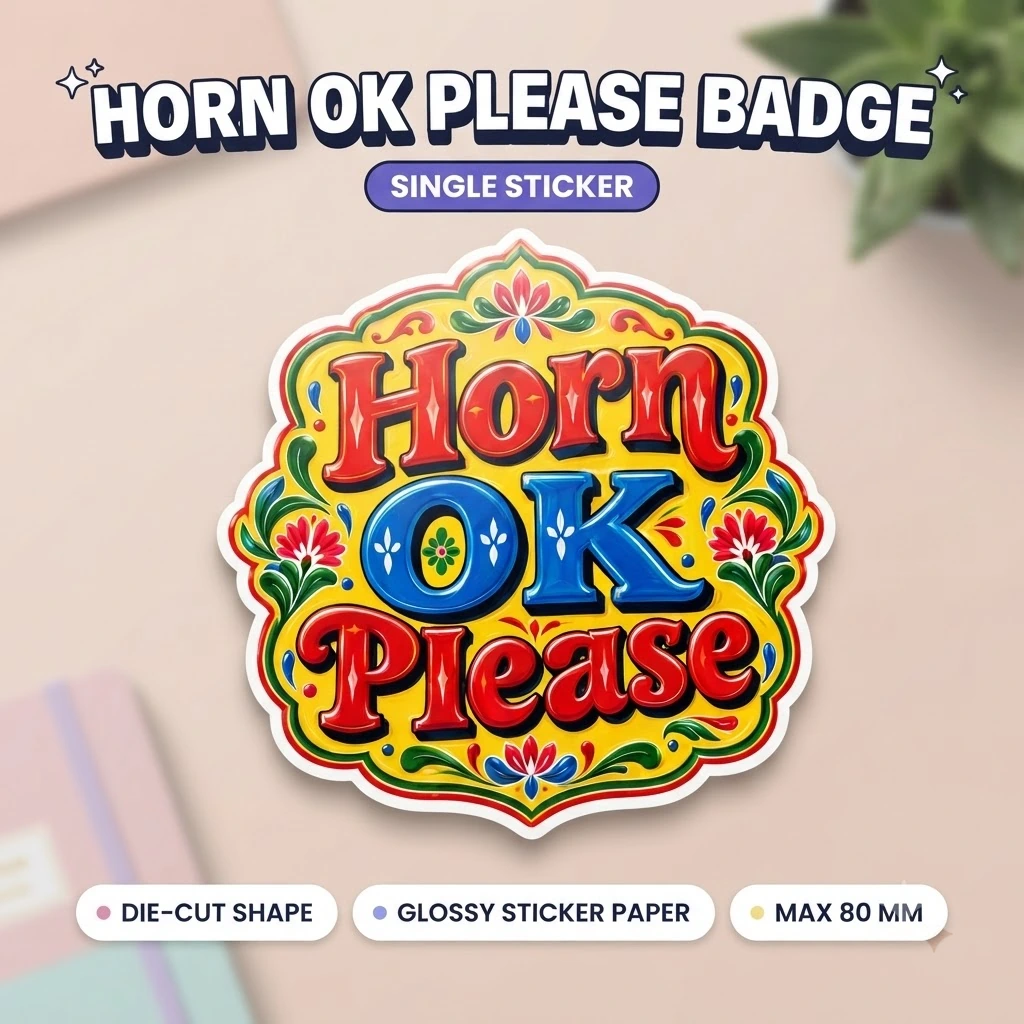
The practical reading is straightforward. Decorative film on the rear or the side of the shell takes well if the finish is clean, so leave the certification and manufacturer labels visible rather than covering them, stay off the visor and the eye port entirely, and do not wrap the chin strap. A helmet is also a smaller and more curved surface than a tank, so a design sized for a tank flank will usually overhang a helmet panel. For a logo, a name or a team badge, a glossy die-cut piece up to 80 mm — like Nuho's Horn OK Please badge sticker at ₹15 — sits within a single panel without wrapping around a curve.
Removing It Without Killing the Paint
Heat the sticker with a hairdryer until a corner lifts, because heat guns are too hot and solvents may remove the paint [7]. Work the corner up with a fingernail rather than a blade, and never put a knife against painted metal. Once the film is off, the remaining adhesive gum comes off with WD-40, tea tree oil or paint polish [7], and the panel then needs one isopropyl wipe before anything new goes on it.
Is It Legal in India?
Decorative film on body panels is ordinary and unremarkable, provided it stays off the registration mark and carries no official emblem. The boundaries — what may cover a lamp, what may never touch the HSRP, and which markings have drawn court action — are set out in our guide to cartoon stickers for bikes. Film versus weather is a separate question, and that one is answered by construction rather than by luck: see waterproof stickers in India for what survives rain, fuel and sunlight.
Frequently Asked Questions
Will a vinyl sticker on bike tank damage the paint?
Not on sound paint. The adhesive grips a sealed clear coat and releases again with gentle heat; damage comes from sharp blades and strong solvents, not from the film itself.
Can you put stickers on a helmet in India?
Yes, on the shell, as long as you keep the visor, the vents and the certification labels clear. Helmets in India sit under mandatory BIS certification, so treat those markings as fixed rather than decorative.
How long does a vinyl sticker on bike tank last?
Cast vinyls are more durable than calendered vinyl, with many cast products rated at seven or more years of outdoor durability [2]. On a prepared surface that is a multi-year result; on a waxed or silicone-contaminated one it can be one season.
Does petrol ruin a sticker on the tank?
A splash wiped away quickly is not the problem. Repeated spills around the filler cap are, because fuel and degreasers soften adhesive — wipe the same day and keep aggressive chemicals off the artwork.
What size should a sticker be for a helmet?
Stay within a single panel. Nuho's glossy die-cut range tops out at 80 mm, which suits a helmet side or a tank flank, while a full tank graphic needs a custom shape cut to your measurements.
Conclusion
A vinyl sticker on bike tank or helmet is a solved problem: right film, clean surface, shade, patience. Do the preparation once and the film will outlast the season you applied it in. One next step — measure the flattest area on your tank, then upload the artwork as a custom shape sticker at ₹79; Nuho cuts it to shape in Coimbatore, Tamil Nadu, manufactures it in 24 to 48 hours and ships it pan-India.
Sources
- Vehicle vinyl wrap — Wikipedia
- Ask the Expert: Cast vs. Calendered Vinyl — PRINTING United Alliance
- Ethanol Blended Petrol Programme — Frequently Asked Questions, Press Information Bureau
- How to Choose Bike Tank Stickers Guide — Alibaba CarInterior
- How to Apply a Vinyl Decal: Wet and Dry — Paperlust
- IS 4151:2015 Protective helmets for motorcycle riders — Bureau of Indian Standards
- How to remove motorcycle stickers — webBikeWorld
Featured Custom Products

Frequently Asked Questions
More Articles You Might Like
Why Everyday Accessories Build Brands, Not One-Time Campaigns
Everyday accessories build brands better than one-time marketing campaigns because they live inside routines the customer already performs: the key on the ignition, the sticker on...

Brand Storytelling for Startups: How a Founder's Story Becomes a Moat
Short answer: Brand storytelling is turning why you started into a story other people can repeat back to you. It holds as a moat because competitors can copy your technology,...

On-Device AI for Indian Small Businesses: Why Work Leaves the Cloud
Indian small businesses are moving routine AI work from cloud tools to on-device AI because it keeps customer data on their own machines, cuts recurring bandwidth and cloud costs,...