
Cartoon Stickers for Bikes in India: Tank, Fairing and Helmet
Nuho India Team
Nuho Creative Team
Key Takeaways & TL;DR
- The Madras High Court reported 1,04,017 private vehicles detected with unauthorised stickers and ₹16,56,000 in fines — the crackdown targets official emblems, not decorative cartoons.
- High-performance cast vinyl is 60 micron thick and rated −50 °C to +120 °C short-time exposure on aluminium, with up to 8 years' outdoor life for black/white film in vertical exposure.
- Tank-side cartoon stickers work best at 6–15 cm on compound curves, and about 6–8 cm is the practical sweet spot for a tank-side mascot.
- Leave a freshly applied sticker 24 hours before the first wash, and post-heat every edge on a curve — that is what stops tank decals from lifting.
- Two-wheeler helmets in India are certified to IS 4151:2015 — keep the BIS standard mark, the visor and the strap clear of stickers.
Can you put cartoon stickers on a bike in India?
Cartoon stickers for bikes are legal in India as long as they stay off the registration plate and carry no official emblems. Court orders in India have targeted stickers that imitate government, police or court markings — not decorative film. On the machine itself, the fuel tank, the fairing panels and the rear of the helmet shell are the surfaces that take vinyl best, and they only keep looking good if the film is proper outdoor-grade vinyl rather than indoor paper stock.
This guide covers where each type of cartoon sticker belongs on a bike, what the film is actually made of, what Indian sun and monsoon really do to it, and how to apply and remove one without harming paint. Prices and specs of films change — verify with the manufacturer before buying.
Are cartoon stickers on bikes legal in India?
Decorative stickers are not the problem. Emblems are. In September 2023, the Madras High Court directed the Tamil Nadu government to ensure that stickers and artifacts bearing the 'Emblem', 'Govt of India', 'Government of Tamil Nadu', 'High Court' or 'Police' are not used on private vehicles, and reported that 1,04,017 private vehicles had been detected with unauthorised stickers and artifacts, with fines of ₹16,56,000 imposed (News18). The Bombay High Court has held similarly that applying police stickers on personal vehicles is an illegal offence, an order that applies to police officials' private vehicles as much as anyone else's (Manupatra roundup).
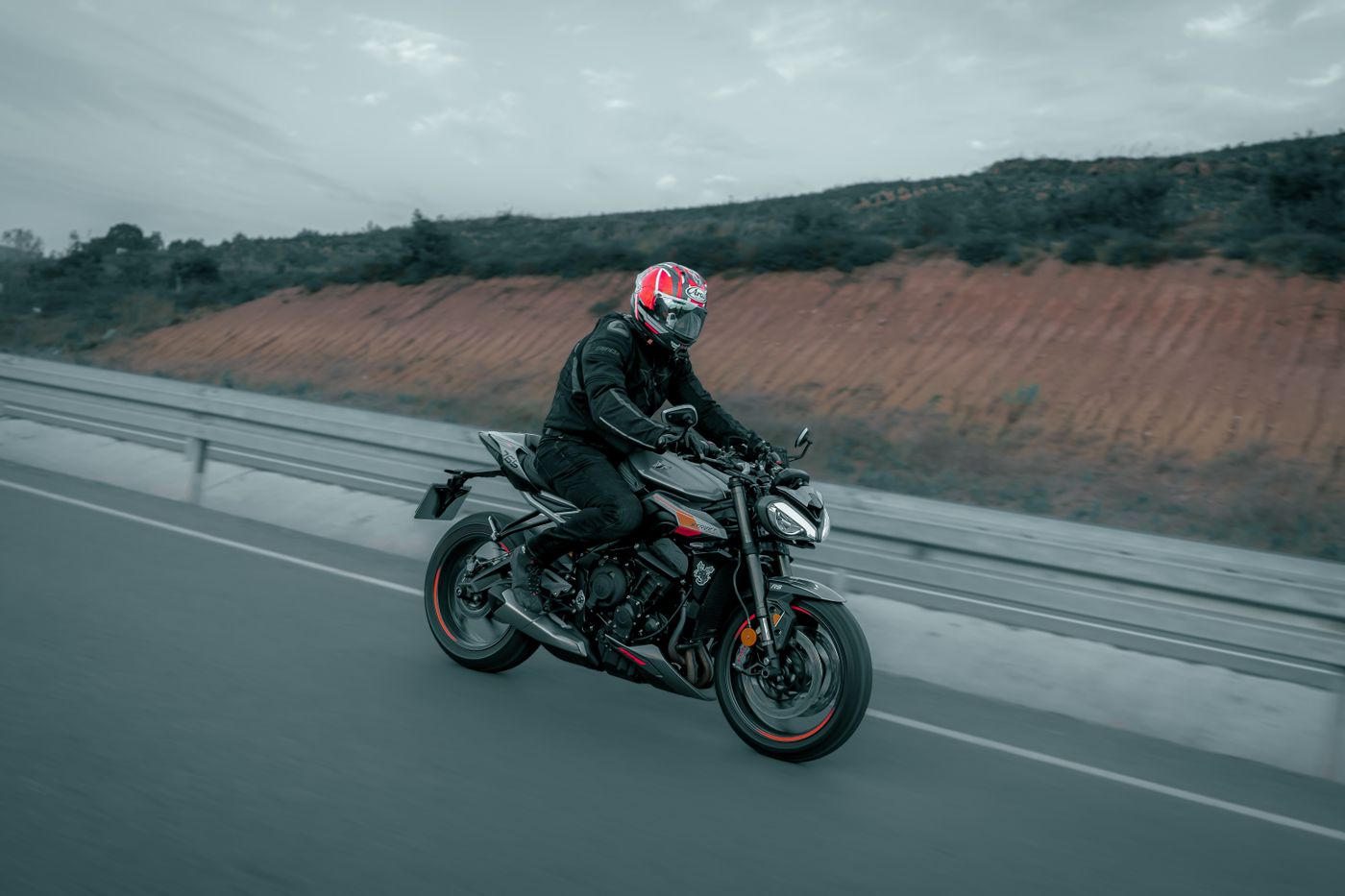 cartoon stickers for bike — A biker on a black motorcycle cruising along an open highway, showcasing speed and freedom
Photo: cnrdmroglu / Pexels
A Pikachu on the tank breaks none of that. The practical rules are simple:
- Keep the number plate clear. Nothing may cover, frame or dim the plate or its characters.
- Avoid official-looking markings. Anything that reads as police, government, press or emergency-service insignia can attract action even if it is a joke.
- Stay off lamps, reflectors and the visor. Stickers on lens covers or the helmet's eye port are a safety problem before they are a legal one.
- Do not obstruct the rider's view. Nothing on the inside of the windscreen or around the mirrors.
The same placement logic applies to four-wheelers — our guide to cartoon car stickers in India: placement and legality covers the car-specific panels and safe zones.
Tank, fairing or helmet: where each cartoon sticker works
Every bike surface behaves differently under film. This table summarises where cartoon stickers for bikes realistically belong:
| Surface | What works | Watch out for |
|---|---|---|
| Fuel tank sides | Die-cut cartoon shapes 6–15 cm | Compound curves need cast film; avoid the filler-neck drip line |
| Tank top | Flat decals up to ~20 cm | Knee contact and tank-bag straps abrade edges |
| Front fairing / side panels | Larger graphics, 15–30 cm | Vibration and flex at panel edges lifts film |
| Front mudguard | Small mascots and shapes | Stone chips at the leading edge |
| Helmet shell (rear/sides) | Small die-cut cartoons, 5–8 cm | Keep the BIS certification mark and the visor area clear |
| Saree guard, heel plate, engine cowl | Rigid PVC or printed stickers | Heat near the engine shortens life sharply |
Vinyl has been dressing vehicles for a century — flexible PVC only became workable when Waldo Semon introduced plasticised PVC in 1926, and vinyl lettering later became cheap enough that entire taxi fleets were wrapped rather than repainted, with film removed after years of service leaving the paint underneath intact (Wikipedia: vehicle vinyl wrap). A tank decal is the same material family at a smaller scale.
What are bike stickers made of? Cast vs calendered vinyl
Two films dominate the sticker world, and the difference matters most on a curved tank.
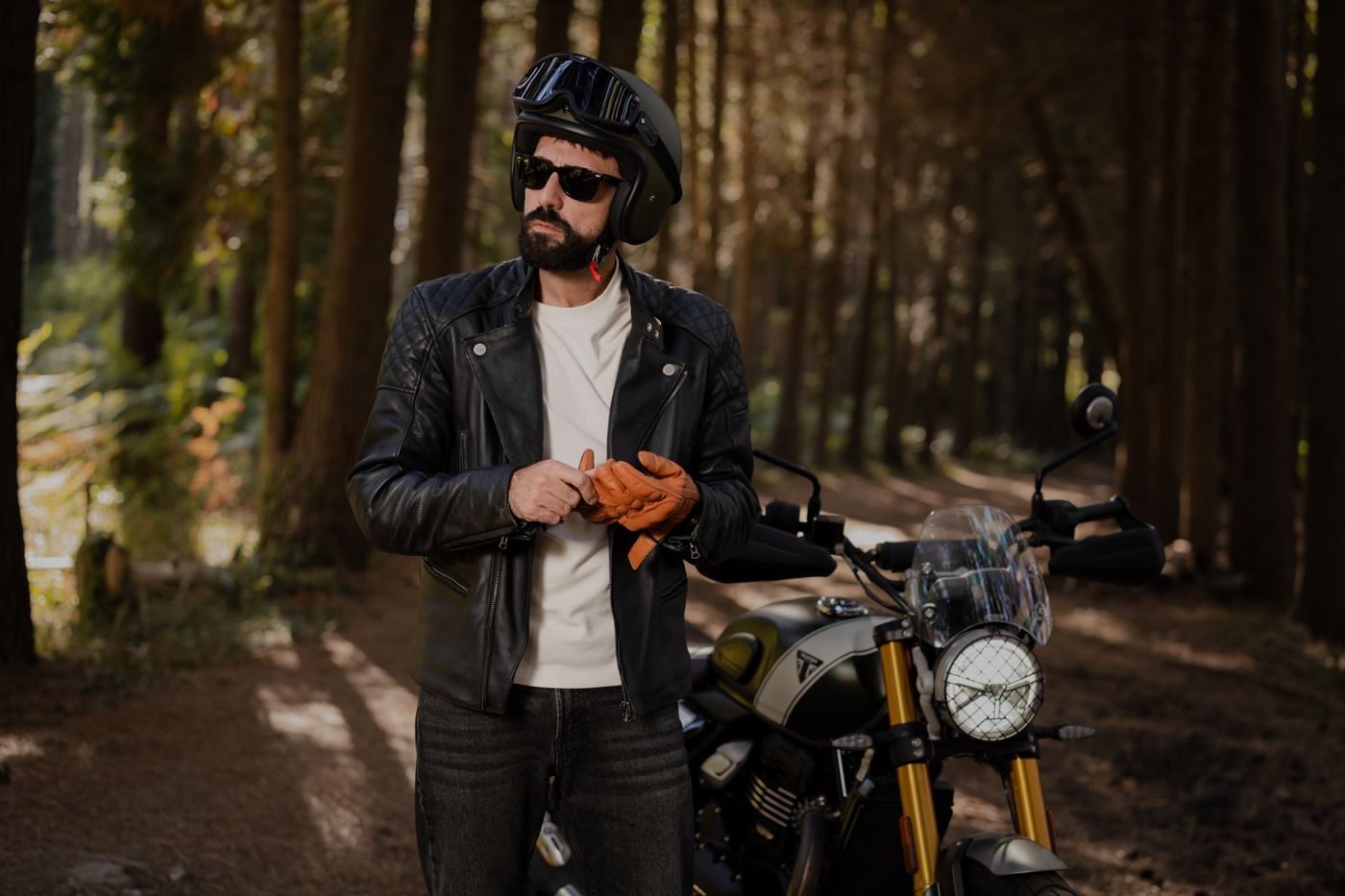 cartoon stickers for bike — Man in leather jacket preparing to ride motorcycle in peaceful forest
Photo: Andrea Prochilo / Pexels
Calendered vinyl is rolled into sheets, is thicker (typically 70–100 micron), cheaper, and holds up fine on flat or gently curved panels. Because it is rolled rather than cast, it carries internal tension; on a compound curve it wants to shrink back, and edges lift first.
Cast vinyl is poured as a liquid and cured into film, is thinner — a common high-performance cast film measures 60 micron — and takes curves without wanting to spring back. The manufacturer data for ORAFOL's ORACAL 751C high-performance cast film lists a temperature resistance, when adhered to aluminium, of −50 °C to +120 °C with no variation on short-time exposure, seawater resistance per DIN EN ISO 9227 of 100 hours at 35 °C with no variation, short-term resistance to most oils, greases and fuels, and a maximum outdoor service life — with specialist application and proper care, on vertical exposure — of 8 years for black/white and 7 years for coloured film (ORACAL 751C technical datasheet, PDF).
Those numbers are a manufacturer ceiling under the right conditions — specialist application, proper care, vertical exposure — not a promise for a sun-baked Indian tank. Treat them as the ranking order they are: cast film lasts longer than calendered, and coloured film lasts slightly less than black or white.
Will a cartoon sticker survive Indian sun and monsoon?
Rain is not the main threat. PVC film does not dissolve in water — the monsoon attacks stickers at their edges, where water works under a lifted corner while the film hardens in cycles of wet and dry. The real enemies are UV, heat cycles and pressure washers:
- UV fades pigment and embrittles the top layer of cheap films. Gloss, saturated colours and cast film all outlast pastel tones on low-grade stock.
- Heat cycles — a tank in peak Indian summer, then a cold night — stress the adhesive bond. The +120 °C short-time figure in cast-film datasheets is headroom; ordinary tank surface temperatures sit far below it.
- Fuel spills matter at the filler neck. Cast-film datasheets list short-term resistance to fuels, but "short-term" is the operative word — a sticker sitting in a persistent petrol dribble loses at the adhesive first.
- Pressure washers lift edges that nothing else would. Hold the lance at least 30 cm away and never point it directly at a decal edge.
A hard-part alternative exists for panels that take abuse: our earlier look at 3D printed accessories for bikes: what holds up in Indian heat covers where printed PLA+ parts work and where they do not.
How to apply a tank or fairing sticker without bubbles
- Wash and degrease. Warm water, then isopropyl alcohol on the panel. Petrol-station dust and tank-bag wax are the usual causes of failure.
- Position with the hinge method. Fix the sticker with two strips of masking tape along one edge, lift the rest, peel the backing, and lay it down from the taped side.
- Squeegee from the centre outwards. A firm, overlapping stroke pushes air ahead of the adhesive. On die-cut shapes, start at the widest part of the artwork.
- Post-heat the edges on curves. A hair dryer on low, run along every edge of a tank curve, relaxes the film so it stops trying to lift. This is the step most people skip, and the reason most tank decals die young.
- Leave it 24 hours before the first wash. Pressure-sensitive adhesive builds its bond with time and light pressure; an early jet wash undoes a good application.
 cartoon stickers for bike — A couple sharing a moment on motorcycles underneath a modern bridge
Photo: cottonbro studio / Pexels
Helmet stickers: keep the certification mark visible
Two-wheeler helmets in India are certified to IS 4151:2015, the Bureau of Indian Standards specification for protective helmets for two-wheeler riders, with certification handled under the BIS conformity-assessment scheme (BIS: IS 4151:2015; product manual, PDF). A certified helmet carries the BIS standard mark, usually moulded or labelled at the rear of the shell.
That mark, the visor and the retention strap are the no-sticker zones. Small cartoon decals on the rear or sides of the shell are cosmetic and optional — but keep the certification mark legible, because that mark is what a traffic officer checks. A helmet that has been dropped or cracked needs replacing; no sticker changes an impact-compromised shell.
Removing a sticker without stripping the paint
Warm the film with a hair dryer on low, peel slowly at a shallow angle, and soften residue with isopropyl alcohol. Never take a blade or a metal scraper to a tank's clear coat. Work in shade on a cool panel. The same gentleness is why fleet operators removed wrapped vinyl instead of repainting — plasticised PVC releases from sound paint when handled properly. On a repainted tank, test a corner first: fresh or cheap paint jobs lift with the adhesive, and that is a paint problem the sticker merely reveals.
Designing a cartoon sticker that survives a tank curve
Cartoon artwork survives the cutting table better than most subjects — bold outlines, solid fills and simple silhouettes translate straight into die-cut shapes. The two things that kill thin artwork are the same on a bike as on a car: no bleed and no border. Antennae, whiskers and thin limbs need a 2–3 mm border so the cut edge lands on solid colour, and the file needs proper bleed so no white sliver shows at the outline. Our walkthrough of custom stickers in any shape: artwork, bleed and cut lines explains both in detail.
For bikes, size discipline matters more than on a car: 6–8 cm is the practical sweet spot for a tank-side mascot, because a bigger shape has to fight more curvature.
That is exactly the kind of work Nuho India does every day — custom-shape and cartoon stickers cut to the artwork outline, manufactured and despatched in 24–48 hours from Coimbatore, Tamil Nadu. Send the artwork, specify the surface, and get film cut to the shape rather than a square sticker you trim yourself with scissors.
Frequently Asked Questions
More Articles You Might Like
3D Printed Motorcycle Accessories: What Actually Holds Up on the Road
3D printed motorcycle accessories only last when the filament matches the mounting point. Here is which material to use, and where, on your bike.
3D Printed Accessories for Bike: What Holds Up in Indian Heat
3D printed accessories for bike riders in India: which parts survive heat, UV and monsoon, which fail, and why a PLA+ keychain is the one safe print.
Bike Keychain Ring Sizes: What Fits an Indian Bike Key
Bike keychain ring sizes explained in millimetres: actual split ring diameters, why 25 mm fits most Indian bike keys, and how to size the tag hole.