
On-Device AI for Indian Small Businesses: Why Work Leaves the Cloud
Nuho India Team
Nuho Creative Team

Key Takeaways & TL;DR
- Edge AI runs machine learning tasks directly on interconnected edge devices, so routine drafts and lookups happen within milliseconds without constant reliance on cloud infrastructure [1].
- Gartner predicts that more than two-thirds of all enterprises globally will deploy edge AI by 2029, up from 10% in 2025 [3].
- The proportion of small businesses investing in AI increased from 26% in 2024 to 36% in 2025, making it the most popular technology investment ahead of cloud computing [5].
- The DPDP Act imposes substantial financial penalties for non-compliance by Data Fiduciaries, so "where does this data go" is now a business question, not only an IT question [4].
startup, start-up, people, silicon valley, teamwork, business
On-Device AI for Indian Small Businesses: Why Work Leaves the Cloud
Indian small businesses are moving routine AI work from cloud tools to on-device AI because it keeps customer data on their own machines, cuts recurring bandwidth and cloud costs, and keeps working when the internet drops. Cloud AI still wins for heavy reasoning, so most sellers will run both.
Key Takeaways
- Edge AI runs machine learning tasks directly on interconnected edge devices, so routine drafts and lookups happen within milliseconds without constant reliance on cloud infrastructure [1].
- Gartner predicts that more than two-thirds of all enterprises globally will deploy edge AI by 2029, up from 10% in 2025 [3].
- The proportion of small businesses investing in AI increased from 26% in 2024 to 36% in 2025, making it the most popular technology investment ahead of cloud computing [5].
- The DPDP Act imposes substantial financial penalties for non-compliance by Data Fiduciaries, so "where does this data go" is now a business question, not only an IT question [4].
What on-device AI actually means
Edge AI deploys AI algorithms and AI models directly on local edge devices, enabling real-time data processing without constant reliance on cloud infrastructure [1]. In plain terms, a small model runs on the hardware you already own: the laptop that prints your invoices, the phone that answers customer chats, the tablet at the shop counter. The model reads the prompt, drafts the reply and saves the file without shipping anything to a distant data centre.
This is not a research lab toy any more. Advances in small language models that are more compact and efficient than large language models are expanding what edge devices can do locally [1]. The practical effect for a two-person business is that summarising a supplier bill, rewriting a product line or sorting customer messages can happen on your own machine in seconds.
Why routine work is leaving the cloud
Three forces are pushing everyday AI work off the cloud and closer to the business.
First, reliability. If the business process is time-sensitive, safety-sensitive, or mission-critical, the architecture has to assume intermittent connectivity, congestion, and failure [2]. A cloud assistant that stalls every time the line wobbles is not a production tool for a shop that cannot afford to stop.
Second, cost and bandwidth. Edge inference can reduce bandwidth costs by filtering data before it leaves the local environment [2]. You stop paying to move text, invoices and images back and forth for tasks a small local model can finish on the spot.
Third, control over data. Data residency, data privacy, and data sovereignty are key drivers of edge AI, says Paul Schell of ABI Research [3]. IBM puts the same point plainly: Edge AI increases privacy because data is not transferred over to another network, where it becomes vulnerable to cyberattacks [1].
The momentum is measurable. Gartner predicts that more than two-thirds of all enterprises globally will deploy edge AI by 2029, up from 10% in 2025 [3], and IDC expects half of all enterprise AI inference workloads will run on endpoints or edge nodes by 2030 [3]. AI is moving to the edge because latency, cost, and resilience demand it, says IDC research manager Olga Yashkova [3].
Cloud AI vs on-device AI: a side-by-side comparison
| Question | Cloud AI | On-device AI |
|---|---|---|
| Where the data goes | Uploaded to a provider's data centre for processing | Stays on your own phone, laptop or shop computer |
| Internet needed | Required for every request | Not needed once the model sits on the device |
| Cost shape | Charged by usage and scales with volume | Runs on hardware you already own |
| Best suited to | Heavy reasoning, training, forecasts and long documents | Drafts, classification, voice notes and quick lookups |
| Privacy posture | Data leaves your premises and sits with a provider | Sensitive data stays on the device |
| When the line drops | Work waits until the connection returns | Local work continues while the network degrades |
Edge inference can reduce bandwidth costs by filtering data before it leaves the local environment, and local systems can continue operating when the network degrades [2]. The honest answer for most small businesses is a split: keep the heavy, slow, one-off jobs in the cloud, and move the repeatable daily drafts to your own devices.
What this means for Indian sellers
India's small businesses are adopting AI faster than they are adopting the cloud that usually carries it. The proportion of small businesses investing in AI increased from 26% in 2024 to 36% in 2025, making it the most popular technology investment ahead of cloud computing [5]. MSMEs contribute nearly 30% of India's GDP and account for a significant share of manufacturing output and exports [5], and around 42% of respondents cited increasing costs as their biggest business concern [5]. Cheaper local inference speaks directly to that concern.
There is also a regulatory reason to know where your data goes. Parliament enacted the Digital Personal Data Protection Act on 11 August 2023, and the Government of India notified the Digital Personal Data Protection Rules, 2025 on 14 November 2025 [4]. The DPDP Act imposes substantial financial penalties for non-compliance by Data Fiduciaries, with the highest penalty up to ₹250 crore for failure to maintain reasonable security safeguards [4]. The Rules introduce an eighteen-month period for phased compliance, giving organisations enough time to adjust their systems and adopt responsible data practices [4]. None of this forces you to process data on your own devices, but it does make "which tool sees my customer's phone number" a question you should be able to answer.
A practical way to think about it: keep raw customer records, order lists and GST invoices on your own machine, and let the cloud handle only the jobs that genuinely need a bigger model. Raw data may stay local, features may move to the edge, and summaries may move to the cloud [2]. If a network degrades during a monsoon shower, a local model can still make basic decisions while a cloud assistant waits for the connection [2].
For the wider shift in how Indian sellers reach customers, read Marketing Trends 2027: WARC's Five Shifts for Indian Small Sellers.
Where AI stops and printing starts
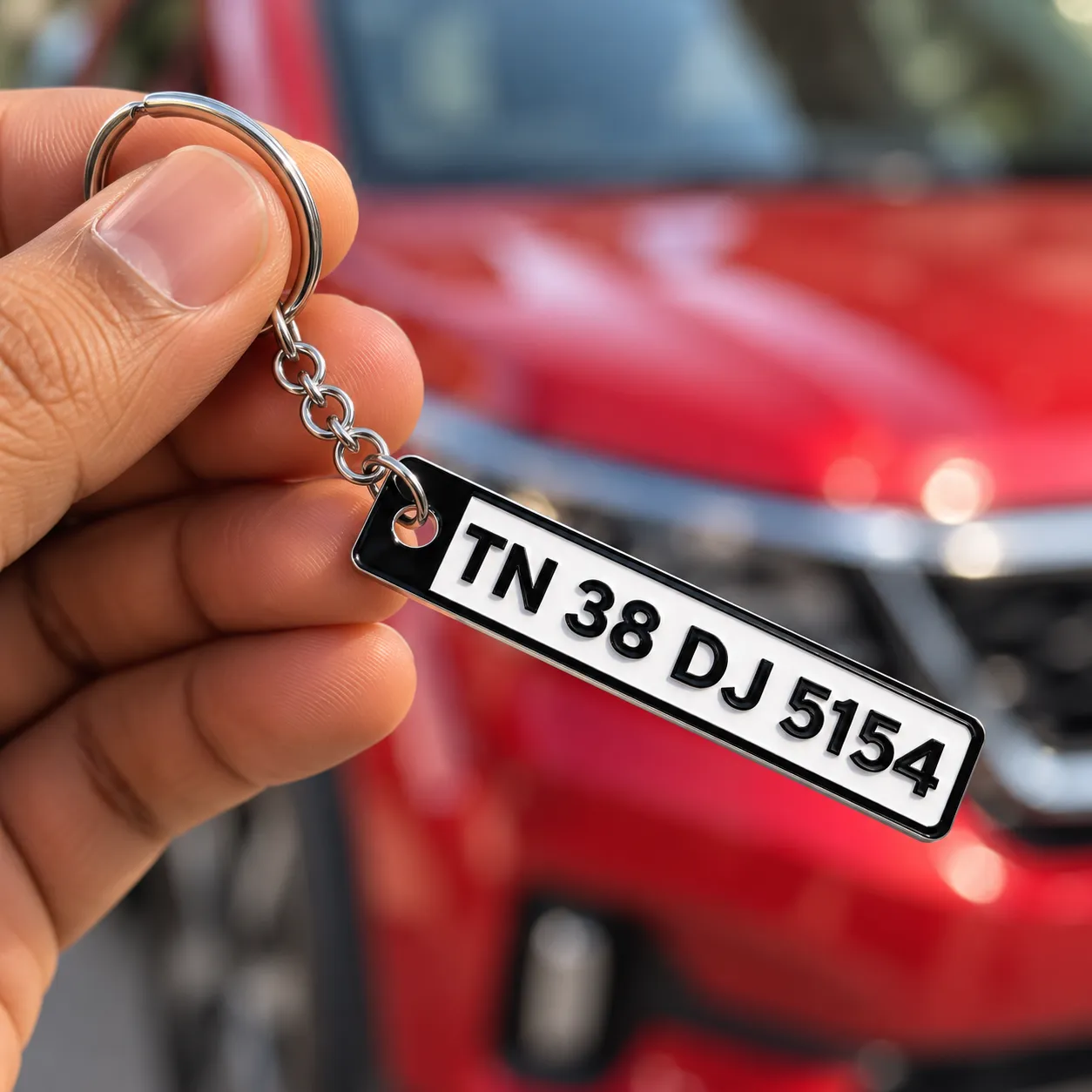
AI can draft your sticker artwork, your packaging note and your keyring name, but it cannot print, cut or ship anything. That half of branding is physical, and it is cheaper and simpler than most owners expect. Nuho India manufactures in Coimbatore, Tamil Nadu. Custom die-cut stickers are priced at ₹79 when you upload your design, personalised 3D-printed name keychains are ₹129, and mini car number-plate keychains are ₹99. Standard orders take 24 to 48 hours to manufacture, then ship pan-India through Delhivery and Bluedart with live tracking.
If you are balancing tool subscriptions against a tight budget, Small Business Branding Stickers: Labels and Packaging on a Budget shows where printed branding keeps earning its keep, and How Technology Helps a Small Business Scale Without Losing Trust covers the rest of the stack.
Frequently Asked Questions
What is on-device AI in simple terms?
It is AI that runs on your own hardware instead of someone else's servers. Edge AI deploys AI algorithms and AI models directly on local edge devices, enabling real-time data processing without constant reliance on cloud infrastructure [1].
Can on-device AI replace cloud AI completely?
No. The cloud still handles model training, fine-tuning, version control, evaluation and global analytics, while latency-sensitive decisions happen close to the source [2]. Most businesses will run both, sending only the jobs that need scale.
Does India's DPDP Act force me to process data on my own devices?
No. The law does not name on-device AI, but it does impose substantial financial penalties for non-compliance by Data Fiduciaries, including up to ₹250 crore for failure to maintain reasonable security safeguards [4]. Choosing where data is processed is how you meet those duties in practice.
Which everyday tasks suit on-device AI?
Predictive analytics, speech recognition and anomaly detection are among the machine learning tasks that take place closer to the user [1]. For a small business that means classification, sorting, dictation and quick drafts rather than long multi-step reasoning.
Do I need new hardware before I start?
Probably not. The models are getting smaller and better, and the chips are getting faster, so more AI work can run on ordinary business hardware [3]. Edge devices are still constrained by compute, memory and power [2], so heavy jobs belong in the cloud.
Conclusion: your next step
On-device AI is not a rejection of the cloud; it is a sensible split of the work, and Indian small businesses are making that split for cost, privacy and reliability reasons. Your next step this week is simple: list the three AI tasks you repeat every morning, and move exactly one of them to a tool that runs on your own device. Keep the heavy jobs in the cloud, and when the artwork is ready to become something physical, upload your design and let Nuho print it.
Sources
Featured Custom Products


Frequently Asked Questions
More Articles You Might Like

Brand Storytelling for Startups: How a Founder's Story Becomes a Moat
Short answer: Brand storytelling is turning why you started into a story other people can repeat back to you. It holds as a moat because competitors can copy your technology,...

Turn Your Hobby Into a Business: An Entrepreneur's Guide for India
Short answer: a hobby becomes a business when a stranger pays for it. Jacob went from a handful of tomato plants to a business with 7,000 plants, growing kits and merchandise [1]....

How a Startup Built a Travel Company Without Selling Packages
Bout India is a luxury and adventure travel company offering fully customised, bespoke trips to India since 2013, with every itinerary handcrafted and a destination expert owning...