
Brand Storytelling for Startups: How a Founder's Story Becomes a Moat
Nuho India Team
Nuho Creative Team

Key Takeaways & TL;DR
- A story becomes a moat only when rivals can copy your technology, capital and talent but not your reasons for starting.
- Research on small businesses found brand storytelling most strongly tied to brand positioning, the bridge between a brand's identity and how customers see it.
- A founder story has to answer why them, why now and who is with you, because a mission alone is not distinctive.
- Write the story once and reuse it unchanged on every surface, from the investor deck to the parcel seal.
- Print the story where customers touch it: parcel seals, key rings and number-plate keychains are listed in the Nuho catalogue from ₹79.
man, writing, laptop, computer, write, studying
Brand Storytelling for Startups: How a Founder's Story Becomes a Moat
Short answer: Brand storytelling is turning why you started into a story other people can repeat back to you. It holds as a moat because competitors can copy your technology, capital and talent but not why you, why now and who is with you. For an Indian small business it is the cheapest durable advantage you can build.
Key Takeaways
- A story becomes a moat only when rivals can copy your technology, capital and talent but not your reasons for starting.
- Research on small businesses found brand storytelling most strongly tied to brand positioning, the bridge between a brand's identity and how customers see it.
- A founder story has to answer why them, why now and who is with you, because a mission alone is not distinctive.
- Write the story once and reuse it unchanged on every surface, from the investor deck to the parcel seal.
- Print the story where customers touch it: parcel seals, key rings and number-plate keychains are listed in the Nuho catalogue from ₹79.
Why a story is the one thing a competitor cannot order
Shweta Rajpal Kohli, President and CEO of Startup Policy Forum, led a masterclass titled 'Startups and Storytelling: Making Narrative Your Moat' at TechSparks 2026, where she said storytelling can be a startup's strongest competitive moat [1].
In business, a competitive advantage is an attribute that allows an organization to outperform its competitors [3].
The reason a story qualifies is that the inputs are shared: as competitors gain access to similar resources such as technology, capital, and talent, founders need to explain what makes their companies different [1].
This is not an argument for printing more stickers. It is an argument for deciding what the printed things are carrying, and the supporting research sits behind that decision. For a case study of a business that built its story over years rather than weeks, read From Home Kitchen to 41 Stores: Branding Lessons for Small Businesses.
What the research on small businesses actually found
The clearest peer-reviewed evidence on this comes from a study of brand storytelling in small and medium-sized enterprises published in the Journal of Brand Management, built on a dataset of 217 German SMEs including 107 effective responses from German start-ups [2].
The results showed strong relations between brand storytelling and brand positioning which serves as the bridge between a brand's identity and its perception by customers [2].
The same study separates strategic storytelling, meaning the brand as a story, from tactical storytelling, meaning stories about the brand, and reports that strategic storytelling correlates more strongly with brand communication than tactical storytelling [2].
It also puts the small-business share of the economy in perspective, because only around 1% of all companies are large enterprises with more than 250 employees while the remaining 99% are SMEs, which employ the majority of the workforce [2].
Read those German numbers as evidence about the mechanism, not as a figure you can lift into an Indian market. The transferable part is the direction of the relationship: a written, repeated story moves brand positioning, and brand positioning is what a customer compares you with.
The three-part test every founder story has to pass
Kohli's test starts with what does not work. A mission alone does not make a startup distinctive because competitors may have similar goals [1].
Founders must explain why them and why now to make their story distinctive, and every startup is a story no one believes in yet [1].
Before you write anything, answer these three questions in plain sentences:
- Why them. What in your own history makes you the person who had to solve this problem, stated in one sentence with a real detail in it.
- Why now. What changed in the market, the technology or the cost of a component that makes this business possible this year.
- Who is with you. The first customer, the first hire, the first repeat order, the community that already buys from you.
If a sentence in your answer would also be true written by a competitor, it is not part of your story yet.
Where the same story has to hold
A brand story is the north star for a growing business, a beacon that guides what a company does in addition to what it says, and it can act as the foundation of brand guidelines that keep your mission, message, and voice consistent [4].
Consistency is the part Indian small businesses most often skip, because the deck, the marketplace listing, the WhatsApp reply and the parcel are usually written by four different people on four different days. The table below maps the story onto the objects that leave your hands, with the prices listed in the Nuho catalogue at the time of writing.
| Touchpoint | Story element it repeats | Catalogue item | Listed price |
|---|---|---|---|
| Parcel seal on every order | Why you started, seen by every buyer and every courier | Custom Shape Stickers – Upload Your Design | ₹79 |
| Key ring the customer carries daily | Why now, the milestone you hit this year | Custom Name Keychain – Personalized 3D Printed Name | ₹129 |
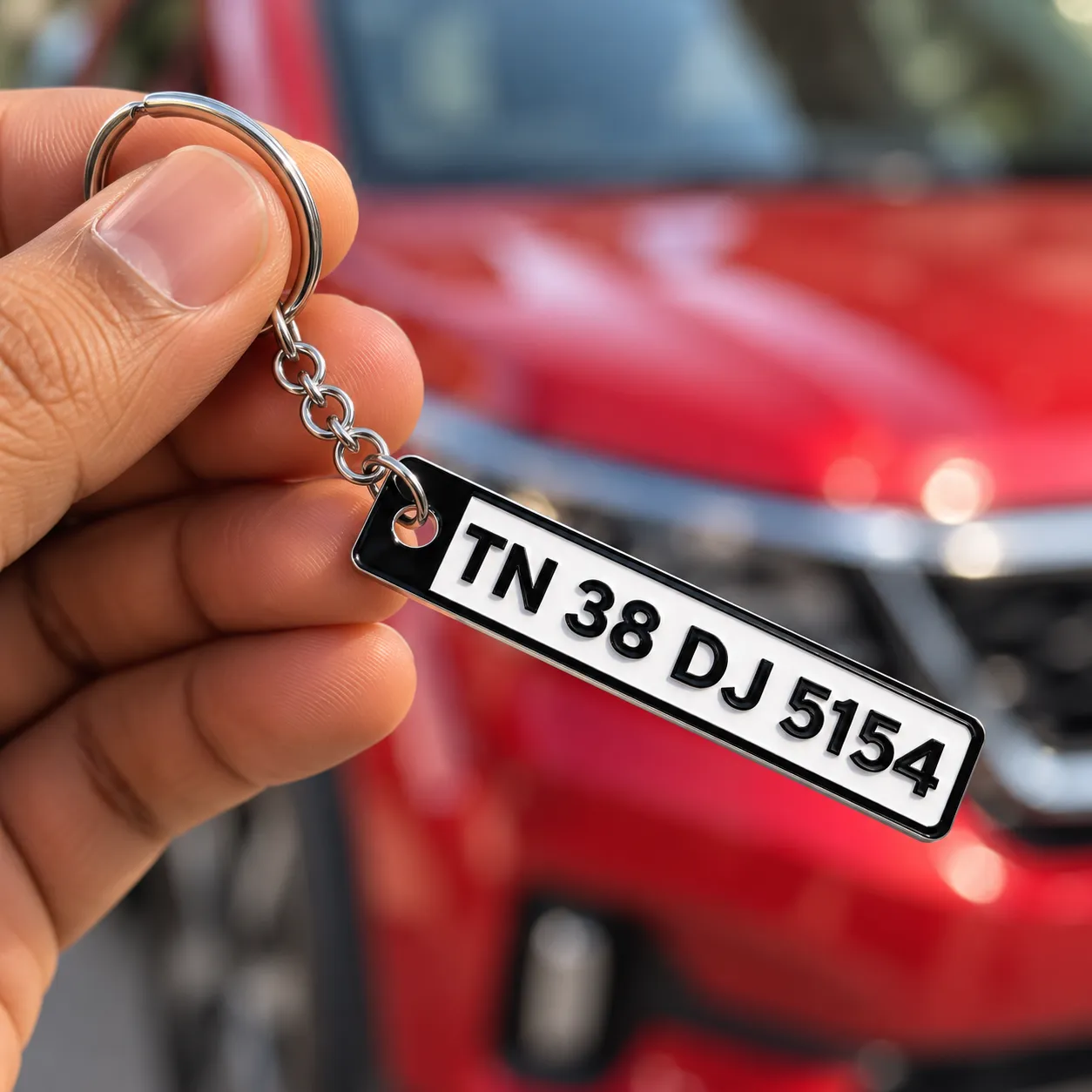
| Car or bike fob tag | Where you are from, in your own plate design | Custom 3D Printed Car Numberplate Keychain – Personalized Mini License Plate | ₹99 |
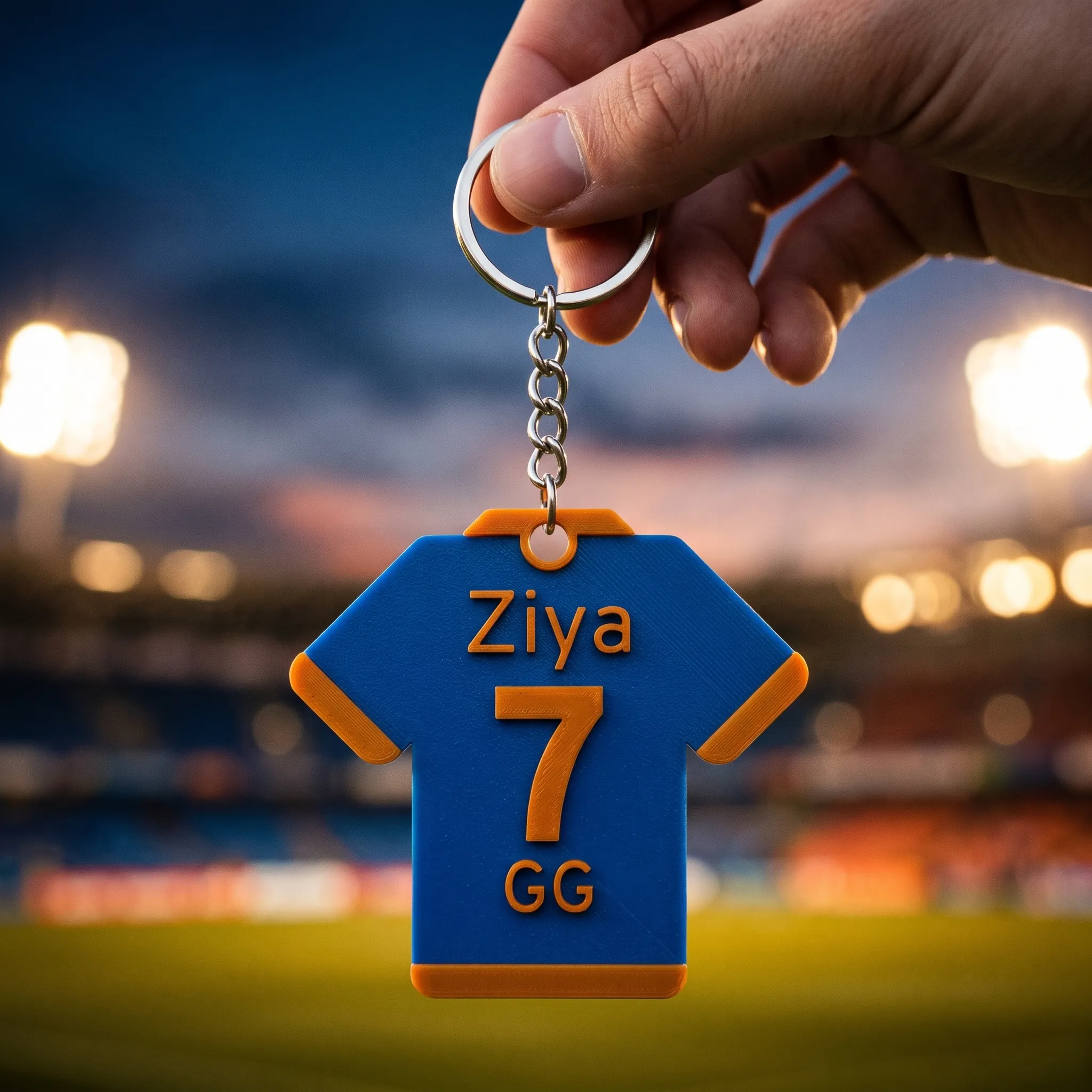
| Desk giveaway for your first ten users | Who is with you, named on the object | Custom Indian Cricket Jersey Keychain – Personalized Name & Jersey Number | ₹129 |
Nuho India is a digital manufacturing and 3D printing studio in Coimbatore, Tamil Nadu, shipping pan-India through Delhivery and Bluedart, with standard orders manufactured in 24 to 48 hours and another 2 to 4 business days in transit. That turnaround is what makes a story-driven print run practical, because you can decide the line you want on the parcel on Monday and have it sealing boxes the same week. The wider sticker side of the same decision is covered in Small Business Branding Stickers: Labels and Packaging on a Budget.
Writing the story once and reusing it
Brand storytelling uses narrative to shape and communicate the essence of your brand to your customers, a mix of facts such as the who, what and when and feelings such as the why that tell people what you are about and why they should care [4].
A brand story has characters, a conflict, rising action and a climax, and it should leave the reader or viewer with a feeling rather than a list of features [4].
That structure is the same one you already use when you explain the business to a friend, which is why the 30-minute exercise below works better than a branding workshop:
- Write the four sentences of your story using the three questions above plus the feeling you want left behind.
- Cut every adjective that a competitor could also claim honestly.
- Check the four sentences against your product page, your packaging insert and your profile bio, and make them identical.
- Print the shortest version where customers physically touch the brand, starting with a parcel seal.
If you want a longer treatment of how technology changes the trust equation for small sellers, How Technology Helps a Small Business Scale Without Losing Trust is the companion piece to this one.
Frequently Asked Questions
How long should a founder story be?
Keep two versions. The full version runs to a paragraph of about 120 words for your about page and your investor deck, and the short version runs to one line for a parcel seal, a key ring or a social bio. Both must contain the same three answers: why them, why now and who is with you.
Does brand storytelling actually change anything measurable?
The peer-reviewed study on small businesses found the strongest relationship between brand storytelling and brand positioning, which is the bridge between what your brand is and how customers perceive it [2]. Treat positioning as the measurable intermediate, and track how often buyers repeat your own line back to you in reviews and replies.
Do I need a different story for every platform?
No. Formats and audiences may change, but the facts behind the story stay the same, and a founder who rewrites the facts for investors and for customers pays for it in credibility. Write it once, then shorten it.
What if my story feels ordinary?
Ordinary details beat invented drama, and a story based on real experiences will always outlast a manufactured one. Start with the specific thing that happened, such as the first order you packed on a table at home, and let the specificity do the work.
Conclusion and your next step
Storytelling is not a campaign you run once, it is the fixed part of a business that keeps everything else consistent, and it costs nothing except the discipline of never changing the facts. Your next step is to write the four sentences today, then order one parcel seal with the first line on it so the story starts leaving your hands this week.
Sources
Featured Custom Products

Frequently Asked Questions
More Articles You Might Like

On-Device AI for Indian Small Businesses: Why Work Leaves the Cloud
Indian small businesses are moving routine AI work from cloud tools to on-device AI because it keeps customer data on their own machines, cuts recurring bandwidth and cloud costs,...
Turn Your Hobby Into a Business: An Entrepreneur's Guide for India
Short answer: a hobby becomes a business when a stranger pays for it. Jacob went from a handful of tomato plants to a business with 7,000 plants, growing kits and merchandise [1]....

How a Startup Built a Travel Company Without Selling Packages
Bout India is a luxury and adventure travel company offering fully customised, bespoke trips to India since 2013, with every itinerary handcrafted and a destination expert owning...