
3D Printed Accessories for Bike: What Holds Up in Indian Heat
Nuho India Team
Nuho Creative Team
Key Takeaways & TL;DR
- Safe 3D printed bike accessories carry no structural load: key tags, number-plate keychains, cable spacers and workshop jigs last, while levers, pegs and racks should never be printed.
- PLA has a glass transition of 60-65 C, so a dark printed part left in Indian summer sun can soften, sag and lose clamp load even though the part never breaks.
- ASA holds its shape to roughly 100 C and resists UV about ten times better than ABS, which is why it suits outdoor brackets and PLA+ suits pocket keychains.
- A Nuho India PLA+ tag weighs 14-18 g, is printed at about 215 C with letters fused to a continuous backing plate, and costs Rs 129-149 with 24-48 hour manufacturing in Coimbatore.
- Creep is permanent: any printed part kept under sustained compression, from a clip to a phone mount, will loosen over months and must be designed for adjustment.
3D printed accessories for bike owners: the short answer
Most 3D printed accessories for bike use survive only when they carry no structural load. A printed key tag, a number-plate keychain, a cable spacer or a workshop jig lasts years. A printed brake lever, footpeg, luggage hook or anything that holds the bike's weight does not — and should not be attempted. Material choice decides the rest: PLA+ softens near 60 °C, PETG a little higher, ASA and TPU higher still.
That is the honest split. Everything below explains where the line sits, using published material data rather than optimism.
Which 3D printed accessories for a bike actually hold up?
The first question is not "can it be printed" but "what happens when it fails". A part that fails quietly — a tag that falls off a ring, a spacer that crumbles — is an inconvenience. A part that fails under load at 60 km/h is a different category of problem.
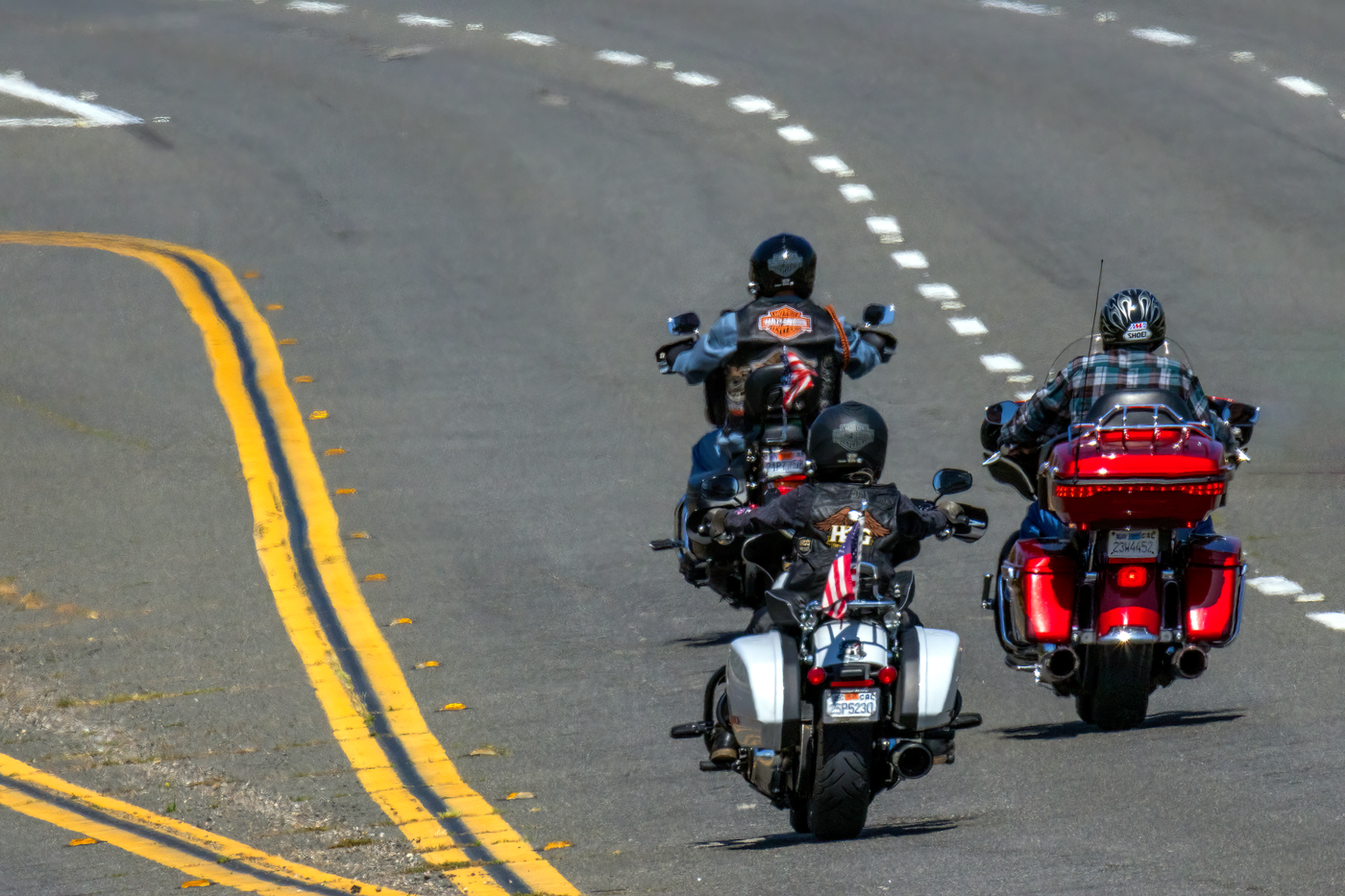 3d printed accessories for bike — Three motorcyclists riding freely on a highway, enjoying the thrill of the open road
Photo: David Brown / Pexels
Sort every idea into three buckets before printing anything:
| Part | Load it carries | Verdict in Indian conditions |
|---|---|---|
| Name or number-plate keychain | Hanging weight only, 10–30 g | Good — the safest thing you can print for a bike |
| Cable guide, spacer, blanking plug | Light, non-critical | Good if clamped gently |
| Phone mount body | Phone weight plus vibration | Marginal — vibration fatigue cracks printed arms |
| Mirror blanking cap, lever perch cover | Cosmetic | Fair — cosmetic only, replace when brittle |
| Number-plate frame or surround | Cosmetic but visible | Poor idea — plates must stay fully legible |
| Brake lever, gear lever, footpeg, stand | Rider safety | Never |
| Luggage rack, top-box bracket, helmet lock | Load-bearing | Never |
| Anything inside the engine, fuel or brake system | Safety-critical | Never |
The pattern is simple: cosmetic and hanging parts are fine; safety and load-bearing parts are not, no matter how good the print looks.
PLA+, PETG, ASA or TPU — which filament suits a bike part?
Filament choice matters more on a vehicle than anywhere else, because a bike lives outdoors. Sun, heat and rain attack the same part from three directions.
| Material | Softening point (published) | UV behaviour | Best bike use |
|---|---|---|---|
| PLA / PLA+ | Glass transition 60–65 °C (PLA data) | Degrades in long sun exposure | Indoor parts, keychains, gifts |
| PETG | Higher than PLA, still softens well below ASA | Moderate | Spacers, clips, low-load brackets |
| ASA | Glass transition around 100 °C, roughly ten times the UV resistance of ABS (ASA data) | Good outdoor stability | Outdoor brackets, cosmetic covers |
| TPU | Flexible, low stiffness | Good | Vibration pads, gaskets, soft clamps |
Plain PLA is the weakest choice for anything that lives on a bike, because its glass transition of 60–65 °C is close to the surface temperature a dark plastic part reaches in direct summer sun in Tamil Nadu. PLA+ improves toughness — it takes impacts and flexing far better than standard PLA — but it is still the same polymer family, so the heat ceiling does not move much.
ASA is the material most people should reach for when a part must stay outdoors year-round. It is not as easy to print, it warps on large flat sections, and it needs an enclosure for good results, which is why small workshops often skip it.
Why does Indian summer break printed bike parts?
Three failure modes do almost all the damage.
 3d printed accessories for bike — Blurred image of a motorcyclist racing at high speed on an outdoor track
Photo: cnrdmroglu / Pexels
Heat creep. A printed part is under constant stress from its own layer bonding, and that stress releases as the material approaches its glass transition. A bracket clamped tight at 25 °C can relax and sag at 55 °C, and the clamp load disappears. This is why printed phone mounts loosen on hot days even when nothing has broken.
UV yellowing and embrittlement. Unstabilised polymers absorb ultraviolet light, and the surface chains break down. The part does not fail dramatically; it goes chalky, then a clip tab snaps off in your hand. Dark dyes absorb more heat and accelerate the same process.
Monsoon moisture and heat cycles. PLA+ does not swell like wood and does not rust, so rain alone is not the problem. The problem is water sitting in layer gaps, followed by sun, followed by contraction. Repeated cycles widen any weak bond line, especially on parts printed with poor layer adhesion.
The practical answer for a bike that parks outside every day: keep printed parts small, keep them out of direct sun where possible, and use them for things that hang rather than things that hold.
What should never be 3D printed for a bike?
Be direct about this list, because printed parts look stronger than they are:
- Brake and clutch components. Any printed lever, linkage or reservoir cap is a safety risk. Printed parts creep under sustained load and fail without warning.
- Steering, suspension or axle hardware. Layer adhesion is directional, and a printed part is weakest exactly where a bolt clamps it.
- Footpegs and stands. A rider's full weight plus vibration on a 15 % glass-filled part is not a test anyone should run.
- Luggage racks and mounts that carry a load over bumps. Fatigue cracks start at sharp internal corners and grow invisibly.
- Anything that covers or alters the number plate. The plate must stay fully visible and legible; a printed surround that shadows a character or changes its shape invites a fine and, worse, a failed inspection.
- Helmet shells or retention parts. Never.
If a part's failure could put you on the road, buy the engineered original. A printed copy is not a substitute for a certified component, and no filament datasheet changes that.
Where printed parts genuinely earn their place on a bike
These are the jobs where 3D printing is not a compromise but the sensible option, because the part is small, cheap to iterate, and non-critical.
- Number-plate and name keychains. A flat PLA+ tag at 14–18 g adds no swing to a key ring and keeps a metal fob from scuffing against other keys.
- Cable and hose spacers. A printed clip that holds a cable off a hot surface costs a few rupees and takes ten minutes to fit.
- Model-specific workshop jigs. A cradle that holds a fork leg or a caliper while you work is the ideal printed part: used indoors, never on the road.
- Helmet hooks and garage hangers. Wall-mounted, load-light, and easy to replace when they age.
- Number-plate shaped desk pieces and gifts. Scale models of a registration, printed as a keepsake, are the safest possible use of the technology — and the one most people actually want.
Notice how many of these are about identity rather than mechanics. That is not a limitation of 3D printing; it is where the value sits for a bike owner.
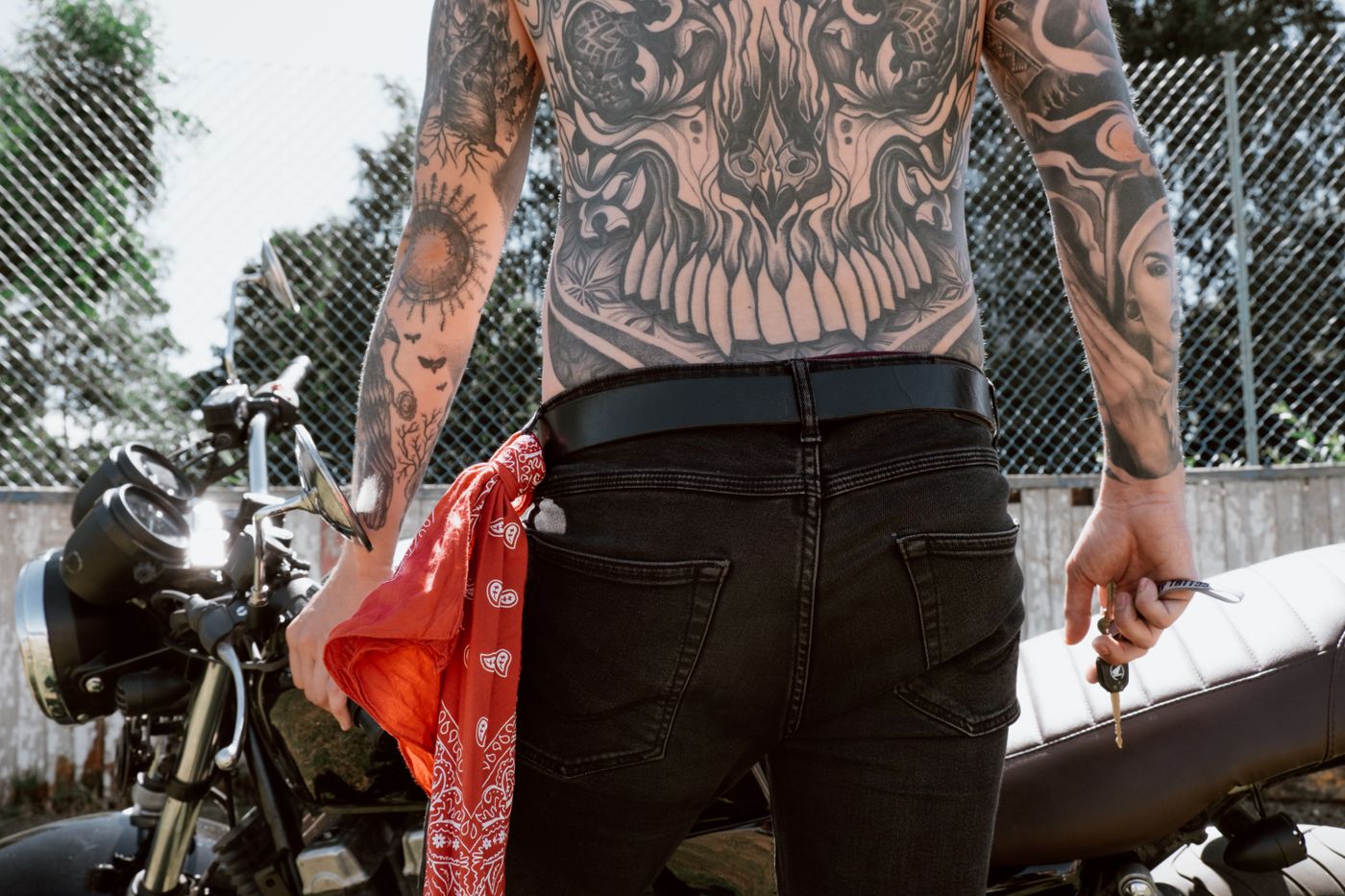 3d printed accessories for bike — Back view of a tattooed biker holding keys beside a motorcycle, showcasing detailed body art and black jeans
Photo: cottonbro studio / Pexels
Do 3D printed keychains survive a bike key ring?
Yes — this is the one bike accessory where PLA+ is the right material rather than a compromise. A keychain carries 10–30 g, never sees engine heat, and spends its life in a pocket or hanging from an ignition barrel.
At Nuho India, tags are printed in PLA+ at about 215 °C, with the letters fused into a continuous backing plate rather than glued on as separate cut-outs. That construction matters on a key ring: a glued letter is a small part waiting to peel off, while a fused letter is the same piece of plastic as the plate behind it. Each tag weighs roughly 14–18 g, which is light enough that a keyless fob still sits the same way in a pocket, and the range runs ₹129–₹149 with 24–48 hour manufacturing in Coimbatore, Tamil Nadu.
For layout specifics — how a real registration scales down to something readable at 60–75 mm — see the guide to custom number plate keychains for bike and car. If you are sizing a tag for a specific car and want the scale factors, the name and number plate keyring sizing guide has the numbers.
One caveat that applies to every printed tag: keep it off a hot dashboard or a bike seat parked in the sun. PLA+ is tough, waterproof and pocket-proof, but it is not a 70 °C material. Treat it as a key ring accessory, not a trim part.
How do you fit a printed part so it does not crack?
Printed parts fail at clamps and sharp corners. Five habits prevent most of it:
- Print the load in-plane. Orient the part so layers run across the load, not along it. A bracket printed flat on its base splits along layer lines when pulled.
- Use washers and a rubber interface. A washer spreads clamp load; a thin TPU or rubber pad absorbs vibration and stops the screw biting into plastic.
- Do not overtighten. Hand-tight plus a thread-locker is enough for a printed bracket. Torque figures from metal parts do not transfer.
- Add clearance, not force. If a part needs to be forced into place, it is preloaded and will creep. Reprint 0.2 mm looser instead.
- Re-check after a week. Tighten nothing; just look for white stress marks, which are the first sign of a crack forming.
If a printed part has to be trimmed, seal the cut edge with a light pass of sandpaper rather than leaving a ragged layer seam that invites a crack.
What does a printed bike accessory actually cost?
Material is rarely the dominant cost. A 15 g key tag uses a small fraction of a ₹1,000-plus spool, so the price you pay is mostly design time, machine time, finishing and packing. That is why a custom tag sells for ₹129–₹149 rather than ₹15, and why a one-off bracket printed at home still costs more in electricity and failed attempts than the plastic suggests.
For anyone printing at home in India, the more relevant cost is storage. Filament picks up moisture within weeks in coastal and monsoon conditions, and wet filament prints with popping, weak layer adhesion and a dull surface — which is exactly how a bike part ends up failing early. The filament storage guide for Indian humidity covers boxes, silica and meter readings in detail.
The honest limits of 3D printed bike accessories
Three limits are worth stating plainly, because they are what separates a useful accessory from a broken one.
No certification. A printed part has no automotive approval, no load rating and no warranty against failure. It is a craft object, not a component.
Creep is permanent. Plastic under sustained load deforms over months, even at room temperature. Any printed part that stays compressed — a clip, a spacer, a mount — will loosen. Design for adjustment or accept replacement.
Colour and finish age. UV exposure dulls and yellows printed parts outdoors. A printed cosmetic cover on a bike will look tired within a season in full sun. Indoors, a printed keychain or decor piece keeps its colour for years.
None of these limits apply to the thing most riders actually want: a personalised tag that carries their registration and name, hangs from the ignition key, and costs less than a tank of fuel. That is a small, light, indoor-tolerant object, and PLA+ handles it well. You can see the current range and shapes at nuho.in/products.
For anything that carries load, holds the bike up, or stops it — buy the original part. The best 3D printed bike accessory is the one that never has to be strong.
Frequently Asked Questions
More Articles You Might Like
Bike Keychain Ring Sizes: What Fits an Indian Bike Key
Bike keychain ring sizes explained in millimetres: actual split ring diameters, why 25 mm fits most Indian bike keys, and how to size the tag hole.
Bike Keychains With Name and Number: Fit, Size and Style
Bike keychains with name and number need the right size, weight and font. Here is what fits a bike key fob, what stays legible, and what to order.
Best Keychains for Bikes in India: Weight and Fit
The best keychain for a bike is light and flat, not heavy. Here is what fits an Indian bike key, why PLA+ beats metal and acrylic, and what a bike tag costs.