
3D Printed Keychain Care: How to Keep the Letters From Wearing Off
Nuho India Team
Nuho Creative Team
Key Takeaways & TL;DR
- Gentle and dry is the whole routine: a soft brush along the layer lines, cool water only if needed, and air drying.
- Heat is the everyday enemy, because PLA+ starts losing stiffness at a heat deflection temperature of 55 °C and a parked dashboard passes that easily.
- Lettering that is part of the print holds its ground; painted or surface-printed lettering is what actually rubs off.
- Design decides lifespan: strokes near 1.5 mm and raised lettering about 1 mm tall survive pocket wear far better than hairline shapes.
- Shade and drying matter: keep the tag out of direct sun, wipe it dry after rain, and choose PETG when the item lives in a vehicle.
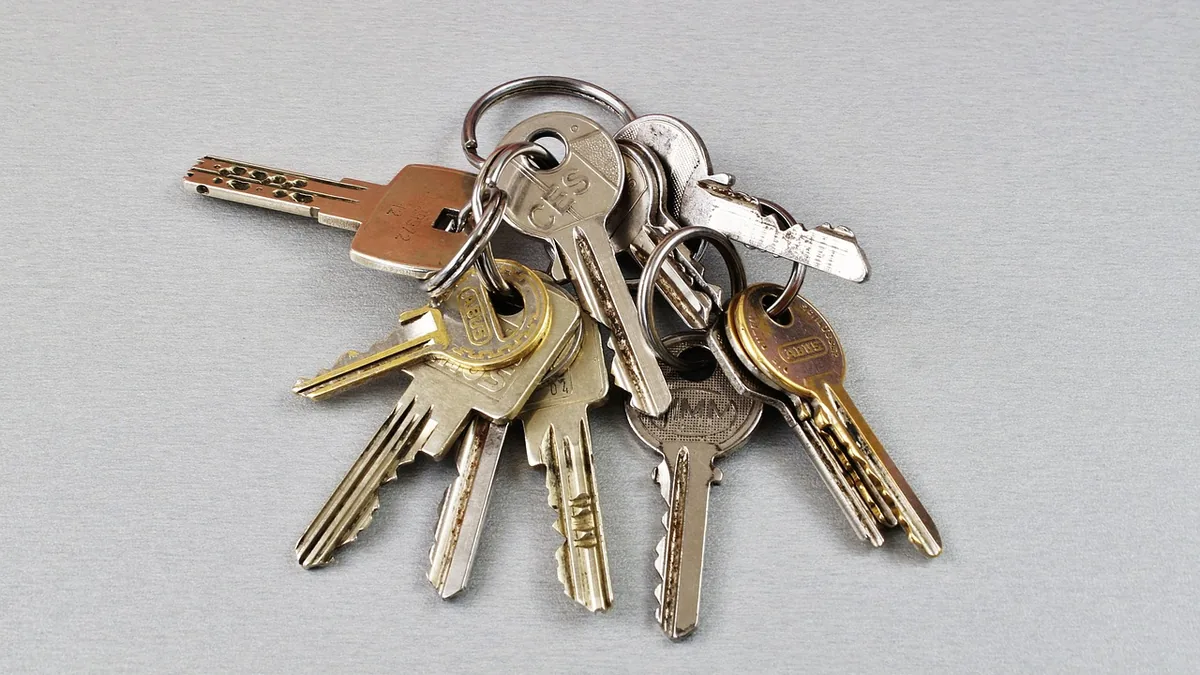
key, keychain, door key, house keys, close up, locking system
3D Printed Keychain Care: How to Keep the Letters From Wearing Off
Short answer: Keep it dry, cool and far from solvents. Brush dust out of the layer lines with a soft dry brush, wipe grime with a cloth dampened in cool water and a little mild soap, then air dry at room temperature. Never use hot water, a dishwasher or a hairdryer, and never leave the tag on a sunlit car dashboard.
Key Takeaways
- Gentle and dry is the whole routine: a soft brush along the layer lines, cool water only if needed, and air drying.
- Heat is the everyday enemy, because PLA+ starts losing stiffness at a heat deflection temperature of 55 °C and a parked dashboard passes that easily.
- Lettering that is part of the print holds its ground; painted or surface-printed lettering is what actually rubs off.
- Design decides lifespan: strokes near 1.5 mm and raised lettering about 1 mm tall survive pocket wear far better than hairline shapes.
- Shade and drying matter: keep the tag out of direct sun, wipe it dry after rain, and choose PETG when the item lives in a vehicle.
Why the letters wear in the first place
A printed keychain does not wear out in the middle; it wears at the surface. The letters stand proud of the tag, so they are the first thing to meet a coin, a second key, a zipper or the rough inner seam of a jeans pocket. Every one of those contacts removes a little material from the highest points, and the highest points are the strokes of your name.
Separating the tag from heavy, sharp metal tools on the same ring is what keeps a multi-colour finish looking crisp [1], and that single habit prevents more damage than any cleaning product ever will.
How the lettering is produced matters just as much as how you treat it. Colour in a multi-colour print goes all the way through the plastic, so it cannot chip, scratch off or fade the way paint does [2]. A painted or marker-filled groove is a surface layer only, and a surface layer is exactly what abrasion removes. Finally, the geometry itself sets a floor: a 0.4 mm nozzle needs roughly 1.5 mm of stroke to give a solid, durable letter, and thinner letters print but wear away and break off [3].
| Threat | How the letter suffers | What actually helps |
|---|---|---|
| Abrasion | Coins, keys and sharp tools rub the raised strokes flat | Keep the tag on its own ring, away from heavy metal tools |
| Heat | Above its heat deflection temperature, PLA+ softens and strokes take a set | Never leave it on a dashboard, near a stove or in a closed car |
| Sunlight (UV) | Long exposure embrittles the plastic and dulls colour | Store in shade; pick PETG for anything kept outdoors |
| Solvents and abrasives | Alcohol, acetone and scouring pads dull the surface and lift fills | Clean with cool water and mild soap only |
| Drying with heat | A hairdryer or hot water warps thin walls and letters | Pat dry, then air dry at room temperature |
The safe cleaning routine
Dust first, water second, and never heat. This is the order that keeps both the tag and the lettering intact.
For everyday dust, a soft brush or microfibre cloth is usually enough, and for grime, cool soapy water and a careful rinse will do the job [4]. Work the brush along the direction of the layer lines rather than across them, because the lines are what trap dust in the first place. For letter grooves and the ring hole, the corner of the cloth or a soft artist's brush reaches where a sponge cannot.
The second half of the routine is a list of things not to do. Bleach, solvents, alcohol, acetone and strong household cleaners are unnecessary for ordinary dirt, and hot water is the one real hazard for PLA [4]. Concretely:
- Dry brush along the layer lines to lift loose dust from the letter faces.
- Dampen, do not soak. A cloth wrung out in cool water with a speck of mild dish soap is plenty.
- Wipe across the letters gently, then rinse the soap off with a brief cool rinse.
- Pat with a lint-free cloth and leave the tag to air dry at room temperature.
- Skip the dishwasher, the hairdryer and the sunlit windowsill — all three add heat to a material that does not want it.
Indian water is worth a thought too: a keychain that has been through a wet commute or a splash of hard tap water should be patted dry before it goes back on the ring, so mineral marks do not settle into the layer lines.
Heat: the parked-car problem
This is where Indian conditions stop being a background detail and start being the main risk. Nuho's published material data lists a heat deflection temperature of 55 °C for PLA+ and 75 °C for PETG, and the wider range runs to 60 °C for TPU, 65 °C for tough resin and 85 °C for ABS.
The independent numbers line up. A neat PLA has a heat deflection temperature of approximately 55 degrees Celsius and loses stiffness above its glass transition temperature [5], which means the tag does not need to melt to be ruined — it only needs to get warm enough to relax while a set of keys presses against it.
Parked cars are the extreme case. Interior temperatures in parked automobiles in a hot climate commonly reach 150 degrees Fahrenheit, and dashboard temperatures can approach 200 degrees Fahrenheit [6]. That is roughly 66 °C of cabin air and about 93 °C on the dashboard surface, measured in unshaded cars in a hot climate such as Cape Canaveral, Florida, and both figures sit far above the point where PLA+ holds its shape. A tag left on the dash through a hot afternoon is being heat-treated, not stored.
The practical version of that advice:
- Do not park a keychain on the dashboard. Use a cupholder, a glovebox or your pocket.
- Do not hang it from the ignition in direct sun where it rests against a heated surface.
- Choose PETG for vehicle use. Nuho's own material table positions PETG for functional outdoor and water-resistant parts, and its 75 °C margin gives real headroom.
- Give a soft tag a flat rest. A letter face pressed against hot plastic under load is how strokes end up permanently bent.
Sun, colour and the monsoon
Heat is quick damage; sunlight is slow damage, and it is the kind nobody notices until the tag looks tired. Lettering that runs through the part is not the problem: colour in a multi-colour print goes all the way through the plastic, so it cannot chip, scratch off or fade the way paint does [2]. What degrades is the plastic around it. After 12 weeks of UV degradation, pure PLA became highly brittle and lost shape stability [7], which is a long exposure by keychain standards but a short one for a tag that lives clipped to a bag strap in Chennai or Mumbai sun.
Monsoon conditions bring a different, simpler problem: water sitting in the layer lines and the ring hole. It is not the rain that damages a PLA+ tag, it is leaving the water there. Wipe the tag dry after a wet commute, dry the ring hole specifically, and store spare tags indoors rather than on a balcony ledge.
Practical shade habits:
- Clip the keychain to the inside of a bag rather than the outside during long outdoor waits.
- Keep spares in a drawer, not on a sunlit windowsill or a car door pocket.
- If a tag must live outdoors or on a vehicle, order it in PETG rather than PLA+.
- Accept that gentle colour mellowing over years is normal weathering, not a defect.
Design and ordering choices that make lettering last
Care only protects what the design allows. Four decisions made before the print starts matter more than any cleaning cloth:
- Stroke width. A 0.4 mm nozzle needs roughly 1.5 mm of stroke to give a solid, durable letter, and thinner letters print but wear away and break off [3]. Ask for a heavy weight rather than a hairline script.
- Raised, not painted. Lettering printed as part of the model carries colour through the whole body; paint and marker fills sit on the surface and rub off first [2]. If you want contrast, a two-colour print gives it without a fragile layer.
- Wall thickness. Nuho specifies a minimum wall thickness of 1.2 mm for FDM parts and 0.8 mm for resin. Thin walls flex, and a flexing letter face is a letter face that sheds its edges.
- Material matched to where it lives. PLA+ for pockets, desks and gift boxes; PETG for dashboards, bike keys and outdoor use.
If you want the making side of this, Nuho's guide to how a 3D printed keychain is made shows where the lettering geometry comes from, and the print settings guide for keychains covers the strength and perimeters behind it. The material trade-offs in one place are in the best material for keychains comparison.
Care by material at a glance
| Material | Heat deflection (Nuho data) | Where it is at home | Care note |
|---|---|---|---|
| PLA+ | 55 °C | Everyday keychains, desk and gift items | Cool cleaning only; keep off dashboards |
| PETG | 75 °C | Vehicles, outdoors, wet use | Best choice for a car or bike key |
| TPU 95A | 60 °C | Flexible tags and bumpers | Wipe clean; it flexes rather than snaps |
| Tough resin | 65 °C | Fine-detail lettering and miniatures | Avoid abrasives; resin finishes scratch visibly |
| ABS | 85 °C | High-heat parts and enclosures | Tolerates heat, still dislikes solvents |
Keychains this routine applies to
The routine is identical across the range; only the material and the exposure change.
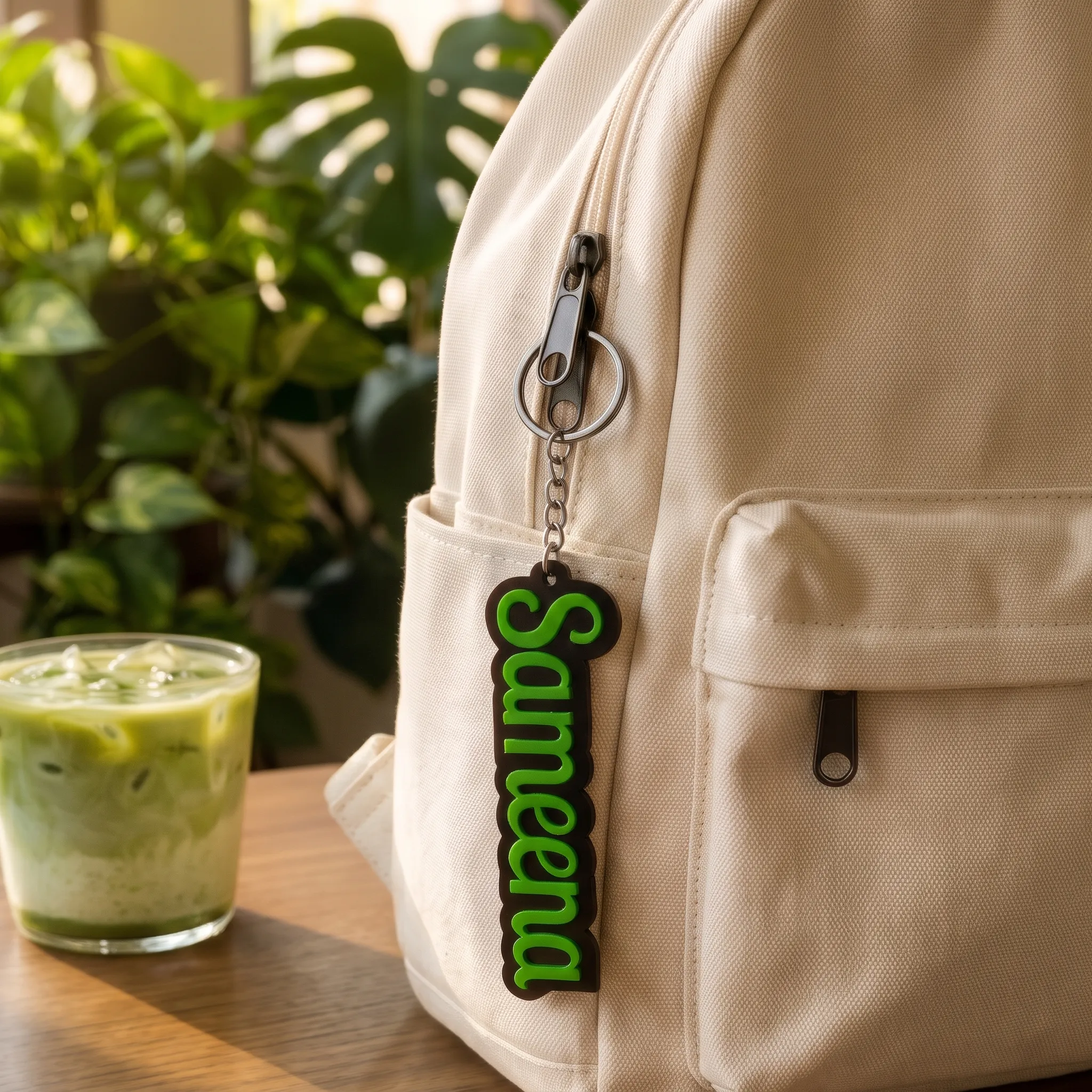
- Custom Name Keychain – Personalized 3D Printed Name at ₹129 — the everyday case: pocket wear, soft cleaning, dry storage.
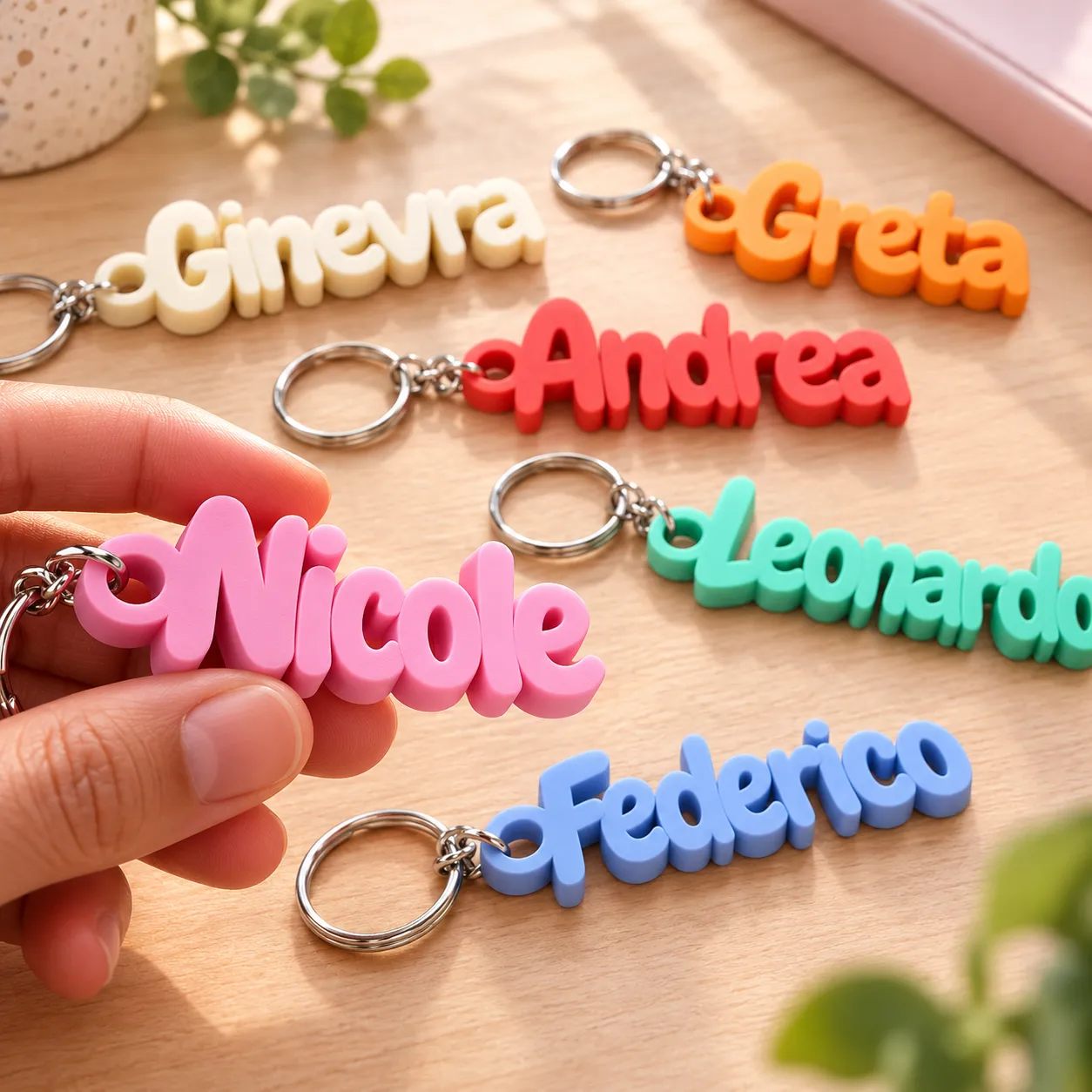
- Custom Name Keychain – Personalized 3D Printed Keyring | Parametric Design at ₹79 — repeated geometric strokes show abrasion first, so keep it off the tool ring.
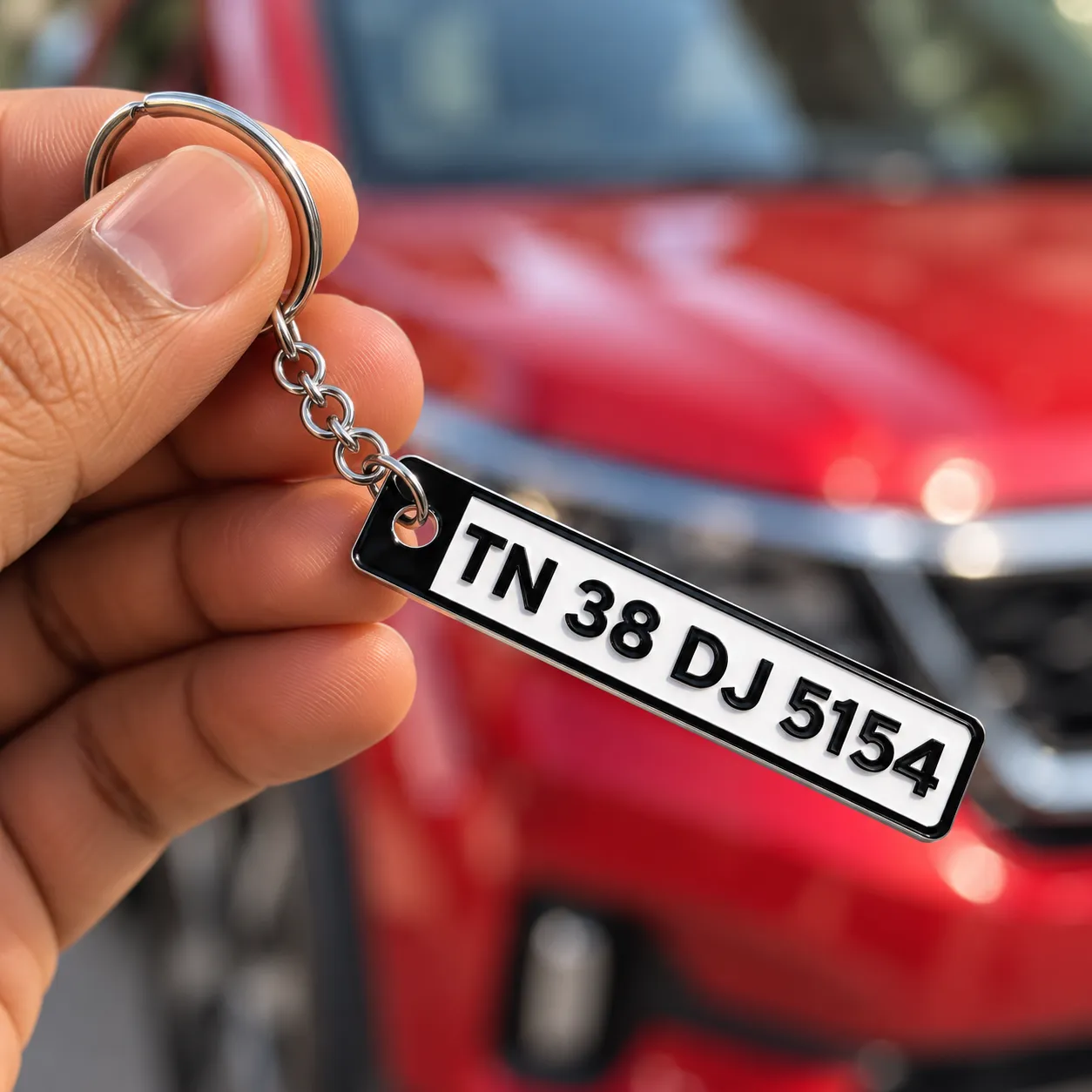
- Custom 3D Printed Car Numberplate Keychain – Personalized Mini License Plate at ₹99 — the one most likely to sit on a dashboard, so PETG and shade both matter.
For the durability side of the same question, see how colours and wear are handled in the name keychain guide for bike keys, and the food-safe version of the cleaning logic is covered in the 3D printed cake topper cleanup guide.
Frequently asked questions
Can you wash a 3D printed keychain?
Yes, with cool water and mild soap. Brush dust along the layer lines first, wipe with a wrung-out cloth, then air dry. Do not soak it, do not use a dishwasher and do not dry it with a hairdryer.
Will the letters rub off a personalised keychain?
Lettering that is printed as part of the model will not rub off, because the colour runs through the plastic rather than sitting on top of it [2]. Painted or marker-filled letters do wear, and thin strokes break off altogether if they are narrower than the nozzle can print solidly [3].
Can I leave my keychain on the car dashboard?
No. Interiors of unshaded parked cars in a hot climate commonly reach about 66 °C, with dashboards near 93 °C [6], and PLA+ begins losing stiffness at 55 °C [5]. A dashboard keychain should be PETG at minimum, and out of the sun in any case.
Does isopropyl alcohol damage a 3D printed keychain?
It is unnecessary and unhelpful. Alcohol, acetone, bleach and strong household cleaners can dull the surface and lift colour fills [4], while cool water and mild soap clean ordinary dirt just as well.
How do I look after a keychain through the monsoon?
Wipe it dry after a wet commute, dry the ring hole specifically, and keep spares indoors rather than on a balcony. Standing water in the layer lines is the problem, not the rain itself.
What material survives heat better than PLA+?
PETG, with a heat deflection temperature of 75 °C against 55 °C for PLA+ in Nuho's published material table. It is the sensible choice for anything that rides in a car, on a bike or outdoors.
The bottom line
3D printed keychain care is a short list done consistently: brush it, wipe it with cool water, dry it, keep it out of heat and direct sun, and keep metal tools off its ring. Lettering printed through the body of the tag survives all of this; the letters that fail are the painted ones, the hairline-thin ones and the ones left on a dashboard.
The next step is to check where your keychain actually lives. If it rides in a car or spends its days on a bag strap, replace it with a PETG version — order a custom name keychain in PETG, and it will still look like itself years from now.
Sources
- How to Care for and Clean Your 3D-Printed Home & Desk Decor — LayerPlay
- How Multi-Colour 3D Printing Works — Formfinity
- Keychain Generator: Custom 3D-Printed Keychain Maker — Meshcast
- How to Clean 3D Printed Items Safely — Soloré Creations
- Thermoforming Characteristics of PLA/TPU Multi-Material Specimens — Polymers (PMC)
- FSEC-PF-160-89: Automobile Interior Temperatures and Car Shades — Florida Solar Energy Center
- Effect of Recycling and UV Ageing on the Properties of PLA-Based Materials — PMC
Featured Custom Products
Frequently Asked Questions
More Articles You Might Like

Brand Storytelling for Startups: How a Founder's Story Becomes a Moat
Short answer: Brand storytelling is turning why you started into a story other people can repeat back to you. It holds as a moat because competitors can copy your technology,...

On-Device AI for Indian Small Businesses: Why Work Leaves the Cloud
Indian small businesses are moving routine AI work from cloud tools to on-device AI because it keeps customer data on their own machines, cuts recurring bandwidth and cloud costs,...
Marketing Trends 2027: WARC's Five Shifts for Indian Small Sellers
WARC's The Marketer's Toolkit 2027 finds that only 46% of marketers expect business conditions to improve in 2027, a drop of nearly 20 percentage points over three years [1]. For...