
Print on Demand Cross-Selling: 7 Upsell Tactics That Grow AOV
Nuho India Team
Nuho Creative Team

Key Takeaways & TL;DR
- Average order value is total revenue divided by the number of orders, so one extra item in the cart moves it directly.
- Cross-selling adds a complementary product while upselling upgrades the existing one, and both work best after the main choice is made.
- Indian festive orders are growing while average order value slipped, so bundle the value instead of discounting harder this season.
- Track the share of orders that carried at least one add-on, per offer and per placement, before you copy anyone else's benchmark.
Custom Shape Stickers – Upload Your Design
Print on Demand Cross-Selling: 7 Upsell Tactics That Grow AOV
Average order value is total revenue divided by the number of orders, and the fastest way to lift it in print on demand is to add one complementary item instead of cutting the price of the first. Cross-selling adds a second product, upselling upgrades the first, and both raise order value without spending more on ads.
Key takeaways
- Average order value is total revenue divided by the number of orders, so one extra item in the cart moves it directly.
- Cross-selling adds a complementary product while upselling upgrades the existing one, and both work best after the main choice is made.
- Indian festive orders are growing while average order value slipped, so bundle the value instead of discounting harder this season.
- Track the share of orders that carried at least one add-on, per offer and per placement, before you copy anyone else's benchmark.
What average order value actually measures
Average order value is the average amount a customer spends per transaction, calculated by dividing total revenue by the number of orders placed rather than by the number of customers or sessions [3]. A store that books Rs 40,000 from 200 orders has an average order value of Rs 200, and every bundle, threshold and add-on you sell is measured against that single number.
| Metric | How it is calculated | What it does not tell you |
|---|---|---|
| Average order value | Total revenue divided by number of orders | Whether more orders arrived or each order got bigger |
| Orders with an add-on | Orders carrying at least one extra item divided by total orders, times 100 | Whether the add-on earned anything |
| Conversion rate | Orders divided by sessions | How much each converted order was worth |
Salesforce advises tracking average order value alongside conversion rate and revenue per visitor, since a high average order value with dipping conversion rates can mean you are gaining on order size while losing on transaction volume [3].
Cross-selling and upselling are not the same move
Cross-selling is a sales technique involving the selling of an additional product or service to an existing customer, and large businesses usually combine cross-selling and up-selling techniques to increase revenue [1]. Amazon's seller guide draws a cleaner line: upselling encourages a customer to consider a more expensive or premium version of a product, whereas cross-selling recommends separate products in addition to the original product [2].
Where upselling increases the value of an order for a single item, cross-selling increases the number of items sold [2]. The distinction also decides placement: upselling belongs on pages where the customer is already in a comparison mindset, while cross-selling is most effective at checkout, where the primary decision has already been made [3].
Why order value matters more in India this festive season
Admitad's annual Diwali e-commerce insights, drawn from over 700,000 online orders made in India across the 2024 and 2025 festive seasons, found that online orders during Diwali 2025 rose 15% year-on-year while gross merchandise value increased 8% and average order value dipped from Rs 3,830 to Rs 3,550 [5].
More shoppers placing smaller orders is exactly the pattern that pushes average order value down, and a seller who competes only on festive discounting ends up shipping more parcels for less money. The counter-move is a bundle that reads as value rather than a price cut: one price, several items, and no coupon habit created. The Diwali gifting guide on this site uses the same logic for gift budgets, where the cap is decided before the items are chosen.
Seven tactics that raise order value without cutting price
1. Bundle complementary items at a visible saving
Salesforce recommends crafting bundles that create perceived value by presenting complementary items together at a discount, curated around items customers already buy together [3]. HubSpot's cross-selling guide calls special packages and bundles that combine the principal product with complementary items another top strategy, noting that the bundle is often cheaper than ordering the items separately [4].
The discount has to be sized properly. A research study appearing in the Journal of Risk and Financial Management found that if a discount is only 20%, customers still prefer to buy individual products, while at 45% or higher the preference for bundles is higher than for individual products [4].
2. Put the smallest add-on at checkout
Cross-selling is most effective on product pages and at checkout, where the primary decision has already been made [3]. A Rs 15 die-cut sticker sitting at checkout asks for almost no decision effort and lifts the cart without touching the price of the main item.
3. Offer an upgrade before you offer a coupon
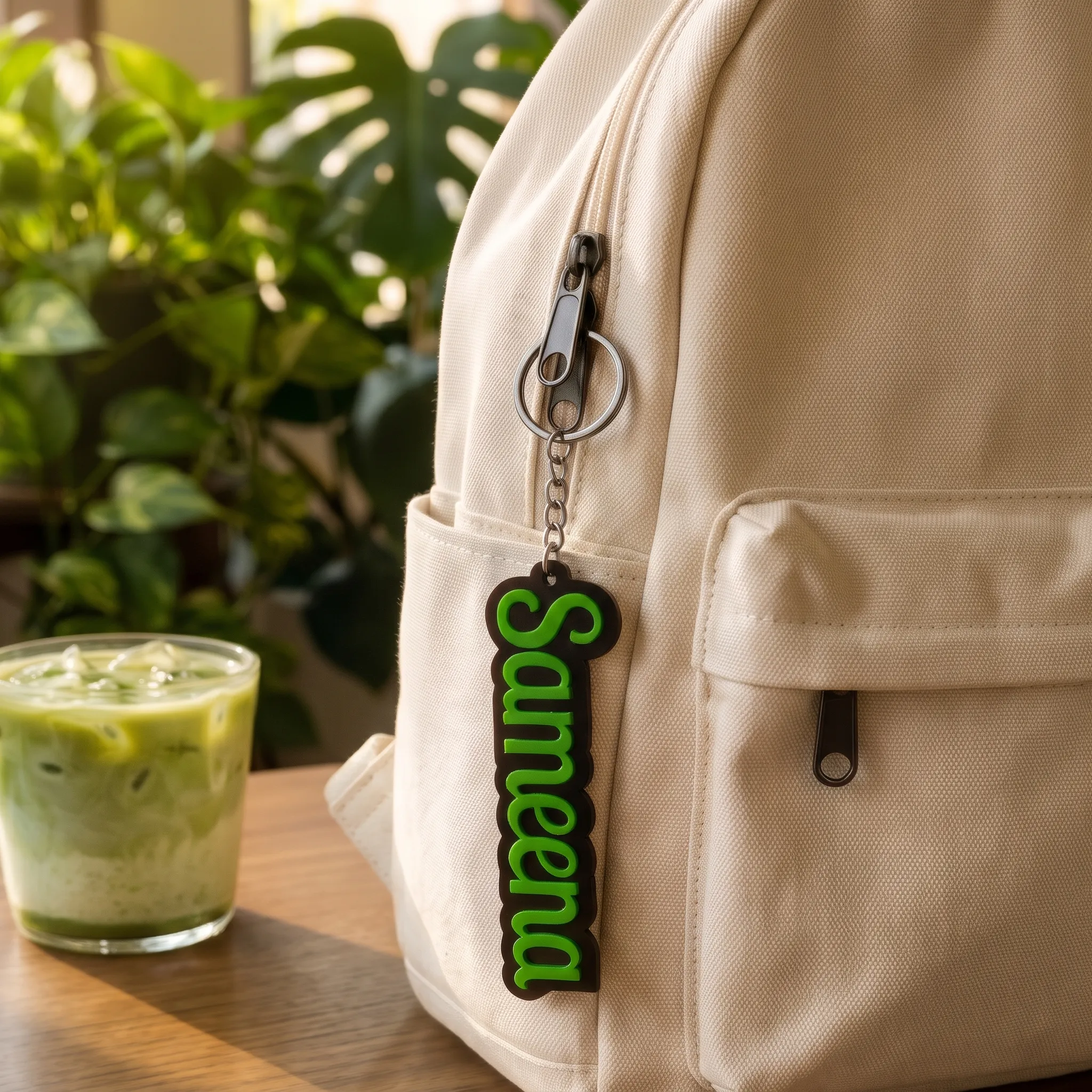
Upselling works best on product detail pages where customers are already in a comparison mindset [3]. The step from a single glossy die-cut sticker to a personalised 3D printed name keychain at Rs 129 is an upgrade the customer can see instead of a discount they have to calculate, and the personalised keychains guide sets out what that upgrade involves.
4. Set a free-shipping threshold above your current average
Salesforce suggests setting a free shipping threshold at roughly 30% above your current average order value so it stays aspirational and still attainable [3]. For a Rs 79 sticker order that lands near Rs 103, which is usually one small add-on away from the threshold.
5. Make one relevant offer after the purchase
Cross-selling fits naturally on product pages, checkout pages, thank you pages and post-purchase emails, according to HubSpot's cross-selling guide [4]. The offer after payment should stay a single item, and it should be the item that completes what the customer has just bought rather than a second wish-list product.
6. Keep every recommendation relevant
According to Forbes research, 81% of modern customers expect brands to deliver a personalized experience [4]. HubSpot's guide is blunter about the failure mode: do not cross-sell just for the sake of it, make sure that every recommendation genuinely adds value to the customer's purchase [4].
7. Sell the solution, not the pile of parts
Wikipedia's overview of cross-selling describes a third kind called selling a solution, where the customer buys the outcome rather than the individual parts [1]. For a small business ordering branding that is a custom sticker sheet, a matching name keychain and a house name plate presented as one gift set instead of three separate listings.
A worked example in rupees
These are the catalogue prices listed on nuho.in for four items that naturally sit together, and the arithmetic is deliberately simple so you can see exactly where the order value moves.
| Cart state | What the customer adds | Order value |
|---|---|---|
| Baseline | Custom Shape Stickers – Upload Your Design | Rs 79 |
| Checkout cross-sell | Chai Cup Cheer Sticker added to the same cart | Rs 94 (Rs 79 + Rs 15) |
| Product-page upsell | Custom Name Keychain chosen instead of the base item | Rs 129 |
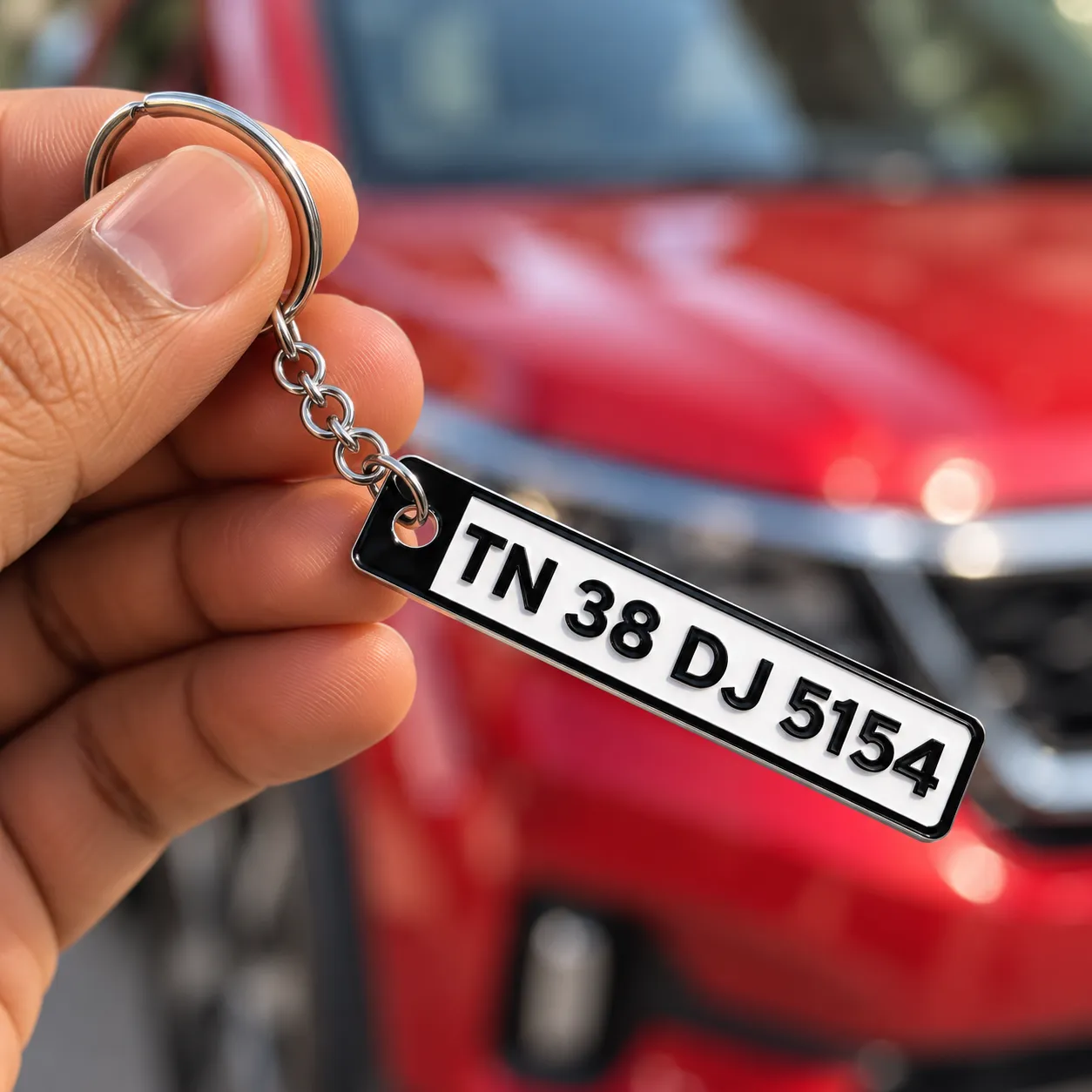
| Solution bundle | Custom 3D Printed Car Numberplate Keychain alongside the name keychain | Rs 228 (Rs 129 + Rs 99) |
Why the effort is worth it, and how to watch it
The typical odds of closing a sale are 60-70% with an existing customer while it is only 5-20% with a new one [4]. McKinsey reports that cross-selling can increase sales and profits by 20% and 30%, respectively [4], and HubSpot research found that cross-selling accounts for 21% of their organizations' revenues, on average [4].
Measure it with one number you compute yourself: orders that carried at least one add-on, divided by total orders, multiplied by 100. Read it per offer and per placement, because a checkout add-on and an upgrade on the product page are not the same experiment.
Nuho manufactures standard orders in 24 to 48 hours and ships pan-India through Delhivery and Bluedart, with 2 to 4 business days of transit to roughly 27,000 serviceable pincodes. Set any threshold offer with that window in mind, because the line you are removing from the customer's decision is the postage, not the delivery date.
Conclusion
Average order value moves for unglamorous reasons: one extra item at checkout, one visible upgrade on the product page, one threshold that is close enough to reach, and one relevant offer after payment. Cross-selling adds, upselling upgrades, and placement decides whether either of them is seen. For a print on demand seller working in INR, the bundle does the persuading that a discount used to do.
Next step: pick one product page this week, add one complementary item at checkout and one upgrade on the page itself, then read the add-on share of orders for 14 days before changing anything else.
Frequently asked questions
What is the difference between cross-selling and upselling?
Cross-selling recommends a separate product in addition to the original item, while upselling encourages a customer to consider a more expensive or premium version of the same item [2]. Both raise average order value, but they ask the customer for two different decisions.
How do you calculate average order value?
Average order value is calculated by dividing total revenue by the number of orders placed in the period, so Rs 40,000 from 200 orders gives an average order value of Rs 200 [3].
Is cross-selling worth it for a small store?
McKinsey reports that cross-selling can increase sales and profits by 20% and 30%, respectively [4], and the typical odds of closing a sale are 60-70% with an existing customer while it is only 5-20% with a new one [4]. The tactics above are the low-cost version of that opportunity.
Does raising average order value hurt conversion?
It can, if the offer is irrelevant or the threshold is out of reach. Salesforce recommends watching average order value next to conversion rate and revenue per visitor, because gaining on order size while losing on transaction volume is not growth [3].
How long does Nuho take to make and ship an order?
Standard orders are manufactured in 24 to 48 hours and then travel 2 to 4 business days with Delhivery or Bluedart to roughly 27,000 serviceable pincodes across India. That is the window to promise when you build a delivery-related offer.
Sources
Featured Custom Products

Frequently Asked Questions
More Articles You Might Like

How Technology Helps a Small Business Scale Without Losing Trust
A small business becomes a trusted brand when the knowledge in the owner's head becomes a record the whole team can follow. Digital order logs, UPI at the counter, WhatsApp...

GIVA's $100M Round: What Indian E-Commerce Sellers Can Actually Copy
GIVA raised over USD 100 million from Multiples Alternate Asset Management to widen its store network, manufacturing and inventory, and the round points to where Indian e-commerce...

From Home Kitchen to 41 Stores: Branding Lessons for Small Businesses
Anju Kalhan turned a personal food experiment into Bliss by Anju, a plant-based snack brand that now sells across 41 retail stores in India. The lesson for small Indian businesses...