
Anime Keychains in India: Custom Name Styles That Last
Nuho India Team
Nuho Creative Team
Key Takeaways & TL;DR
- A daily-carry keychain should be 50-60 mm wide, 3-4 mm thick and 14-18 g; Nuho India prints custom PLA+ name tags at Rs.129-Rs.149 with 24-48 hour despatch.
- Unmodified acrylic (PMMA) behaves in a brittle manner under impact and scratches more easily than glass, which is why thin acrylic charm edges chip in a pocket.
- Indian fair dealing under Section 52 of the Copyright Act 1957 covers private or personal use, research, criticism and news reporting, not commercial reproduction of a character.
- PLA+ is printed at about 215 C, softens around 60-65 C, and is insoluble in water, so monsoon rain is fine but a parked-car dashboard is not.
- Katakana transliterates syllables, not letters: Rahul becomes ラーフル and Priya becomes プリヤ, so a native reader may spell a name differently.
What Makes an Anime Keychain Last in an Indian Pocket?
A keychain that survives Indian daily carry is flat, 3–4 mm thick, 14–18 g and printed in one piece: no glued-on face, no brittle edge, no metal bezel grinding against the fob. Nuho India prints custom name keychains in PLA+ for ₹129–₹149, with 24–48 hour manufacturing and despatch from Coimbatore, Tamil Nadu. Character art is a licensing question, not a printing one.
Anime keychains in India are sold as one product but are really two. One is character merchandise — a specific hero's face, licensed or not. The other is an anime-style name keychain: your name in a bold display face, a katakana line beside it, a colourway borrowed from a series. The first is someone else's property; the second is yours, and it is the one a printer can make well.
This guide covers both: what each type is made of, why the cheap ones fail at the edges, where Indian copyright law sits, and how to size an anime-style name keychain that still looks right after a year on a bike key.
Anime Keychain or Anime-Style Name Keychain: Which One Are You Buying?
Four constructions dominate the Indian market. They fail in completely different ways, and the failure mode matters more than the artwork.
| Type | How it is made | Weight (approx.) | What fails first | India price band (approx.) |
|---|---|---|---|---|
| Printed acrylic charm | UV print on 3 mm PMMA sheet, laser cut | 4–8 g | Chips at the cut edge, print scuffs | ₹49–₹199 |
| PVC / rubber charm | Moulded soft PVC, painted | 6–12 g | Paint rubs off high points | ₹99–₹399 |
| Hard enamel metal | Stamped metal, enamel fill, plated rim | 15–30 g | Plating wears, rim dents | ₹250–₹800 |
| 3D printed PLA+ | FDM print, letters fused to one backing plate | 14–18 g | Nothing structural; colour fades in sun | ₹129–₹149 |
Those bands are approximate street prices and move with imports and sales — re-check before you buy. The construction differences do not move.
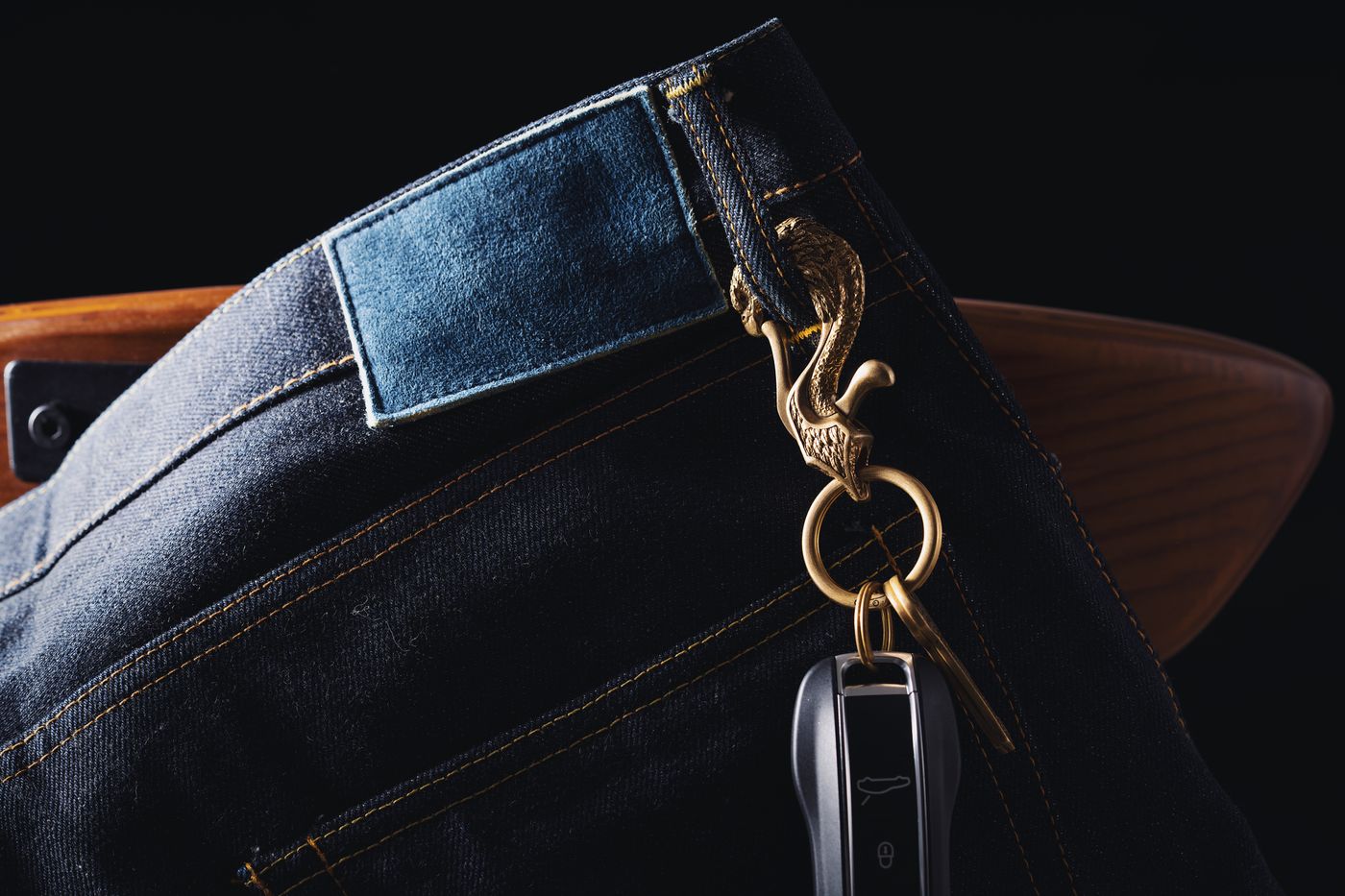 anime keychain — Close-up of denim jeans with a keychain featuring a carved eagle and car key. Stylish accessory detail
Photo: COPPERTIST WU / Pexels
The acrylic charm is the default "anime keychain under 100" purchase, and it is fine as a collectible, poor as a keychain: a keychain lives on a ring with keys pressing against it. The enamel pin is the opposite problem — beautiful, heavy, and it swings.
A printed PLA+ tag sits in the useful middle. It is one continuous piece, so there is no face plate to peel and no plated rim to wear through. The trade-off is resolution: FDM printing resolves detail at roughly 0.4 mm, so fine line art will not survive the translation. Bold silhouettes, thick letterforms and flat colour blocks do.
Why Do Acrylic Anime Keychains Chip at the Edges?
Because acrylic is glass-clear and glass-brittle. Poly(methyl methacrylate), the plastic sold as acrylic or Perspex, transmits up to 92% of visible light at 3 mm thickness, which is exactly why character prints look so vivid on it — and, per the material's published properties, unmodified PMMA "behaves in a brittle manner when under load, especially under an impact force" and is "more prone to scratching than conventional inorganic glass."
Translate that into a pocket. An anime charm is cut as a silhouette: a head, a hair spike, a sword tip. Those shapes leave narrow necks of 2–3 mm between the ring hole and the body, and that neck takes every impact when the bunch lands on a table. The print is a thin surface layer, so a scuff takes colour with it and the clear edge turns cloudy against coins.
Density tells the same story from another angle. Acrylic sits at 1.17–1.20 g/cm³ and PLA at 1.21–1.43 g/cm³ (PLA properties), so equal-size tags weigh about the same. The difference is that a printed tag can be 3.5 mm thick through the whole body, loop included, instead of 3 mm of brittle sheet with a punched hole.
Is It Legal to Sell Anime Character Keychains in India?
Usually not, and this is the part most listings skip. India's copyright law runs on the Copyright Act, 1957, and its exceptions are narrower than the American fair-use doctrine people quote online. As the statute's fair-dealing section is summarised, Indian fair dealing is limited to private or personal use including research, education, criticism or review, and reporting of current events.
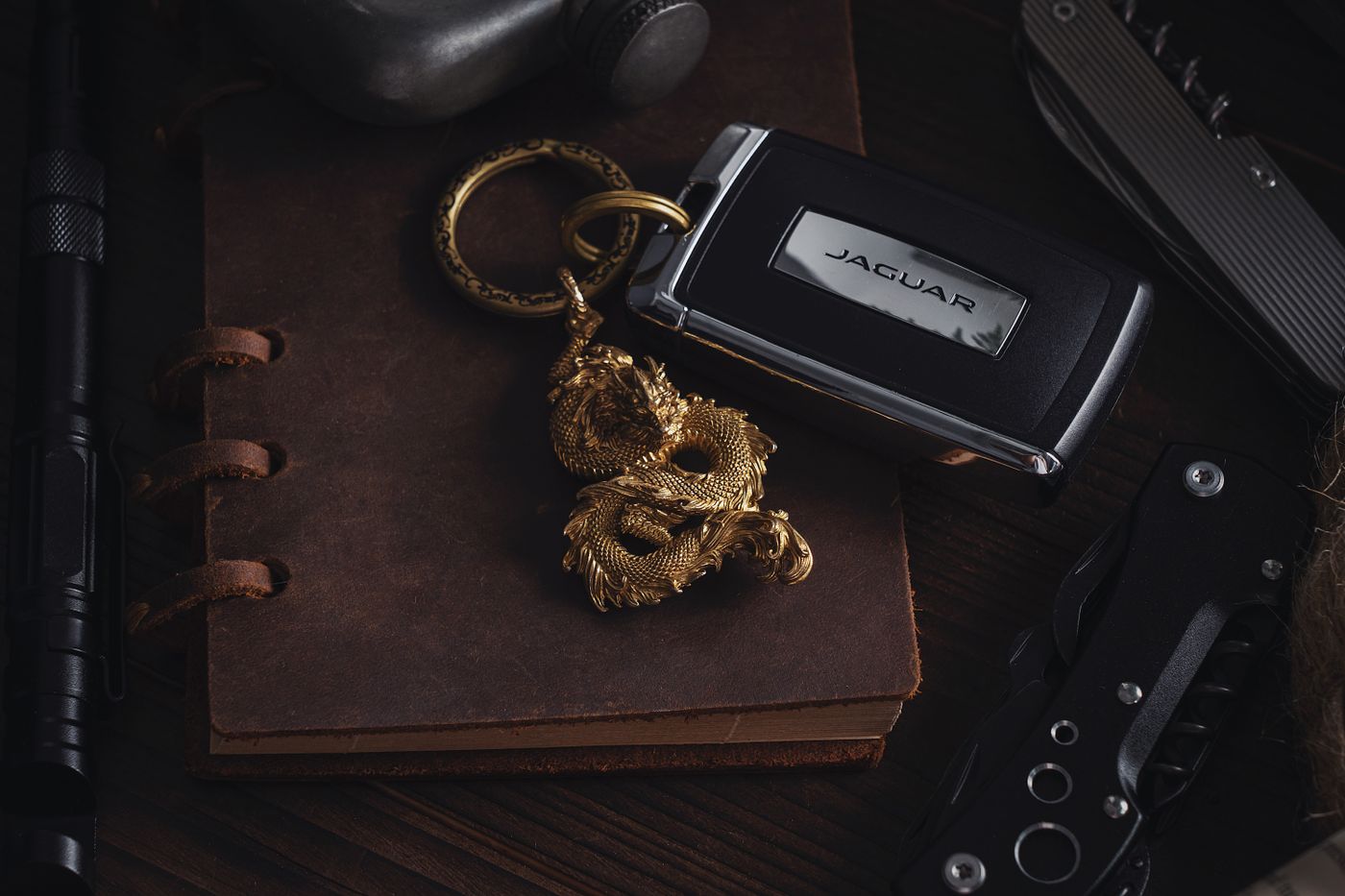 anime keychain — Stylish still life featuring a dragon keychain, luxury car key, and retro notebook on a rustic surface
Photo: COPPERTIST WU / Pexels
A keychain you print for yourself falls inside private use. Five hundred keychains with a licensed character's face, sold on a marketplace, does not — that is commercial reproduction of an artistic work, and it needs a licence from the rights holder. Nothing about 3D printing changes that; the tool is irrelevant, the copy is the issue.
So Nuho India prints names, initials, number plates, and original mascot shapes you supply or approve — not copyrighted characters, logos, or team crests we have no licence for. If you want a specific character on your keys, buy licensed merchandise from an official store. If you want the look — the palette, the chunky lettering, the mascot energy — that is a design brief we can print, and it is legally clean because the artwork is yours.
How Big Should a Custom Anime Name Keychain Be?
Size is the difference between a keychain people keep and one that ends up in a drawer. Four numbers decide it:
- Width: 50–60 mm. Past 60 mm the tag catches on the pocket seam before the keys do.
- Thickness: 3–4 mm. Under 3 mm the loop becomes the weak point; over 4 mm it feels like a tile in your pocket.
- Weight: 14–18 g. A bike ignition barrel takes a key plus a light tag comfortably. A 40 g metal charm on a keyless car fob is another story — see our material comparison for keychains.
- Letter height: 6–8 mm for a name. Below 6 mm, counters inside A, B, D and R start closing up at 0.4 mm nozzle resolution.
For a backpack zip, go smaller and lighter — 45–50 mm is plenty, and the sizing notes for backpack name tags apply directly. For a bike key, keep the bunch under about 60 g; a heavy bunch pulls the key sideways in the barrel and wears the ignition switch.
One detail that decides how it hangs: the ring hole. A 4 mm hole takes a standard 25–30 mm split ring with room to swing. Punch it at 3 mm and the tag hangs stiff, wearing one point of the loop.
How Do You Get a Japanese Name Keychain That Reads Right?
Katakana does not transliterate letters, it transliterates syllables — and Indian names rarely map one-to-one. The safest approach is to write the name in Latin letters in a heavy display face and set katakana beside it as a secondary line, so the tag reads correctly even if the transliteration is imperfect.
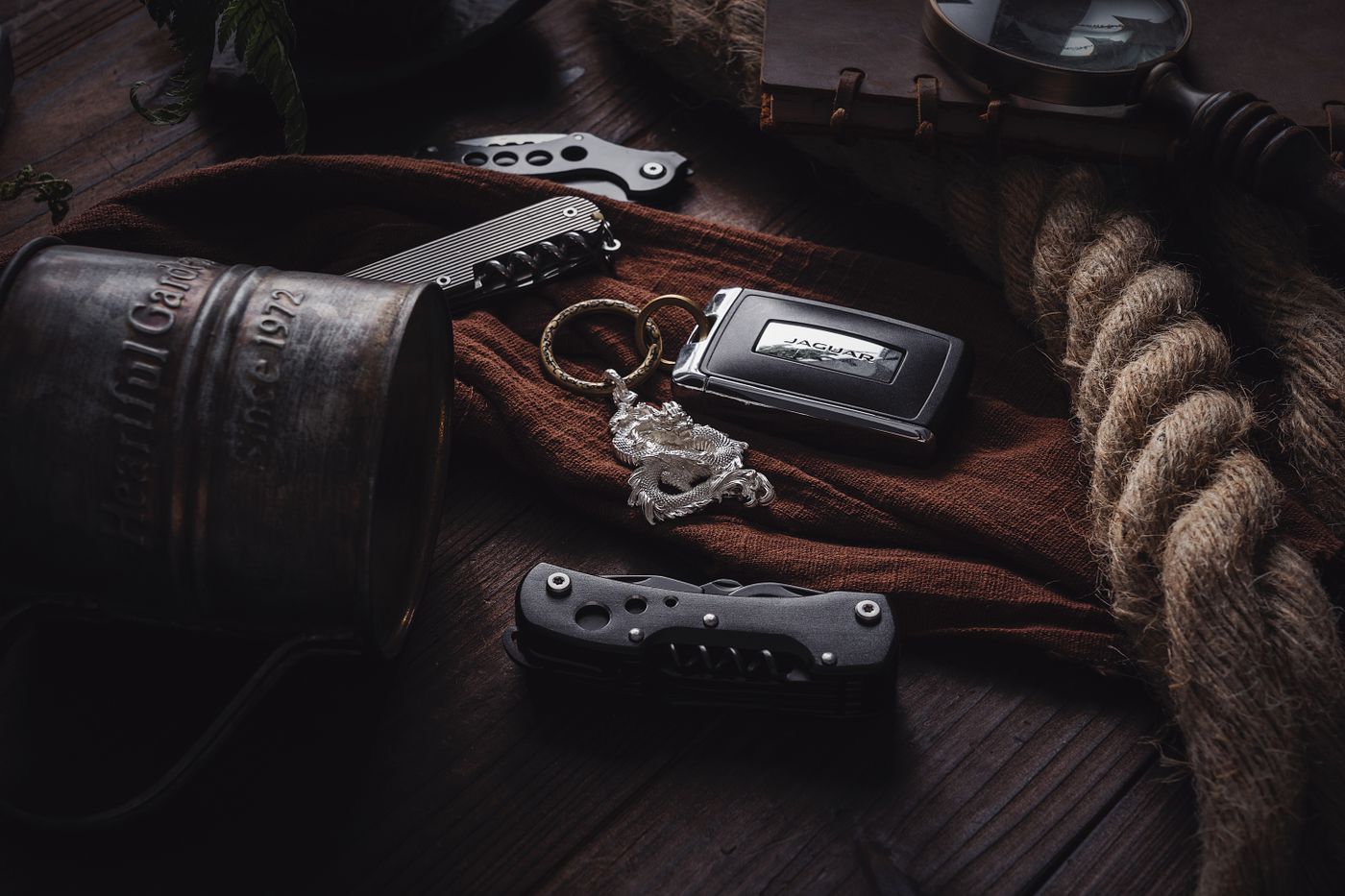 anime keychain — A vintage-themed still life featuring a keychain, rope, knife, and an engraved mug on a wooden table
Photo: COPPERTIST WU / Pexels
Rough patterns, and they are rough:
| Name | Approximate katakana | Why it lands that way |
|---|---|---|
| Rahul | ラーフル | "Ra" + long "a" + "fu" + "ru"; the final L becomes a ru syllable |
| Kiran | キラン | "Ki" + "ra" + "n"; the final n gets its own character |
| Priya | プリヤ | "Pu" + "ri" + "ya"; the P needs a vowel, so "pu" |
| Arjun | アルジュン | "A" + "ru" + "ju" + "n"; the R in the cluster becomes "ru" |
Two rules fall out of it. Final consonants gain a vowel — Rahul ends in "ru", not "l". Clusters get broken — "Pr" becomes "pu-ri". If katakana is the main event rather than an accent, have someone who reads Japanese check it before ordering 50 pieces. We set the glyphs you specify; we do not claim to be Japanese-language proofreaders.
Which Colours and Finishes Survive Daily Carry?
PLA+ is printed at about 215 °C, layer over layer, so the tag is one fused object with visible horizontal lines. Matte hides those lines; gloss amplifies them. Neither changes strength much — layer adhesion is set by temperature and cooling, not by the topcoat.
Colour is where daily carry bites:
- Black, charcoal, deep navy hide pocket scuffs and denim dye transfer best.
- White and pale yellow show grime first, especially on a bike key that lives near a chain.
- Red and orange fade fastest in direct sun — keep the tag off a dashboard.
- Two-colour letter fills — a light name on a dark plate — stay legible longest, because the contrast is geometric rather than painted on.
Heat is PLA's real limit: it softens around 60–65 °C, well below a parked car's dashboard in an Indian summer. Water is not a problem — PLA is insoluble and does not swell, so rain and a wet bike seat are fine. A rinse and a soft brush clears dust from the layer lines.
What Does an Anime Keychain Cost in India?
Cost tracks construction, not artwork. Approximate, and worth re-checking against live listings:
| What you are buying | Approximate price | What drives it |
|---|---|---|
| Imported PVC charm, single | ₹99–₹399 | Import duty, character licence |
| Acrylic charm, printed | ₹49–₹199 | Sheet cost, UV print, laser time |
| Hard enamel metal pin | ₹250–₹800 | Mould tooling amortised over the run |
| Custom printed PLA+, one-off | ₹129–₹149 | Machine time, not material |
| Custom printed PLA+, 50+ pieces | Quoted per order | Plate setup shared across the batch |
The last line surprises people. In 3D printing, material is cheap and machine time is not: a 55 mm tag uses a few grams of filament but occupies the printer for roughly 25–40 minutes. That is why a one-off costs more than a moulded import, and a batch of 50 costs far less per piece.
How Do You Order a Custom Anime-Style Keychain From Nuho India?
- Pick the shape. A rectangle plate, a rounded tag, a hexagon, or a silhouette from an original mascot. Silhouettes need at least a 3 mm neck at the ring hole.
- Choose the lettering. Heavy display faces hold up best. Send the exact spelling, including capitalisation — we print what is approved.
- Set the second line. Katakana, a number, a date, or nothing. Two lines maximum at 50–60 mm; a third forces the type down to 4 mm and it stops being readable.
- Approve the proof. You see the layout before printing. This is where a wrong transliteration or a clipped descender gets caught.
- Wait 24–48 hours. Printing and despatch happen in Coimbatore, Tamil Nadu, then it ships.
The full range sits at nuho.in/products. Everything is PLA+, everything is printed to order, and letters are fused to a continuous backing plate rather than glued on as separate cut-outs — the reason a narrow letterform does not snap off in a bag.
What Should You Check Before Gifting an Anime Keychain?
Gifting is where sizing goes wrong, because the buyer is guessing. A few scenarios:
- For a school-age kid: a 45–50 mm tag on a backpack zip, single name, no dangling charm. Avoid small detachable parts: one printed piece plus one split ring.
- For a bike rider: number plate or name, 50–60 mm, matte black or navy. It lives near a chain and a hot engine; light colours show it.
- For a couple: two tags, same typeface, opposite colourways — dark plate with a light name, light plate with a dark name. Matching shapes read as a set; matching colours just look duplicated.
- For a group or club: 50+ pieces, one shared plate setup and a standard typeface, with colour left to the buyer — how team and fandom keychains are usually ordered.
- For someone who collects characters: buy licensed merchandise. A name tag does a different job — it identifies your keys, it does not complete a shelf.
The Honest Limits
A printed PLA+ tag is not indestructible. It shows layer lines under raking light, softens on a May dashboard, and a 0.4 mm nozzle will not reproduce fine line art. A silhouette with a 2 mm neck will eventually break at the neck, because that is what thin sections do.
What it will do is survive a pocket, a monsoon, a bike ignition and a year of drops — at 14–18 g, in your colour, with your own name and no licensing question attached. That is a narrower promise than most listings make, and it is the one that holds.
Prices and specifications change — verify with the manufacturer or seller before buying.
Frequently Asked Questions
More Articles You Might Like
Custom Sticker Sheets in India: Kiss-Cut Sets That Peel Clean
How to plan a custom sticker sheet in India: A4, A5 and A6 counts, kiss-cut peel mechanics, per-sticker cost maths and artwork rules for mixed designs.
Bumper Stickers in India: Sizes, Placement and Legal Limits
Bumper stickers in India: the placements that are legal, the sizes that read from a following car, and how to apply one so it survives monsoon and sun.
3D Printed House Name Plates for Indian Homes: Weather and Mounting
3D printed house name plates in PLA+ for Indian homes: where they survive sun and monsoon, how to mount them, and how they compare with acrylic and brass.