
3D Printed Lenses in Seconds: What Actually Changes in India
Nuho India Team
Nuho Creative Team
Key Takeaways & TL;DR
- Light-Form Technology cures the entire volume of a progressive lens in one flash of light rather than shaping it from a blank, and IOT says the first commercial application is already reaching consumers.
- The 90 percent energy, 76 percent waste and no-water claims are the company's own manufacturing-stage figures, and independent coverage reports that the announcement included no independent test data.
- None of the sources for this article describes an Indian launch or an Indian price for lenses made this way.
- A custom keychain, name plate or sticker in India is still made layer by layer or cut from vinyl, so the forming speed in a headline does not change your order.
- Nuho manufactures standard orders in 24 to 48 hours and ships to roughly 27,000+ pincodes with Delhivery and Bluedart.
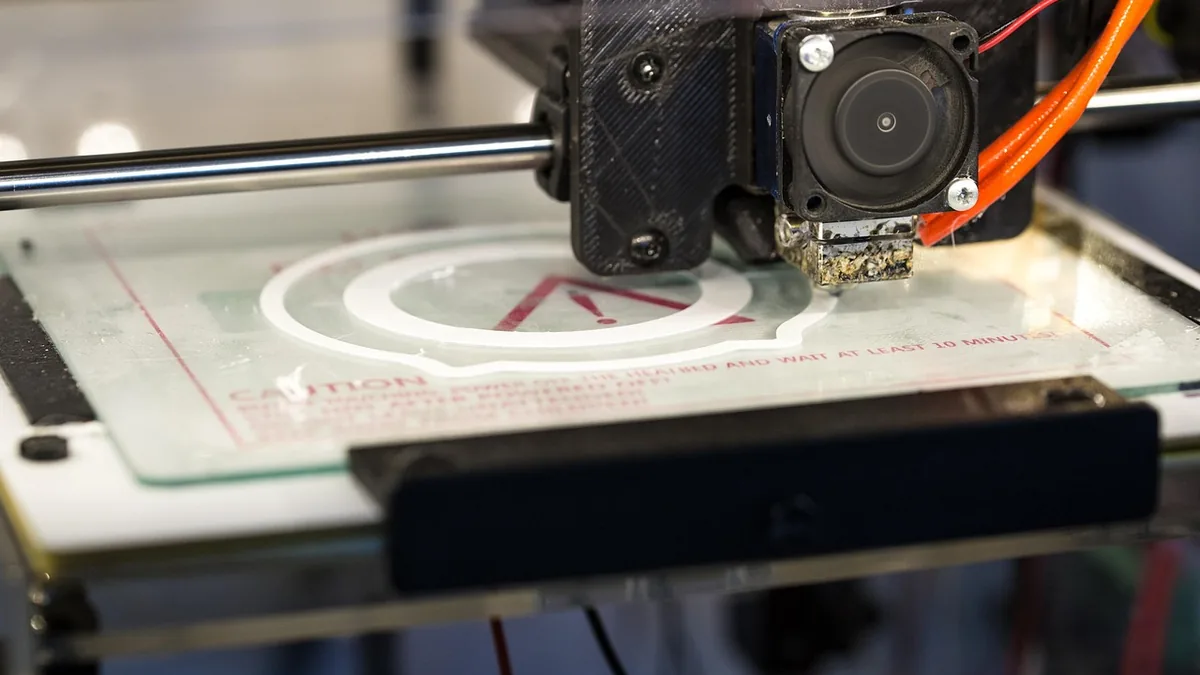
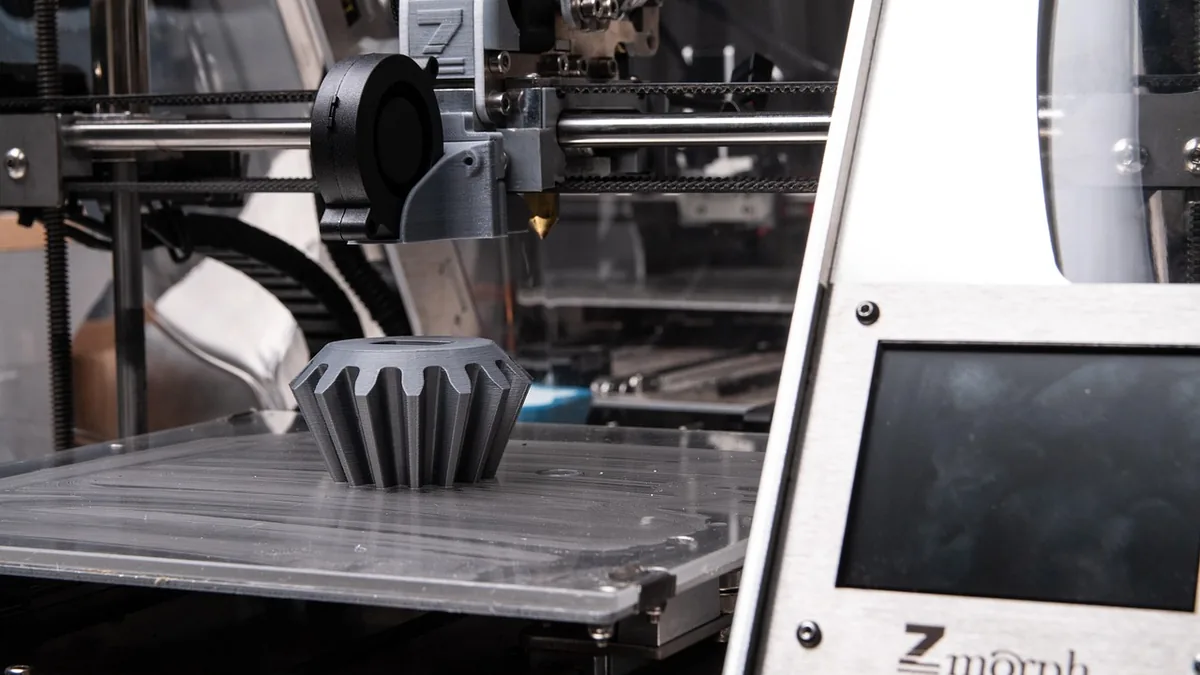
printer, 3d, print, 3d printing, white, 3d model
3D Printed Lenses in Seconds: What Actually Changes in India
IOT, a Madrid-based ophthalmic lens technology company, says its Light-Form Technology forms a complete personalized progressive lens from a single flash of light in seconds, skipping the generating and polishing steps of conventional surfacing [1]. The energy, water and waste savings the company announces are figures for the manufacturing stage only [1].
Key Takeaways
- Light-Form Technology cures the entire volume of a progressive lens in one flash of light rather than shaping it from a blank, and IOT says the first commercial application is already reaching consumers.
- The 90 percent energy, 76 percent waste and no-water claims are the company's own manufacturing-stage figures, and independent coverage reports that the announcement included no independent test data.
- None of the sources for this article describes an Indian launch or an Indian price for lenses made this way.
- A custom keychain, name plate or sticker in India is still made layer by layer or cut from vinyl, so the forming speed in a headline does not change your order.
- Nuho manufactures standard orders in 24 to 48 hours and ships to roughly 27,000+ pincodes with Delhivery and Bluedart.
What IOT actually announced
IOT announced Light-Form Technology from Madrid on 29 October 2026, describing it as an additive manufacturing process that produces complete personalized progressive lenses using a single flash of light [1]. Independent trade coverage adds that there is no layer-by-layer build, that the lens skips the generating and polishing steps conventional surfacing depends on, and that lenses made this way are already on sale to consumers [2].
The company explains the process as stabilized frontal photopolymerization, in which light forms the lens volume in a single step. Unused resin is recovered to limit waste, the surface is hardened, and the lens is mapped; the forming stage itself takes seconds, and the remaining processing completes the workflow [1]. For a process meant to replace prescription lens surfacing, IOT says the method must reproduce the intended optical design precisely rather than merely produce a recognizable shape [1].
For scale, the company states that it brings more than two decades of optical research, with its technologies incorporated into 35 million lenses annually across 70 countries [1]. Printed optics are not entirely new territory: the trade coverage documents Luxexcel building lenses layer by layer in a material jetting process before Meta acquired the company, and a University of Waterloo system that 3D prints custom contact lenses in roughly 20 minutes [2].
What the numbers do and do not say
Compared with conventional lens production, IOT says Light-Form eliminates water use in manufacturing, cuts energy use by 90 percent and reduces waste by 76 percent, and the company stresses that these figures refer to manufacturing only [1] [2]. Independent coverage of the launch states that all of the figures come from IOT's own announcement, which included no independent test data, and that the announcement did not detail how they were measured [3].
That is not a reason to dismiss the technology. It is the correct way to read any supplier claim, in India or anywhere else: separate the measured number from the marketed number, and ask which stage of the job the number covers. A forming step measured in seconds says nothing about artwork checks, finishing, quality control or courier time.
How single-flash printing differs from layer-by-layer printing
3D printing is an additive manufacturing process in which successive layers of material are laid down to build an object [4]. Almost every process a buyer in India can order from today works that way: filament is fused through a nozzle, or resin is cured slice by slice, and the shape emerges over minutes or hours.
Light-Form does the opposite. It cures the full geometry in a single light exposure instead of depositing material one slice at a time, which is why the forming step can be described in seconds [1] [3]. The object is still a designed, specified part; only the way the material becomes solid has changed.
| Process | How the shape is formed | Best suited to | What it means for an order in India |
|---|---|---|---|
| Light-Form volumetric photopolymerization | The whole lens volume is cured in a single flash of light, with no generating or polishing step | Prescription progressive lenses, announced by IOT | Nothing yet: no Indian launch or Indian price appears in any source for this article |
| Fused deposition (FDM) | Thermoplastic filament is fused one layer at a time through a nozzle | Keychains, number plates, name plates and desk accessories | Standard orders are manufactured in 24 to 48 hours, then couriered in 2 to 4 business days |
| Resin printing | Photopolymer resin is cured into a solid part for fine detail | High-detail miniatures, smooth jewellery and fine-tolerance masters | The same dimensional tolerance of ±0.2 mm or ±0.2 percent, whichever is greater, applies |
| Die-cut vinyl stickers | Printed vinyl is cut to the artwork outline | Custom shape stickers, labels and small-business packaging | Upload artwork once and reorder; there is no model to design or print |
Why a custom order in India still takes 24 to 48 hours
The forming step was never the whole job. A personalized order passes through an artwork check, a slicing step where material, infill, resolution and quantity set the print time, the print itself, finishing, a quality check and packing. Only the print itself is directly comparable to a speed claim in a headline. Nuho manufactures standard orders in 24 to 48 hours, and transit takes a further 2 to 4 business days through Delhivery Air and Surface or Bluedart Express to about 27,000+ pincodes across India.
If you are budgeting a run, how long a 3D print actually takes and what drives the cost of a print in India cover the same inputs in detail. Humidity and heat matter more than forming speed in Indian conditions: filament stored through the monsoon picks up moisture, and PLA+ is specified at 55°C heat deflection while Tough Resin is specified at 65°C, so where a part will live decides the material before the machine ever starts.
What an Indian small business should take from it
The honest lesson from Light-Form is about expectations, not eyewear. Personalised production is moving towards one-off items made without tooling, and a supplier who can form a part in seconds still has to design it, check it, finish it and deliver it. When a quote arrives instantly, ask what was measured and what was announced, and ask which stage of the job the number covers.
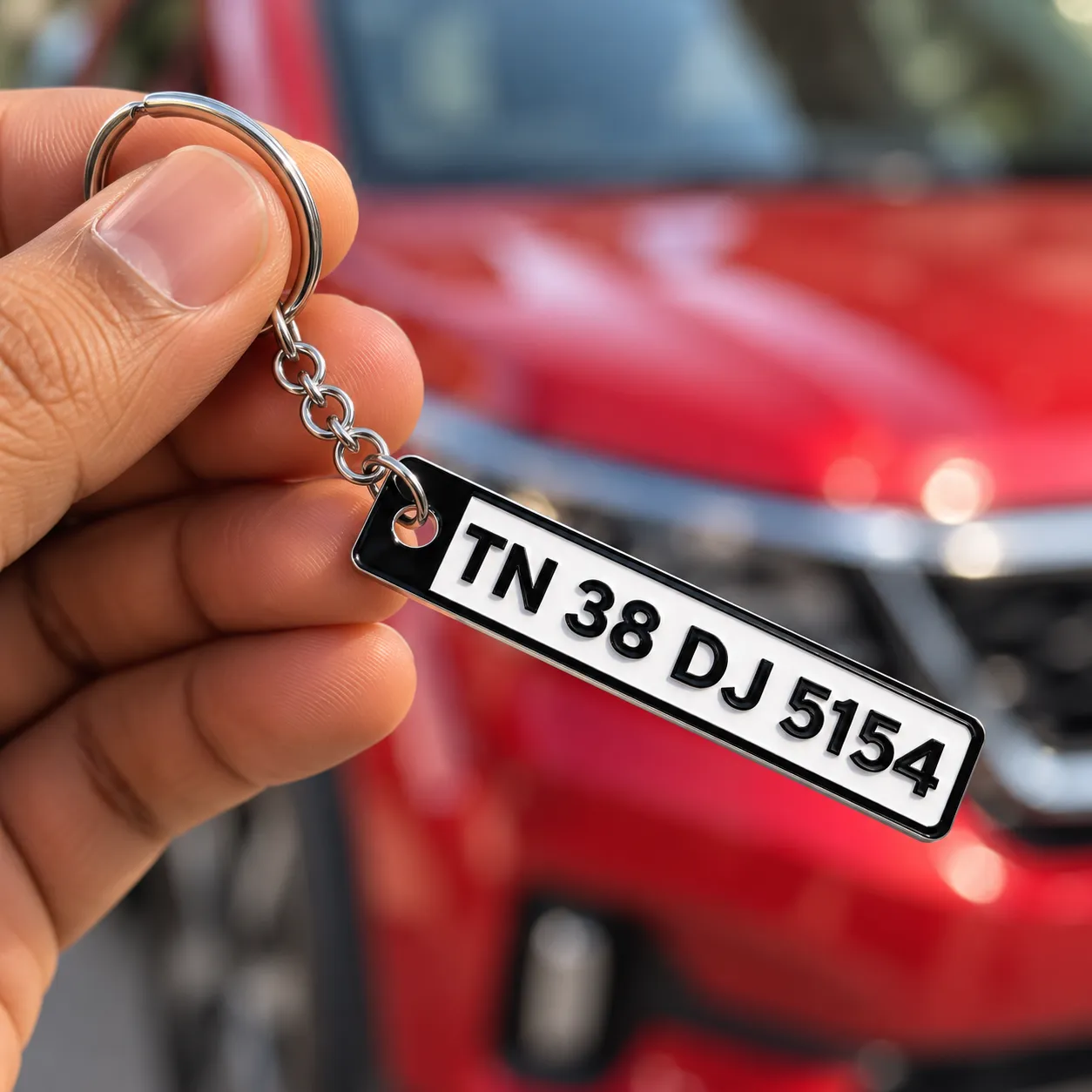
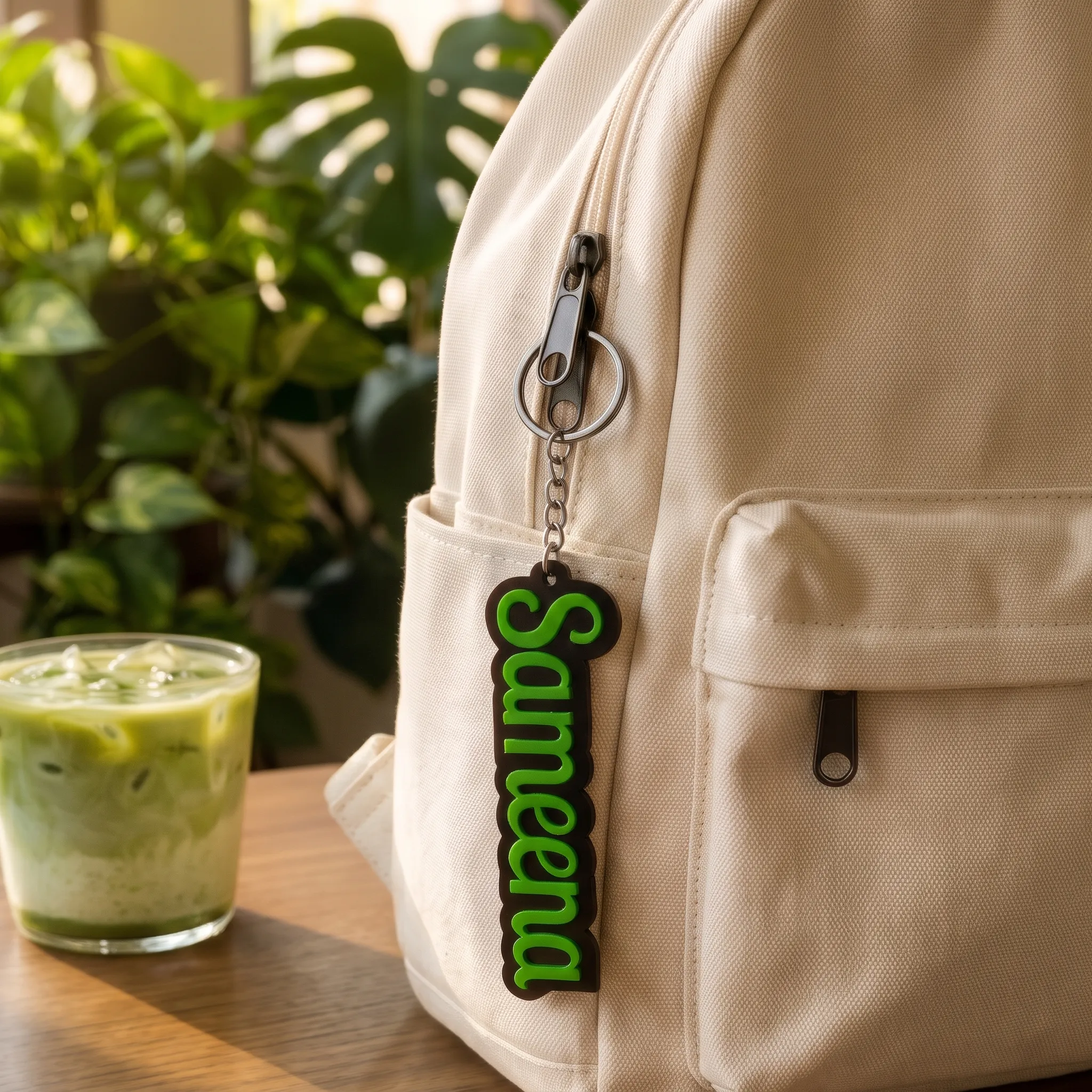
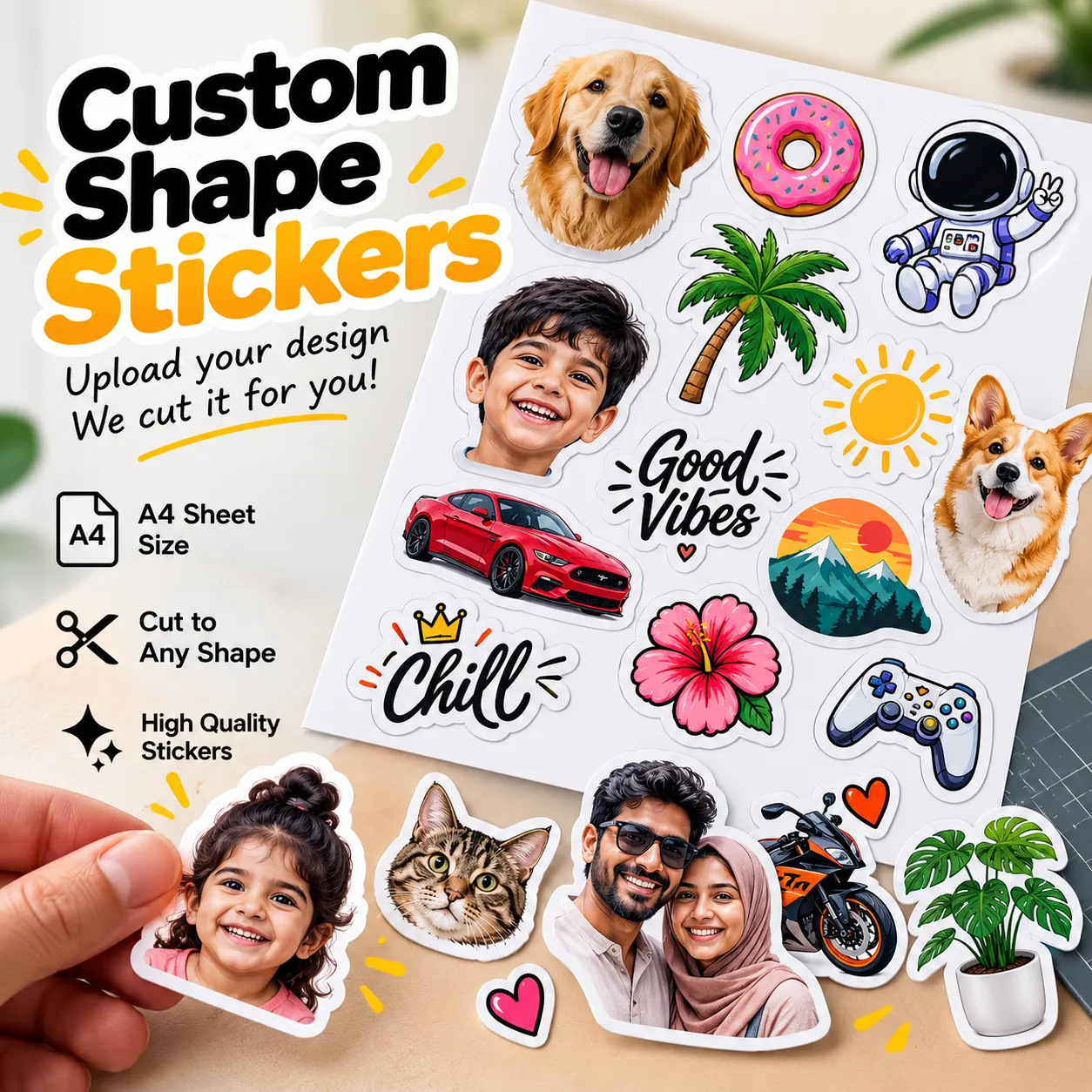
For branded merchandise the trade-off is unchanged: small runs beat tooling when quantities are low, and a small run compared with injection moulding explains where that line sits. The same thinking applies to stickers, which are cut from artwork rather than printed in three dimensions — Custom Shape Stickers that accept your own design are listed at ₹79, a Custom Name Keychain at ₹129, and a Custom 3D Printed Car Numberplate Keychain at ₹99. None of the three needs a machine that forms a part in one flash of light; all three need a name, a number or a file.
Frequently Asked Questions
Are 3D printed lenses available in India?
None of the sources for this article describes an Indian launch, an Indian price or an Indian retailer for progressive lenses made with Light-Form Technology. The announcement covers the technology and its first commercial application abroad.
Is 3D printing instant now?
No. The seconds figure describes the forming stage of one specialized process for prescription lenses. Everyday fused deposition and resin printing still build a part one layer at a time, and a personalised order also includes artwork checks, finishing, quality control and courier time.
What does the 90 percent energy saving actually cover?
It is a comparison against conventional lens production for the manufacturing stage only, announced by IOT. Independent coverage reports that the announcement included no independent test data and did not detail how the figures were measured.
How long does a personalised keychain from Nuho take?
Nuho manufactures standard orders in 24 to 48 hours, and courier transit takes 2 to 4 business days to serviceable pincodes across India. Custom orders accept STL, STEP, OBJ and 3MF files.
What does a ±0.2 mm tolerance mean for my design?
It is the dimensional tolerance Nuho prints to, or ±0.2 percent, whichever is greater. It decides whether a clip, ring or interlocking part fits, which matters long before forming speed does.
Conclusion and the next step
Single-flash forming is a genuine step for prescription optics, and it changes nothing about how a custom keychain, name plate or sticker is made in India today. What it does change is the standard you should hold any speed claim to: name the stage, name the measurement, and ignore the rest.
Next step: order one sample before you judge any process — a single Custom Name Keychain at ₹129 tells you more about material, finish and detail than another hour of reading announcements.
Sources
- IOT achieves a world first with personalized progressive lenses 3D-printed using light - PR Newswire
- IOT 3D Prints Personalized Progressive Lenses in Seconds With a Single Flash of Light - 3D Printing Industry
- New 3D-printed progressive lenses cut manufacturing energy by 90% and waste by 76% - Yahoo Tech
- 3D printing - Wikipedia
Featured Custom Products
Frequently Asked Questions
More Articles You Might Like
ELEGOO M1 Ultra 3D Scanner: Specs, Price and What It Means in India
The ELEGOO M1 Ultra is an all-in-one smart 3D scanner launched on 29 October 2026 at a retail price of USD 1,699, with early-bird pricing of USD 1,599 through 12 November [1]. It...
3D Printing Tolerances and Keychain Fit: What ±0.2 mm Actually Means
Short answer: 3D printing tolerances are the acceptable dimensional gap between the size you designed and the size that comes off the printer. Desktop FDM typically lands within...
3D Print Delamination: Why Layers Split and How to Stop It
Short answer: 3D print delamination happens when a new layer of plastic fails to weld itself to the layer beneath it, so the two separate along a layer line. The four usual causes...