
Sticker vs 3D Printed Emblem: Which One Should You Choose?
Nuho India Team
Nuho Creative Team
Key Takeaways & TL;DR
- A sticker is a flat printed film: full colour, cut to any outline, and the cheaper line item at any quantity.
- A 3D printed emblem or tag is a raised solid object: it carries real depth and weight, and it wants a clean, flat or gently curved spot.
- Indian conditions decide the result more than the format does: strong sun and months of monsoon humidity attack both film and printed plastic.
- In the Nuho catalogue a glossy die-cut sticker is ₹15, a custom shape sticker is ₹79, and a raised 3D printed keychain starts at ₹79.
luggage, travel, sunlight, vacations, summer, stickers
Sticker vs 3D Printed Emblem: Which One Should You Choose?
A printed sticker wins when you need colour, quantity and a low cost per piece: it is a flat film that follows curves and applies without drama. A 3D printed emblem wins when you want depth, rigidity and a badge-like presence that holds its shape on a clean, hard surface.
Key Takeaways
- A sticker is a flat printed film: full colour, cut to any outline, and the cheaper line item at any quantity.
- A 3D printed emblem or tag is a raised solid object: it carries real depth and weight, and it wants a clean, flat or gently curved spot.
- Indian conditions decide the result more than the format does: strong sun and months of monsoon humidity attack both film and printed plastic.
- In the Nuho catalogue a glossy die-cut sticker is ₹15, a custom shape sticker is ₹79, and a raised 3D printed keychain starts at ₹79.
Sticker vs 3D Printed Emblem: What Actually Differs
A 3D emblem creates a dimensional, raised appearance that adds depth and visual impact, while stickers and decals remain flat against the surface [1]. Depth is the one difference that explains almost everything else: how the two read in a photograph, how they feel under a thumb, and where each one can physically go.
The flat option is a manufactured film. Mass-production of vinyl decals starts with large rolls of vinyl sheet fed through a cutting plotter that prints the desired image and cuts the shapes, and modern cutting systems achieve sub-millimeter precision on die-cut decals [2]. The raised option is an object rather than a sheet: a 3D chrome emblem is a raised, rigid badge shaped to your logo, while a vinyl decal is a thin adhesive film that can flex around curves and window glass [3].
In practice a sticker borrows its colour from your artwork and its shape from the surface underneath it, while a raised emblem or printed tag brings its own body and reads as something that was made rather than something that was stuck on.
| Dimension | Printed sticker | 3D printed emblem or tag |
|---|---|---|
| Profile | Flat film sitting flush on the surface | Raised body standing off the surface |
| Colour | Full colour and gradients printed directly | Colour comes from the material and the finish |
| Outline | Cut to any shape after printing | Built from a model, so the shape is fixed at design time |
| Surfaces | Smooth, flat or curved, glass included | Clean, flat or gently curved spots only |
| Weather | Fades and peels when the film grade is poor | Holds its shape; the material decides the UV life |
| Cost per piece | The lower of the two | Higher, because each piece is printed solid |
| Application | Peel, align, press; trapped air is the risk | Position, press firmly; alignment is unforgiving |
| Removal | Warm it and peel; residue may stay behind | Warm it, then cut through the adhesive |
| Best for | Labels, packaging, laptop lids, quantity runs | Name tags, keychains, badges and keepsakes |
Which One Survives an Indian Summer and Monsoon
Format does not decide durability. Grade and material do. Badges and emblems are commonly engineered to withstand weather exposure, UV light, moisture, temperature changes, and everyday wear, and compared with traditional stickers they are generally less prone to peeling, fading, or appearing worn over time [1].
For the sticker side, the film grade is what shows up after one monsoon. A raised UV DTF sticker is waterproof, scratch-resistant and UV-resistant, while a regular flat sticker can fade, peel or wear out quickly [4], and the same comparison is blunt about surfaces: regular stickers are limited to smooth surfaces, while a raised transfer film sticks to metal, plastic, wood, glass and ceramics [4].
For the printed side, the honest limit is heat plus humidity. PLA is susceptible to UV light and moisture, leading to photo-degradation and hydrolytic degradation, and the degradation rate increases with temperature and relative humidity [5]. That is the Indian condition in one sentence: a long hot summer followed by months of monsoon, which is why a printed part that lives outdoors should be shaded or should be made in a more weather-tolerant material. Nuho's own material table puts PETG at a 75°C heat deflection temperature against 55°C for PLA+, and lists PETG for outdoor accessories and water-resistant parts.
Heat, rain, road grime and constant handling wear down a cheap sticker fast, while a raised 3D emblem holds up to daily wear and keeps its texture [6]. The grade you buy is what shows up after a season of dust and rain, and that film question is answered properly in our guide to vinyl vs paper stickers in Indian weather.
What Each One Costs in India
StickerJaki publishes wholesale bands for both formats: raised 3D stickers protrude 1–5mm above the surface through embossing, foam backing or molded silicone, and regular flat stickers are 30–70% cheaper for the same design size [7]. The same comparison notes that raised stickers cost more, weigh more and cannot go on anything that has to stack or has to close flat [7].
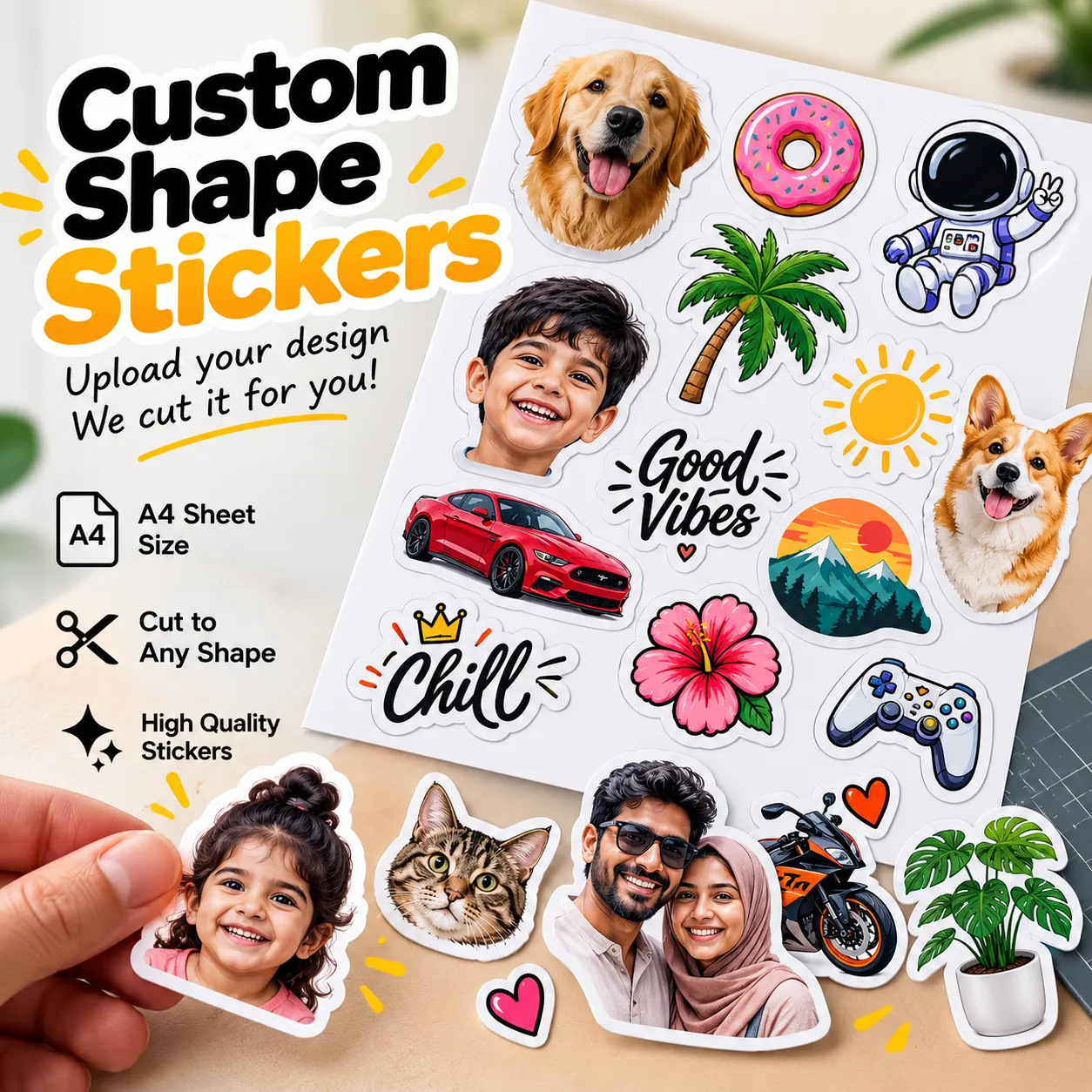
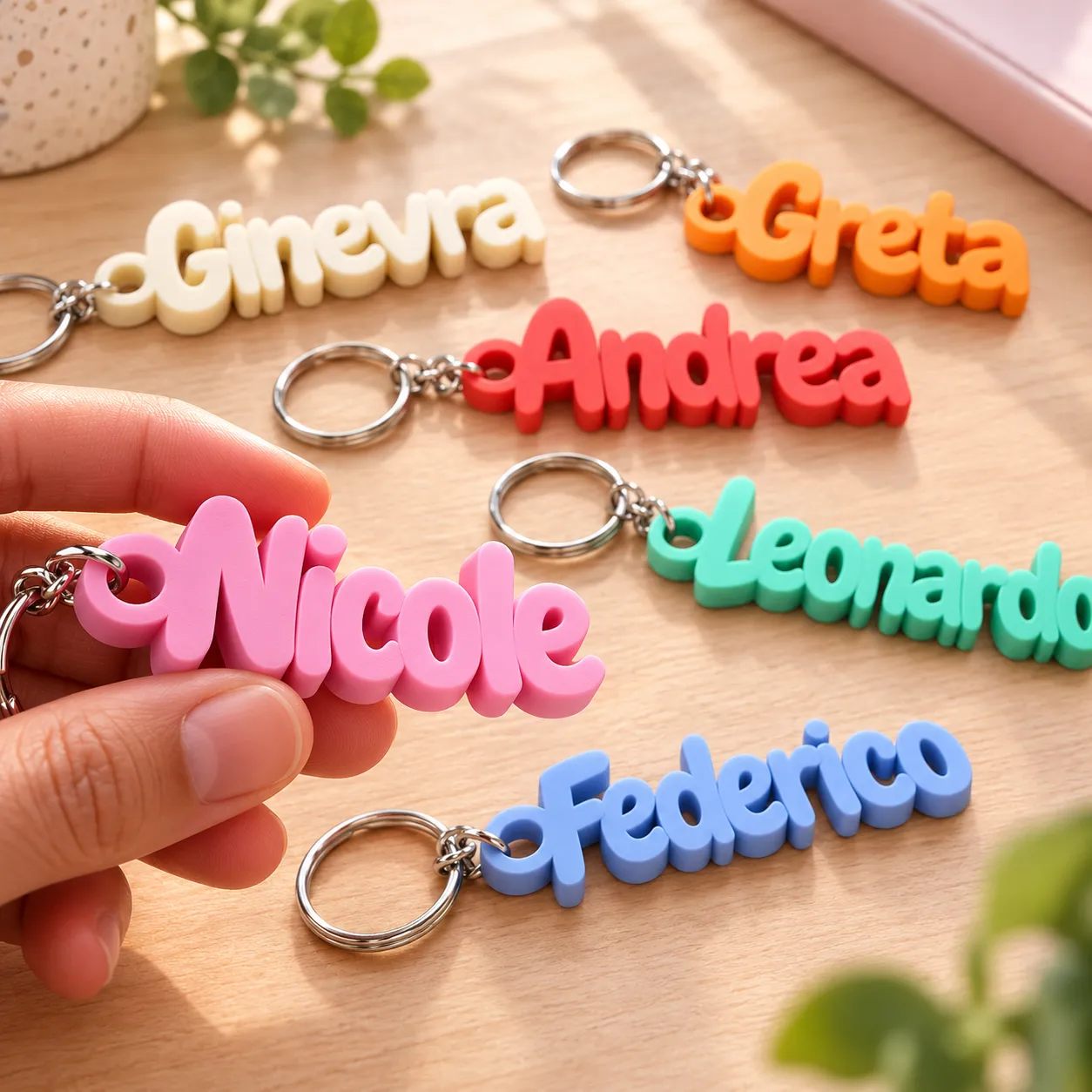
Translated into the Nuho catalogue, the gap is visible in rupees. A glossy die-cut sticker such as the Horn OK Please badge sticker is ₹15, a custom shape sticker carrying your own artwork is ₹79, and a raised custom name keychain printed in PLA+ starts at ₹79. Quantity changes the maths faster than format does: stickers stay the cheaper line item at every volume, so the printed option earns its extra cost only when the object itself is the product.
Applying and Removing: The Surface Decides
Both formats attach with adhesive, and that is where the difference reaches your hands. Decals require a specialized installation process and must be applied perfectly to avoid bubbles or other imperfections, while a badge can be attached to a surface with a strong adhesive [1]. For a raised piece the preparation is what makes it last: clean the spot with rubbing alcohol and let it dry completely, position the emblem before you peel the backing, press firmly for about thirty seconds, and skip the car wash for a day or two [3].
Removal runs the other way. Warm the emblem with a hair dryer to soften the adhesive, then slide fishing line behind it and saw gently through the tape; never pry an emblem off with a screwdriver, because that is how paint gets scratched [3]. A warmed sticker peels back at a shallow angle instead, and any adhesive left behind comes off with the same patient, non-abrasive approach.
Where Each One Fits in India
Flat film is the right answer for anything that is printed in quantity and lives on a flat or curved surface: packaging seals, shipping boxes, laptop lids, water bottles and shop signage. If you are cutting a run of shapes rather than one design, the difference between a die-cut and a kiss-cut run decides how the sheet peels, which is covered in die-cut vs kiss-cut stickers.
Printed objects are the right answer for anything people carry: name tags, bag tags, keepsakes and keychains. Two material questions decide how long those last, and both are answered in 3D printing keychains: settings, strength and batch cost and in the best material for keychains.
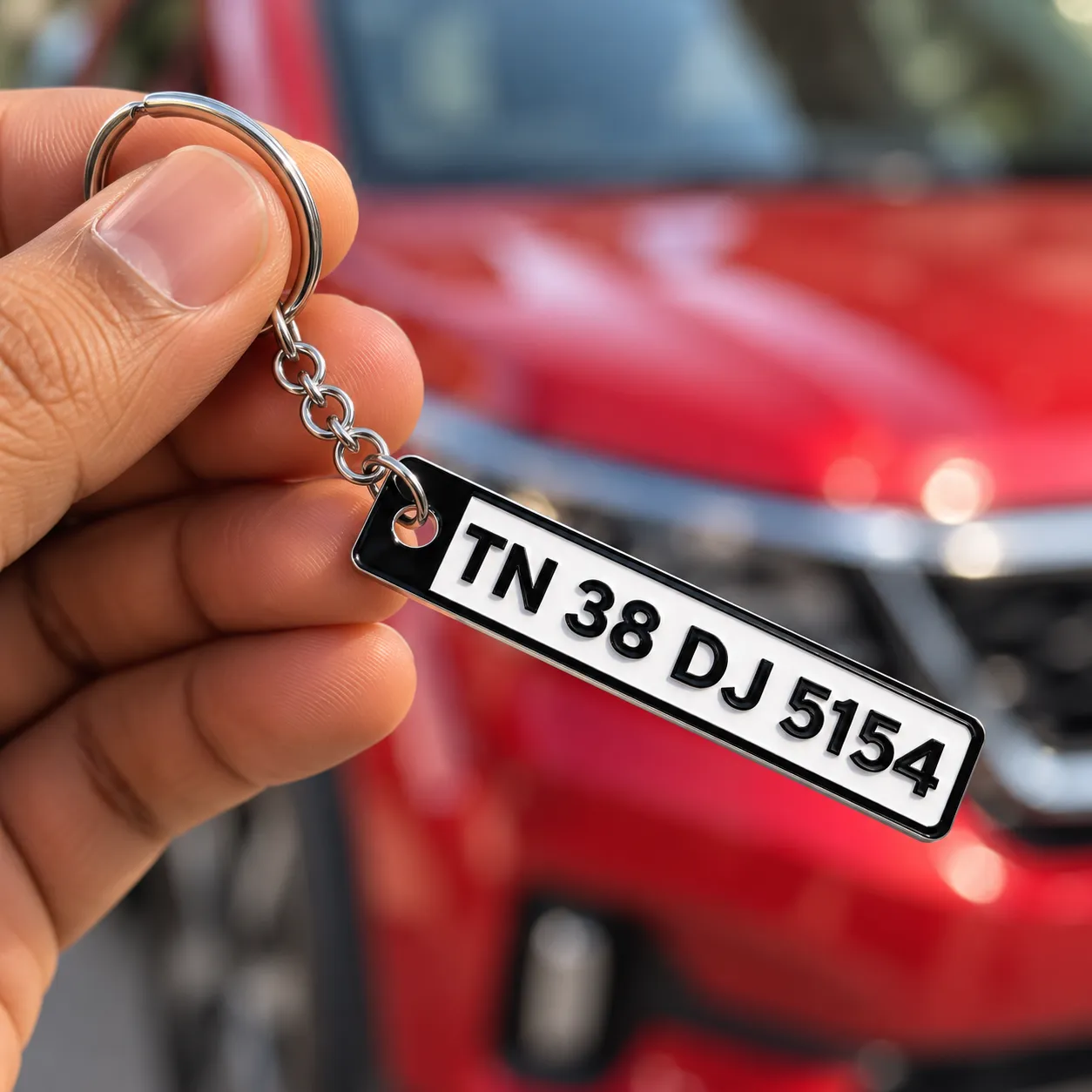
Vehicles sit in between, and that is where the two formats usually meet. A custom 3D printed car numberplate keychain at ₹99 carries the plate design as a printed object in PLA+, while a decorative sticker stays on the bodywork or the helmet. Nuho manufactures in Coimbatore, Tamil Nadu, runs standard orders in 24 to 48 hours and ships pan-India through Delhivery and Bluedart, so the practical difference in waiting time between the two formats is small.
Decision Guide: Choose by the Job
| If the job is... | Choose | Because |
|---|---|---|
| Labels or packaging seals in a run of 100 or more | Printed sticker | Lowest cost per piece and fastest to apply |
| Artwork with gradients, photographs or fine lines | Printed sticker | Full colour prints directly onto the film |
| A surface with a tight curve or a window | Printed sticker | The film flexes where a rigid body cannot |
| A keychain, name tag or keepsake with weight | 3D printed object | It is the object itself, not a label on one |
| A badge that should read as premium at arm's length | 3D printed emblem | Raised edges catch light the way flat print cannot |
| Something that must stack, close or be scanned | Printed sticker | A raised body will not sit flush or fit in an envelope |
Frequently Asked Questions
Is a 3D printed emblem better than a sticker?
Not in general, only for a specific job. The emblem wins on depth, rigidity and perceived quality, and the sticker wins on colour range, cost per piece and the number of surfaces it will cling to. Pick by the surface and the quantity, not by a preference for one format.
Will a sticker survive the monsoon?
A good outdoor film survives it and a poor one does not. Rain, road grime and handling are what destroy cheap film, so the grade you order matters more than the artwork you put on it, and the surface must be clean and dry before anything is applied.
Which is cheaper for a small business ordering 100 pieces?
The sticker, every time. Flat film is the lower cost per piece at any volume, and the raised format only makes sense where the printed object is the product you are selling rather than a mark on something else.
Can a sticker and a 3D printed tag be used together?
Yes, and it is a common pairing. Print the campaign artwork as flat film on packaging and lids, then give the same identity to a raised printed tag or keychain that people carry, so the two formats do the jobs each one is good at.
Does a 3D printed keychain fade in sunlight?
PLA is susceptible to UV light and moisture, and its degradation rate increases with temperature and relative humidity, so a printed part left in direct sun will age faster than one kept in a bag or a drawer. Shade is the cheapest protection.
Conclusion
The sticker vs 3D printed emblem choice is really a question of what the object has to do: colour and quantity point to flat film, depth and durability point to a printed body, and in Indian conditions material grade settles the argument. Start with one job you actually have — the next run of labels, or the tag you want people to keep — and size it up as a custom shape sticker at ₹79.
Sources
- Badges & Emblems vs Stickers — Form Manufacturing
- Decal — Wikipedia
- 3D Chrome Emblems vs. Vinyl Decals: What Lasts, What Looks Premium, and How They Attach — Match Point Promotions
- Regular Stickers vs. UV DTF 3D Stickers — UTM Printing
- Temporal evolution of structure property relationship for UV+RH artificially weathered material extrusion additive manufactured PLA — Scientific Reports
- 3D Emblems vs Stickers: What's the Difference and Which Stands Out More? — StickMadly
- 3D Stickers vs Regular Stickers: Which One Should You Choose — StickerJaki
Featured Custom Products
Frequently Asked Questions
More Articles You Might Like

College Merch Stickers Keychains for Fests on a Student Budget
College merch stickers keychains are the cheapest way for a student club to build an identity: order die-cut stickers in one run, add a small batch of 3D printed name keychains...
Product Photography for Stickers and Keychains: 5 Listing Shots
Short answer: Product photography for stickers and keychains needs five frames: a flat shot on plain white, a scale shot beside an everyday object, a close-up of the cut edge, one...
Merch for a Cause: Community Lessons for Indian Brands
Merch, short for merchandise, is any branded item a person buys or receives from a community, cause or creator — a sticker, keychain, T-shirt or hoodie that signals belonging....