
Name and Number Plate Keyrings: Sizing for Indian Cars (2026)
Nuho India Team
Nuho Creative Team
Key Takeaways & TL;DR
- An Indian car plate is 500 x 120 mm, so a keyring at 1:7 scale lands at 71 x 17 mm with 5-7 mm lettering - the practical readable band.
- A private-car registration runs 9-10 characters; adding a name on the same line needs 95-110 mm of width, so stacking on a second line is the only honest layout.
- Nuho India prints PLA+ plate tags at about 215 C, each weighing 14-18 g, priced at Rs 129-149 with 24-48 hour manufacturing in Coimbatore, Tamil Nadu.
- PLA melts at 150-160 C, so a printed tag belongs on a key ring, not on a sun-baked dashboard.
- Metal tags resist scratches but swing against keyless fobs; a 14-18 g PLA+ tag adds no noticeable load.
How Big Should a Name and Number Plate Keyring Be?
A name and number plate keyring for an Indian car works best at 60–75 mm wide, which keeps a 500 × 120 mm plate's proportions while leaving lettering roughly 5–7 mm tall. Below about 55 mm, a ten-character registration plus a name stops being readable at arm's length.
That is the sizing problem in one line. Everything else — character counts, fonts, ring hardware, weight — follows from it.
What Are the Real Dimensions You Are Scaling Down?
Indian registration plates are not arbitrary. The standard sizes are fixed, and a keyring that ignores them looks wrong even when the owner cannot say why. The published specification for Indian registration plates lists:
| Vehicle class | Plate size | Aspect ratio |
|---|---|---|
| Light motor vehicle (car) | 500 mm × 120 mm | 4.2 : 1 |
| Two-wheeler, rear | 200 mm × 100 mm | 2 : 1 |
| Two-wheeler, front | 285 mm × 45 mm | 6.3 : 1 |
| Medium and heavy commercial | 340 mm × 200 mm | 1.7 : 1 |
A car plate is a long, thin bar, and that silhouette is the most recognisable thing about it. It is also the first thing cheap keyrings get wrong: print the number on a square tag and the result reads as a name badge, not a plate.
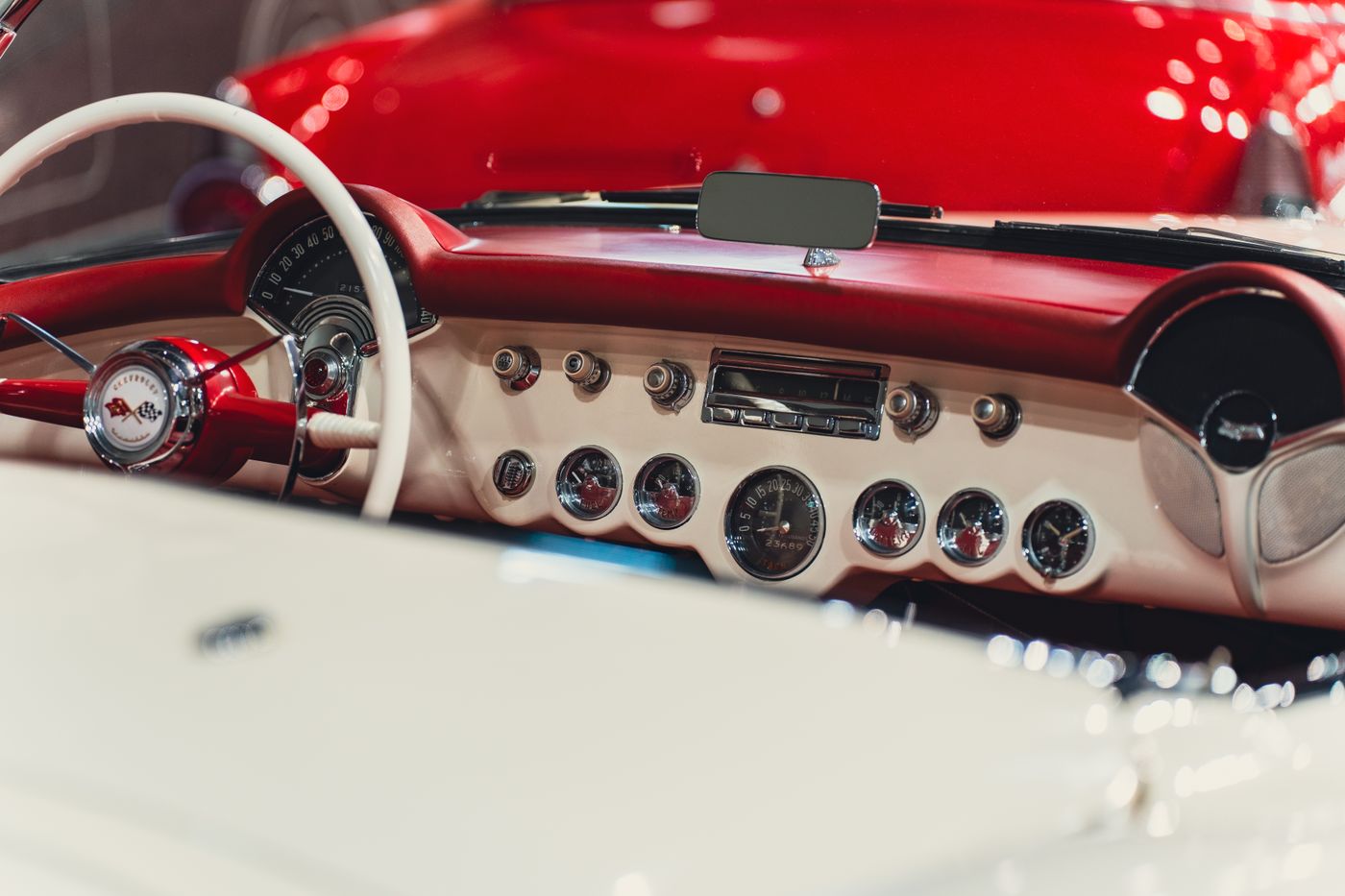 name keyring number plate — Close-up of a vintage car dashboard with retro design and classic details
Photo: Robert Schwarz / Pexels
The registration follows the format set under the Motor Vehicles Act: two-letter state code, two-digit RTO number, a one-to-three-letter series, and four digits. That is 9 to 10 characters for most private cars — TN 38 AB 1234 is ten with spaces, nine without. Add IND and you are at thirteen. Character count, not plate width, decides whether the tag stays legible.
Why a Car Plate Does Not Shrink Cleanly
Scale 500 × 120 mm by 1:7 and you get 71 × 17 mm. The proportions survive; the lettering does not automatically survive with them, because printed strokes have a physical minimum.
At 215 °C, a 0.4 mm nozzle lays a line roughly 0.45–0.5 mm wide. Two adjacent lines make a stroke near 1 mm. Go thinner and the digit becomes a single extrusion path — printable, but fragile enough that a drop onto tile can shear it. That is why plate-style keyrings need either fewer characters or more width.
Scale Factors: 1:5 to 1:9 in Practice
The table converts the standard 500 × 120 mm car plate into keyring sizes, assuming a single line carrying the full registration.
| Scale | Tag size | Letter height | Verdict |
|---|---|---|---|
| 1:5 | 100 × 24 mm | 8–9 mm | Reads beautifully, hangs like a small ruler |
| 1:6 | 83 × 20 mm | 7–8 mm | Good for a two-line name plus number |
| 1:7 | 71 × 17 mm | 5–7 mm | The practical sweet spot for a car key |
| 1:8 | 62 × 15 mm | 4–5 mm | Fine for the number alone; tight with a name |
| 1:9 | 55 × 13 mm | 3–4 mm | Novelty territory — readable only up close |
1:7 is where most car tags should land. If you want a name and a number, you are not choosing a smaller scale — you are choosing a second line, which changes height rather than width.
 name keyring number plate — Close-up of a classic vintage car dashboard featuring an analog radio, speedometer, and keys
Photo: Pragyan Bezbaruah / Pexels
How to Measure Your Car Before You Order
You need five minutes and a phone camera.
- Photograph the rear plate straight on. Stand square to the car and fill the frame, so spacing and character order are accurate.
- Write the registration exactly as printed, including spaces. Do not "correct" anything —
01and1differ on a plate. - Count the characters, including any
IND. Tell the maker the count, not just the number. - Decide whether the name replaces or joins the number. Five to seven letters fit a second line; a fifteen-character full name does not.
- Weigh the key you are attaching it to. A heavy bunch plus a heavy tag is what wears an ignition barrel.
- Choose the hardware last, once you know the fob's hole and whether the key rides in a pocket or a bag.
If the car is new and the plate has not arrived, use the standard 500 × 120 mm figure. The tag will still look proportional once the plate is fitted.
One Line or Two: Fitting a Name Beside a Number
Only three layouts work at keyring scale, and each has a cost.
| Layout | Typical size | Best for | Trade-off |
|---|---|---|---|
| Number only, one line | 60–75 × 15–18 mm | Minimalist tags, keyless fobs | No name — less obviously yours |
| Number plus name, stacked | 65–80 × 28–34 mm | Gifts, family cars | Taller tag; can foul a tight fob pocket |
| Name only, number on the reverse | 55–65 × 18–22 mm | People who dislike long tags | Fewer characters visible at a glance |
Side-by-side — name then number on one line — is what people ask for and what fails most often. ARJUN • TN38AB1234 is eighteen characters. At 5 mm lettering that needs roughly 95–110 mm of width, which is a luggage tag, not a keyring.
 name keyring number plate — Close-up of a black luxury sports car's wheel detail in an outdoor setting
Photo: J T / Pexels
Stacking is the honest answer. A two-line tag 70 mm wide and 30 mm tall gives each line 8–9 characters at readable size, and the border still wraps both lines like a plate.
Does the Character Count Change the Design?
Yes, more than most buyers expect.
Narrow characters get more room. A registration heavy in 1, I, 7 and 4 has more white space than one full of M, W and 8, so a design made from a character count alone will space the second plate too tightly. A photo of the actual plate beats a typed number.
0 and O are a real problem. Indian plates avoid I and O in series letters to prevent confusion, but 0 still appears in the digits. At 4 mm, a thin-stroked zero reads as an O; wider, squarer zeroes solve it.
IND is optional and expensive. The blue IND strip is authentic to an HSRP plate, but it consumes 10–15% of the tag's width and forces every other character smaller. Leave it off unless the recipient asked for it.
How Heavy Should a Keyring Be?
Weight is the sizing question nobody asks and everybody feels. At Nuho India, a PLA+ plate tag weighs 14–18 g — light enough that a keyless fob still sits the same way in a pocket.
Metal is the opposite trade. It feels substantial and resists scratches, but a solid metal tag can weigh several times as much and swings against the fob's plastic casing every time you set the key down. Over months, that is how fobs get polished corners and scuffed logos.
A simple rule: if the ring already carries more than three keys, keep the tag under 20 g.
Which Fonts Survive at 5 mm?
Plate lettering is engineered, not styled. Indian plates use a uniform-stroke block face, and that is what survives at small scale. Anything with contrast between thick and thin strokes — serifs, scripts, calligraphic initials — fails, because the thin parts fall below the nozzle's reliable minimum.
For the name line, a bold geometric sans works. For the number line, keep characters near-monospaced so the digits line up like a real plate. We covered specific typefaces, stroke widths and spacing in Car Number Plate Keychain Designs: Fonts and Sizes.
Do not ask for a manufacturer's logo or badge font. Beyond the trademark problem, a logo competes with the number for the same 70 mm and makes both harder to read.
Ring, Clip or Strap?
- Split ring, 25 mm. The default: fits most fob holes, stays put, lets the tag lie flat. Specify stainless over painted steel.
- Lobster clip. Useful if the tag moves between a car key and a bag, but adds length and a metal body that knocks against the fob.
- Short strap. Quiet and non-scratching, though straps fray and hide the tag's edge. Better for two-wheelers.
- Long chain or lanyard. Avoid on a keyless fob — the leverage is the problem, not the weight.
Check the tag's hole against the ring's wire thickness. A 25 mm ring needs a 3.5–4 mm hole; drilling after printing weakens the corner.
PLA+ vs Metal vs Acrylic for a Plate Tag
| Material | Weight | Wear behaviour | Best use |
|---|---|---|---|
| PLA+ | 14–18 g | Wipes clean, does not swell; softens in sustained heat | Everyday car and bike tags, gifts |
| Acrylic | Light | Brittle at narrow strokes and drilled holes | Flat name tags, not fine plate numbers |
| Cast metal | Heavy | Scratches fobs, holds up to keys | People who want heft and do not mind scuffs |
| Leather | Light-medium | Softens and darkens, cannot carry fine text | Fob holders rather than plate tags |
PLA is a thermoplastic polyester with a density around 1.21–1.43 g/cm³ and a melting range of 150–160 °C, as documented in the material's published properties. That is why the tag should not live on a dashboard in direct summer sun: PLA softens well below its melting point. A key ring in a pocket or bag never sees those temperatures.
Where metal wins is scratch resistance and feel. A printed tag will pick up a scuff if dragged across concrete; it will not shatter, and the colour runs through the material rather than sitting on top, but it is not indestructible.
Ordering Checklist
Before you send an order, confirm:
- The registration typed exactly as printed, with spaces.
- The character count, including any
IND. - Whether the name shares the face or gets a second tag.
- The layout: one line or stacked.
- Tag width — 60–75 mm is the safe band for cars.
- Ring type and hole size.
- The date you need it.
If you cannot photograph the plate, ask for the registration in writing. Guessing a series letter is the most common cause of a reprint.
Where to Order a Name and Number Plate Keyring
Nuho India prints these tags in PLA+ at around 215 °C, with every letter fused to a continuous backing plate rather than glued on as a separate cut-out. At 5 mm lettering that matters: there is no joint to fail, and the tag survives a pocket full of keys.
The range sits at ₹129–₹149, with manufacturing in 24–48 hours in Coimbatore, Tamil Nadu. You can see current styles and send a plate photo through the Nuho India product page. For the ordering process end to end, the car keychain with number plate and name guide covers artwork, proofs and corrections. If you are still choosing between a plate tag and a plain name tag, Best Car Keychains in India compares formats by car type.
Sizing is the one decision you cannot fix after printing. Measure the plate, count the characters, then choose the scale.
Frequently Asked Questions
More Articles You Might Like
Leather vs 3D Printed Car Keychains: Wear, Weight and Cost
Leather vs 3D printed car keychains, compared on grams, monsoon wear and cost per year in India, with honest limitations and real price bands.
Vinyl Stickers for Cars in India: Where They Survive
Vinyl stickers for cars in India survive on flat, clean, cool panels — not textured trim, hot bonnets or number plates. A surface-by-surface guide.
Car Key Fob Battery Replacement in India: A Buyer's Guide
Car key fob battery replacement in India: find the right CR2032, fit it without cracking the fob, and know what a dealer should really charge.