
Filament Storage in Indian Humidity: Boxes, Silica and Meters
Nuho India Team
Nuho Creative Team
Key Takeaways & TL;DR
- Aim for under 30% relative humidity inside the storage box; in Indian humidity a sealed container with damp air trapped inside is a slow way to ruin a spool.
- Use roughly 100 g of indicating silica per 10 litres of box volume, and recharge or replace it as soon as the beads change colour.
- PLA is hygroscopic; commercial producers dry it at about 80 °C before extrusion, and moisture in filament turns to steam at the 215 °C nozzle, causing popping, stringing and weak layer bonds.
- A 1 kg spool that has absorbed 0.5% of its weight is carrying about 5 g of water, which is enough to change how it prints.
- At Nuho India, PLA+ keychains print at about 215 °C and weigh 14-18 g, with 24-48 hour manufacturing in Coimbatore, Tamil Nadu; once printed, the dense surface makes humidity a non-issue.
How should you store 3D printer filament in Indian humidity?
Store filament in a sealed container with fresh desiccant and a hygrometer, keep the reading under about 30% relative humidity, and dry any spool that has sat open for months before printing with it. In Indian humidity the seal is the easy part — the desiccant and the meter are what actually keep filament printable.
That order matters, because most storage advice online is written for a European workshop sitting at 40–50% RH in summer. Airtight boxes get recommended as if the box itself were the fix. In Coimbatore, Chennai, Mumbai or Kochi, the air you seal into the box in June is already carrying a lot of water. A perfect gasket then does the opposite of what you wanted: it traps that damp air against the spool for weeks. The result is not dramatic: prints come out slightly rough, stringing worsens, and nobody connects it to the box in the cupboard.
This guide covers what moisture actually does to PLA+, which container is worth paying for, how much silica you need, and how to dry a spool without wrecking it.
What actually happens when PLA absorbs water?
PLA is a polyester, and like most thermoplastics used in filament printing it is hygroscopic — it attracts and holds water molecules from the surrounding air. Wikipedia's article on 3D printing filament notes that many thermoplastics are hygroscopic, that commercial producers dry PLA pellets to roughly 80 °C before extrusion, and that extruding damp plastic causes dimensional flaws. The same physics comes back at the nozzle.
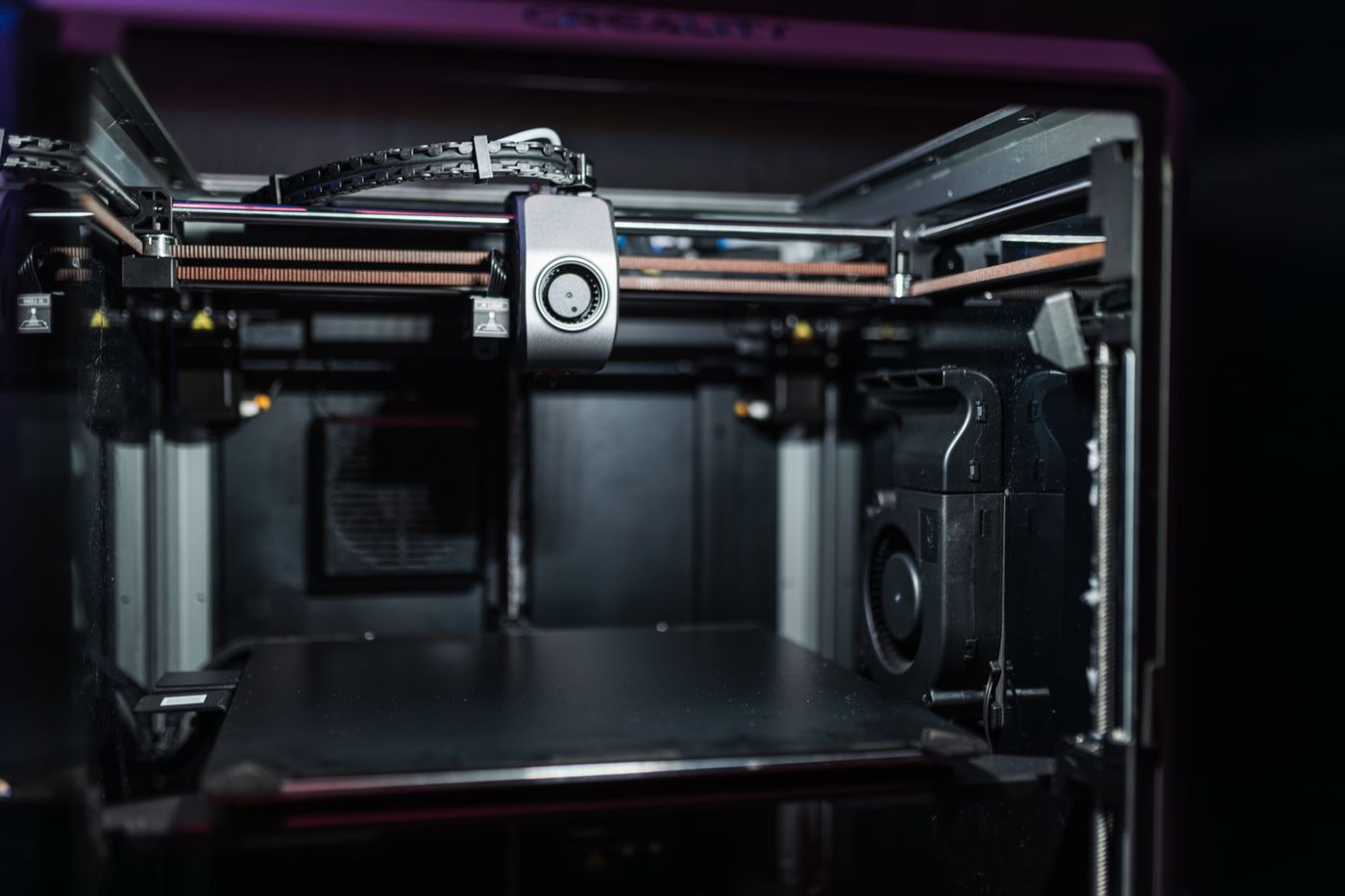 3d printer filament storage — Close-up view of a modern 3D printer interior showcasing advanced technology
Photo: Matheus Bertelli / Pexels
Inside the hotend, filament at about 215 °C turns absorbed water into steam. That steam expands inside the melt and does three things: it pushes plastic out unevenly (the popping and spitting you hear), it cools the bead as it leaves the nozzle (weak layer bonding), and it leaves micro-voids in the wall (a chalky, matte surface that will not take a smooth finish). On a name keychain the visible symptom is stringing between letters and a cloudy top layer.
Two details matter. First, the damage is reversible — this is absorbed water, not a chemical change, so drying restores most of the print quality. Second, a raw spool is far more vulnerable than a finished part. A 1 kg spool of 1.75 mm filament has an enormous surface area relative to its mass, and it stays exposed for months. A printed keychain weighing 14–18 g has a dense, low-porosity skin. That is why a spool needs a box and a keychain does not.
Which 3D printer filament storage box is worth buying?
There is no single best container — there is a container that matches how often you print. The table below compares the five options people actually buy in India, with the humidity each one can realistically hold when the desiccant is fresh.
| Option | Typical India price band (approx., re-check) | RH it can hold | Best for | Main weakness |
|---|---|---|---|---|
| Zip bag + silica sachet | ₹100–300 | 35–45% | One or two spools, short gaps | Bags puncture, seals fail silently |
| Airtight cereal box, 4–6 L | ₹400–900 | 25–35% | 1–2 spools in daily use | Gasket wears, no feed port |
| Vacuum bag + hand pump | ₹250–700 | 20–30% | Long-term spares | You must re-bag for every print |
| Dry box with a feed port | ₹1,500–3,500 | 15–25% while printing | Printing straight from storage | Bulky, desiccant needs replacing |
| Dehumidifying cabinet | ₹9,000–25,000 | 10–20% | A workshop with 10+ spools | Power draw, capital cost |
Prices move with imports and GST, so treat those bands as a rough shape rather than quotes.
The practical recommendation for a home printer in India is a dry box with a feed port for the spool currently loaded, plus vacuum bags for everything else. That combination gives you low humidity where it matters (during a multi-hour print) without buying a cabinet. If you print once a month, bags and a good gasket are enough — but only if you actually re-bag.
Volume matters as much as the seal. Silica must dry the air inside the box before it starts on the spool, so a half-empty 20 L tub is 10 L of humid air to absorb. Match the container to the spool, not to your ambition to buy five colours.
Do silica gel packs actually work?
Yes, and the mechanism is well understood. Silica gel is an amorphous, porous form of silicon dioxide; the xerogel used as a desiccant has pores around 2.4 nanometres and a strong affinity for water molecules, which is why it ships inside electronics and food packaging. It is not a scent mask or a marketing token — it is a physical adsorbent with a finite capacity.
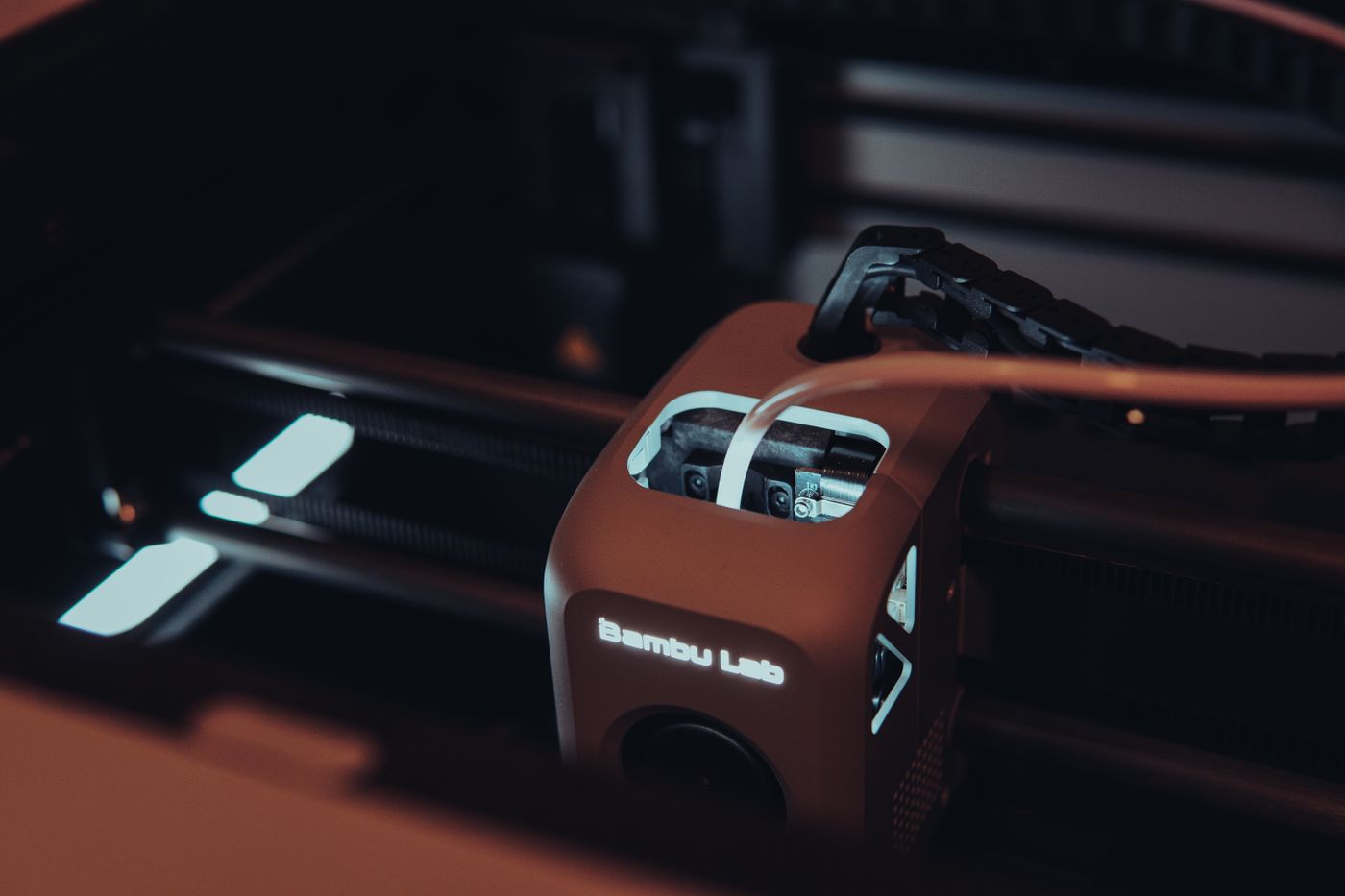 3d printer filament storage — Detailed view of a 3D printer mechanism in a dark setting, highlighting technology
Photo: Tibor Szabo / Pexels
Finite is the important word. A 5 g sachet that ships inside a new spool is sized to protect that spool inside a sealed bag for a few months, not to dry a 20 L tub for a year. As a working quantity, use roughly 100 g of indicating silica per 10 litres of box volume, and replace or recharge it when the indicator beads change colour. Indicating grades are coated or dyed to shift hue as they saturate, which is the only cheap way to know whether your desiccant is still doing anything.
Three practical rules from people who have ruined spools:
- Keep beads out of direct contact with filament. Loose beads abrade the surface and fine dust gets dragged into the hotend. Use a mesh bag or a perforated container.
- Do not mix fresh and spent desiccant. You lose the ability to tell which is which.
- Recharge rather than rebuy. Indicating silica can be regenerated in a domestic oven at low temperature until the colour returns — follow the instructions on the pack you bought, because coated indicator grades differ.
Why a hygrometer matters more than a lid
A ₹300 hygrometer is the cheapest upgrade in this entire article. Without a reading you are guessing, and the failure mode of a storage box is silent: it looks sealed, it feels sealed, and the spool inside is at 55% RH.
Two habits make a cheap meter useful. First, read it as a trend, not a lab value — consumer sensors are typically accurate to a few percent and drift over time, so the number that matters is whether it is rising. A box that used to sit at 22% and now sits at 38% is telling you the silica is spent, whatever the absolute accuracy. Second, check it against a reference once. A sealed jar with a saturated salt solution holds a stable, known humidity for days, which is enough to spot a meter that is wildly out.
Placement counts too: put the meter where the air is, not on the silica bag, and keep the box out of direct sun. A sealed tub on a balcony can hit 45 °C inside, and PLA's heat resistance is poor unless annealed, so a spool can deform before humidity becomes the issue.
How do you dry a spool that is already wet?
Drying is straightforward, but the margin for error is smaller than most guides admit. Wikipedia's filament article notes that a food dehydrator can remove water from hygroscopic materials at above 70 °C, and that commercial producers dry PLA at around 80 °C before extrusion. Those figures describe loose pellets in a controlled dryer, not a wound spool on a plastic hub in a kitchen oven. A domestic oven's thermostat can overshoot by 20 °C, and PLA softens well below its melting point, so the spool can deform before it dries.
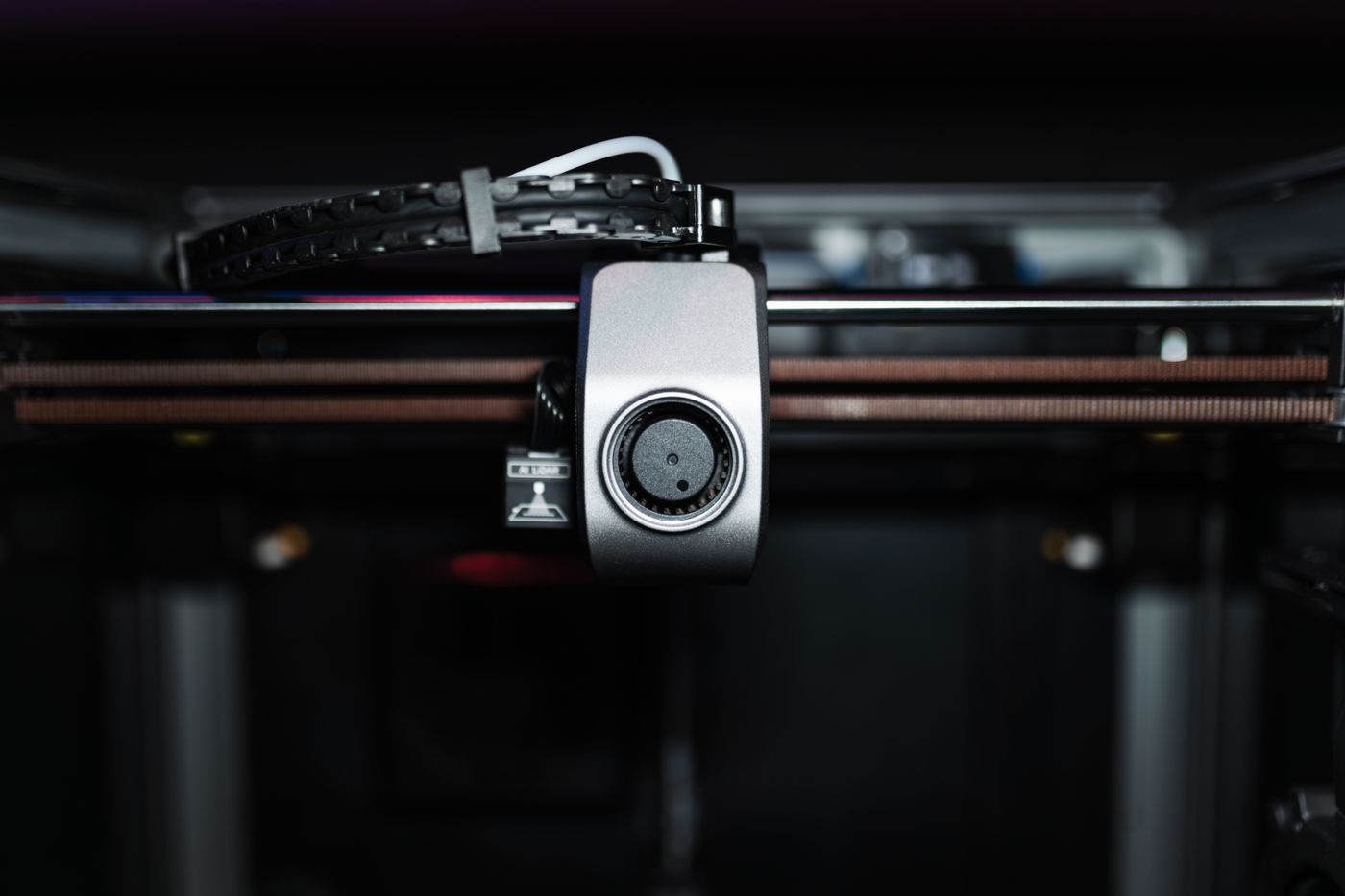 3d printer filament storage — Macro shot of a 3D printer nozzle highlighting technology and precision
Photo: Matheus Bertelli / Pexels
Use a filament dryer or a food dehydrator set to the temperature your filament maker publishes, and work in this order:
- Weigh the spool on a kitchen scale. A 1 kg spool that has taken up 0.5% of its weight in water is carrying about 5 g of it, which is enough to cause popping.
- Check the maker's drying spec for that specific material. PLA, PETG and TPU do not share one temperature, and PLA+ blends vary by brand.
- Dry it vented, 4–6 hours as a starting point, with the lid cracked or the vent open so the water vapour can leave.
- Cool it inside a sealed box with fresh silica. A warm spool pulled straight out into humid air re-absorbs moisture on the way down.
- Print a test piece with retraction-heavy geometry. Stringing and popping should drop noticeably within the first few centimetres.
- If nothing changed, the moisture may not be the problem. Check for a worn nozzle, a partial clog, or filament that is simply old and brittle — stored PLA also embrittles with age, and drying will not fix that.
What does Indian humidity mean for a finished keychain?
Very little, and that is the honest answer. Once PLA+ is printed into a solid part, the exposed surface area collapses and moisture uptake slows to the point where it does not affect a 14–18 g keychain in normal use. A custom name keychain printed at Nuho India at about 215 °C, with letters fused to a continuous backing plate rather than glued on, does not swell, warp or soften in a pocket in Coimbatore.
The real threats to a finished keychain are heat and abrasion, not damp. A dashboard in direct summer sun is far harsher than a monsoon, and a bunch of keys rubbing together wears the surface long before humidity does anything. If you want the material comparison in detail, the PLA vs PETG durability guide covers where each plastic actually fails, and the filament comparison chart lines up PLA, PETG, TPU, ABS and ASA on the properties that matter.
For anyone printing their own, the economics are covered separately in the PLA filament price per kg guide — but the short version is that ruined spools, not expensive filament, are what make this hobby costly. If you would rather skip the storage problem entirely, our custom 3D printed keychains are made to order in 24–48 hours and ship across India from ₹129.
Which storage mistakes cost the most?
- Sealing humid air. Box, lid, click — and the spool is now in a humid microclimate. Load the box in an air-conditioned room, or dry the air with silica before the spool goes in.
- Reusing spent silica. A sachet that has been in a drawer for a year is decoration. Indicating beads, or a schedule, or both.
- Trusting a worn gasket. Silicone seals flatten with use. A cereal box that no longer hisses when you press the lid is not airtight.
- Storing in a garage or balcony cupboard. Heat cycling does more damage to PLA than humidity does, and both arrive together in Indian summers.
- Buying 5 kg before you can store 5 kg. Bulk pricing only wins if the last kilogram still prints like the first.
- Leaving the spool on the machine between prints. The most common storage container in India is an open printer, and it is the worst one.
None of this needs to be expensive. A sealed box, 100 g of indicating silica, and a ₹300 hygrometer will outperform a cabinet that nobody checks — because the point is not to own storage, it is to know what your filament is sitting in.
Frequently Asked Questions
More Articles You Might Like
Resin 3D Printing Safety: Gloves, Ventilation and Waste
Resin 3D printing safety for home setups: nitrile gloves, real extraction, a two-jar IPA wash, and how to solidify resin waste instead of pouring it away.
3D Printing Layer Height: 0.12 mm vs 0.2 mm vs 0.28 mm
Layer height 0.12 vs 0.2 vs 0.28 mm compared: print time, surface finish, real strength effects, the 80% nozzle rule, and the settings used for keychains.

3D Printed Gift Boxes: STL Files, Fit and Finishing (2026)
A practical guide to 3D printed gift box STL files: lid clearance, wall thickness, layer height, filament cost and finishing steps that survive real handling.