
3D Printed Phone Stands in India: Desk Risers and Car Docks
Nuho India Team
Nuho Creative Team
Key Takeaways & TL;DR
- Desk phone stands work at 15-25° of backward tilt; car docks and video calls need 60-75°, near-vertical, with the screen raised toward eye level.
- PLA's glass transition is 60-65 °C (Wikipedia), so a printed car dock belongs on a shaded vent, never a sun-baked dashboard where parked interiors climb far above ambient.
- A wedge-style desk stand slices to 15-30 g of filament; fold-flat kickstands run under 10 g — a kilo of PLA prints dozens of stands.
- Print flat, face down, with 1.35-1.8 mm walls (3-4 perimeters on a 0.4 mm nozzle) at 0.2 mm layers and 20-30% infill for a stand with no supports.
- Nuho India prints PLA+ at about 215 °C in Coimbatore, with personalised gifts despatched in 24-48 hours across India.
What is a 3D printed phone stand?
A 3D printed phone stand is a simple bracket, printed in PLA+ on a desktop machine, that holds your phone at a fixed angle on a desk, a kitchen counter or a car vent. Desk risers typically tilt the screen back 15–25° and weigh 15–60 g; car docks hold the phone closer to vertical, around 60–75°, so it faces the driver. If you own a printer, one costs a handful of grams of filament and a couple of hours of machine time. If you don't, print shops and custom-gift makers produce them to order. This guide covers the design rules that decide whether a printed stand actually holds a modern phone — including the one heat limit every PLA stand carries.
Why PLA+ is a sensible material for a phone stand
PLA is, according to the polylactic acid entry on Wikipedia, the most widely used plastic filament in FDM 3D printing, and the reasons read like a spec sheet for a phone stand: low melting point, high strength, low thermal expansion and good layer adhesion. Low thermal expansion matters more than it sounds — a wide, flat base prints without the corner lift that spoils ABS parts, and good layer adhesion means the cradle lip takes the phone's weight across bonded layers instead of shearing apart at them.
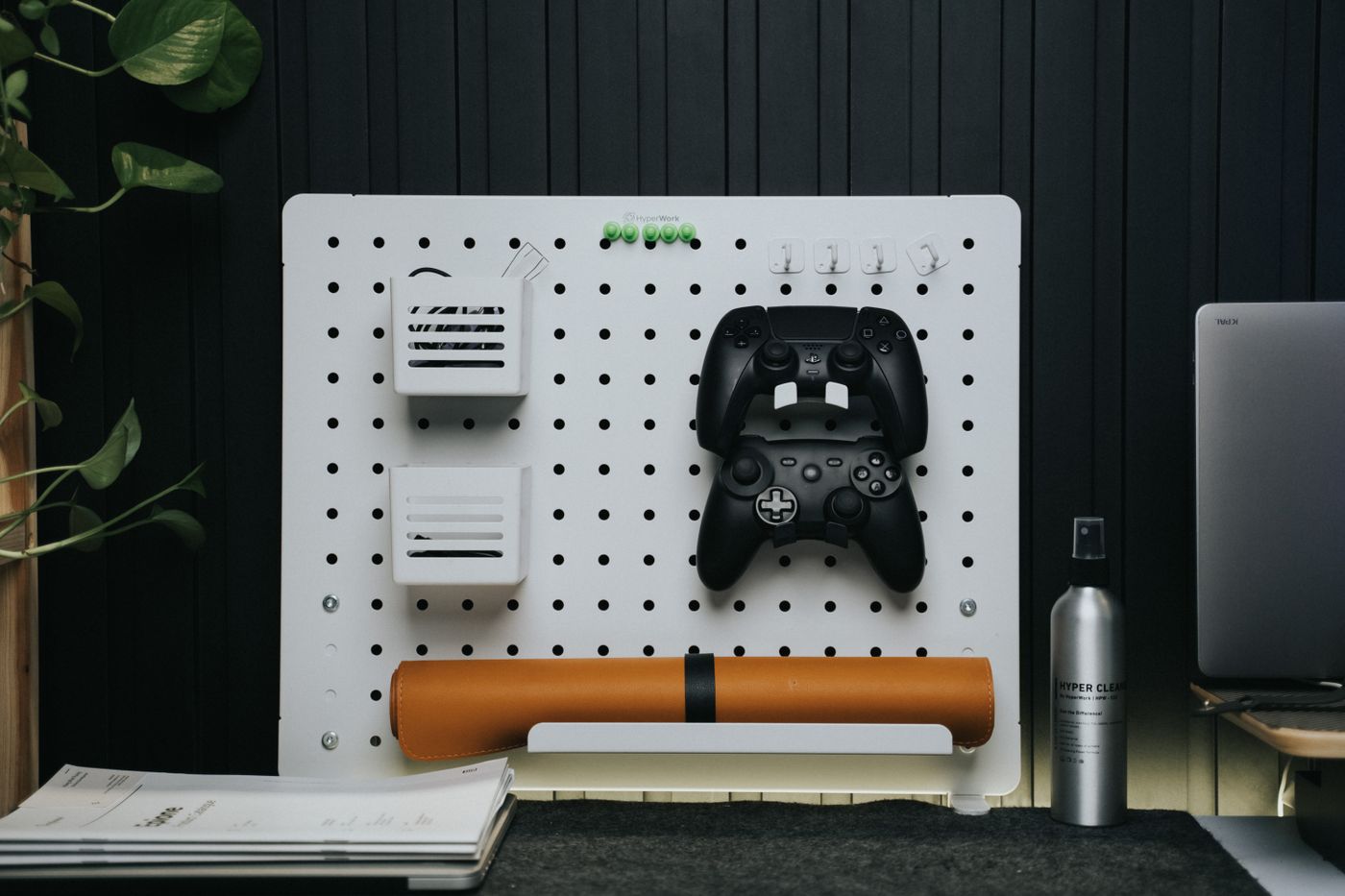 3d printed phone stand — Minimalist workspace with a pegboard displaying game controllers and tech accessories
Photo: minhphuc .workspace / Pexels
The published numbers that define PLA's behaviour:
| Property | PLA range (published) | What it means for a stand |
|---|---|---|
| Glass transition | 60–65 °C | Softening starts here — the dashboard limit |
| Melting temperature | 130–180 °C | Prints on any desktop machine, no heated chamber needed |
| Young's modulus | 2.7–16 GPa | Stiff enough that a thin riser does not flex under a phone |
| Density | 1.21–1.43 g/cm³ | A 40 cm³ stand lands near 50 g |
Figures from the Wikipedia polylactic acid entry; actual values vary with grade and additives.
The same source is blunt about PLA's weakness: it has poor heat resistance unless annealed. That one sentence decides where a printed stand can live. On an air-conditioned desk, 60–65 °C is a lifetime away. On the dashboard of a car parked in Indian summer sun, it is the whole conversation — which is why the car section below treats a vent clip as the only sensible printed mount.
One more number from the same page: PLA's density of roughly 1.2–1.4 g/cm³ means weight scales with volume, so the cheapest way to make a stand stronger is usually more perimeters on a thinner shell, not a solid block.
What angle should a phone stand use?
For desk use, 15–25° of backward tilt is the working range; for video calls and recipes, stand the phone much closer to vertical, 60–75°, and raise the screen rather than tilting your head down. The reason is posture. A 2014 study in Surgical Technology International by Kenneth K Hansraj modelled the forces the cervical spine carries as the head tilts forward into worse posture, and found that load on the neck rises as the head moves further forward over the phone. The practical translation for stand design: a low kickstand that works fine for a quick glance forces a forward hunch in a thirty-minute call, so anything used for meetings, online classes or long videos should lift the top of the screen toward eye level, not merely prop the phone up.
Three placement rules follow from that:
- Video calls and classes: near-vertical (60–75°) and as high as the setup allows — a stack of books under a riser beats a perfect angle at desk level.
- Casual desk use and notifications: 15–25° keeps the screen readable with a glance and stable enough for thumb typing.
- Kitchen and workout timers: near-vertical, placed back from the counter edge so splashes and bumps miss the cradle.
These are design ranges, not medical advice — but they are the numbers stand designers actually work from, and they are cheap to test: slice two wedges at 20° and 65° before committing to a finished model.
How do you design a 3D printed phone stand?
A printable stand comes together in six decisions, and almost all of them are made before the printer heats up:
- Set the angle first. Fix 15–25° for a desk riser or 60–75° for a near-vertical dock, then build the wedge around it. Adjustable designs add a hinge or a ratchet, but every extra joint is a tolerance you must get right — see our 3D print design tips for beginners for the clearance rules moving parts need.
- Size the cradle lip at 10–12 mm deep and round the top edge — deep enough to hold a phone in a case, shallow enough not to cover the bottom of the screen or block a charging cable.
- Leave a cable cut-out. A U-shaped slot at the bottom centre lets a cable pass through while the phone charges, so the stand doubles as a charging dock.
- Design walls as multiples of one extrusion. With a 0.4 mm nozzle that is about 0.45 mm per perimeter, so 1.35–1.8 mm walls (three to four perimeters) give a rigid shell without printing solid plastic.
- Print flat, face down, no supports. A wedge printed on its back face has no overhangs at all, and the bed-facing surface comes out smooth — the layer lines run with the load, not across it.
- Slice at 0.2 mm layers with 20–30% infill and add a thin silicone or rubber pad under the base, because hard PLA on a polished desk slides before it tips.
Print time and filament use vary with size and infill — check your slicer's estimate rather than trusting a generic figure.
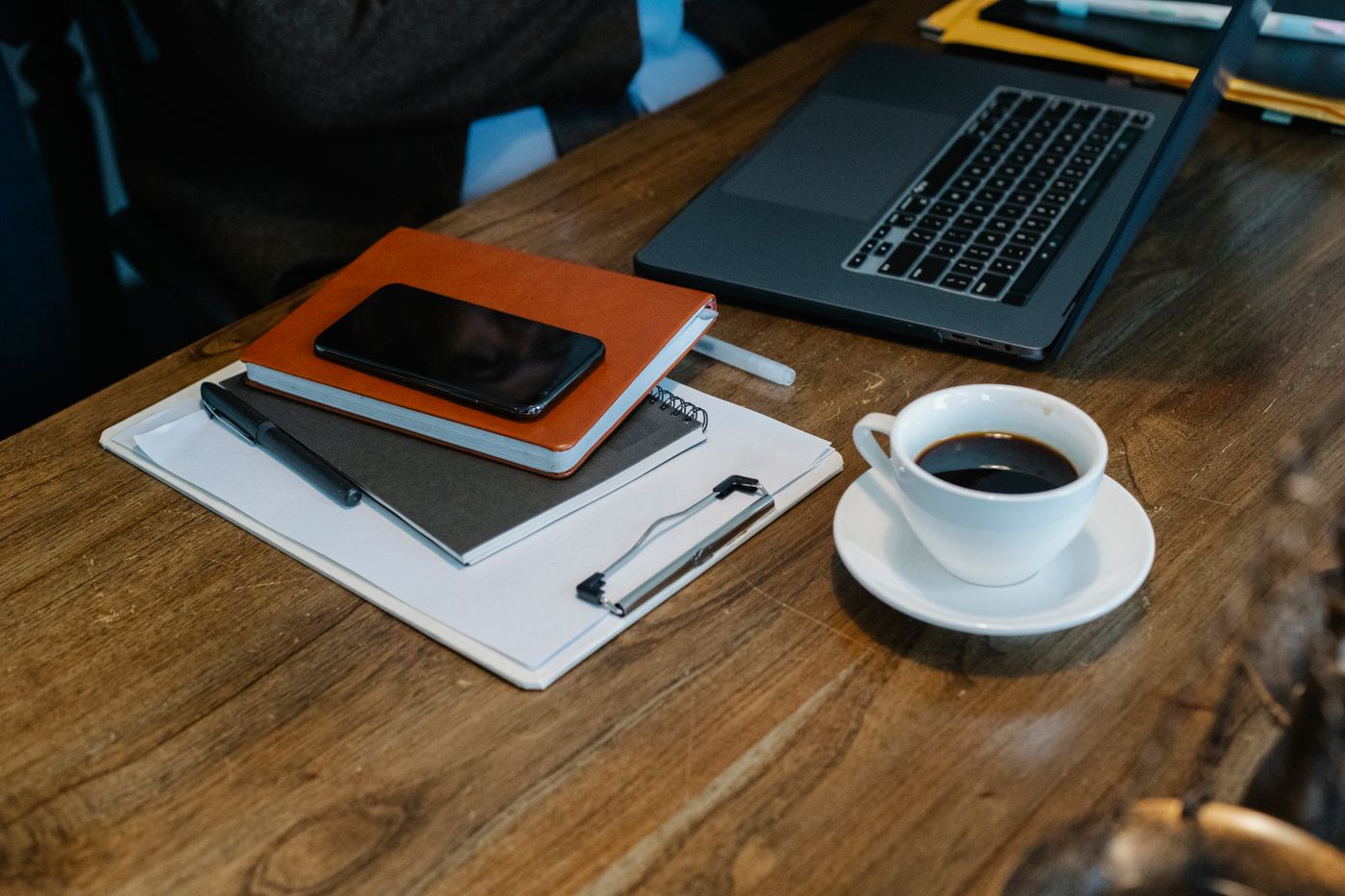 3d printed phone stand — From above of opened laptop with cup of coffee placed on wooden table near notebooks and smartphone in office
Photo: Sora Shimazaki / Pexels
Desk riser vs car dock: two very different jobs
A desk stand and a car dock face opposite constraints, and mixing them up is how printed stands get a bad name.
| Constraint | Desk riser | Car dock |
|---|---|---|
| Heat | Room temperature, no limit in practice | PLA softens from 60–65 °C; parked-car interiors climb far above ambient in direct sun |
| Vibration | None | Constant road vibration tests the layer bonds |
| Mounting | Friction and gravity | Vent clip, cradle or console placement |
| Failure mode | Slides on a slick surface | Softens, warps or drops the phone |
The honest car-dock verdict: a printed car dock should live on an air vent or in a shaded console, never on a dashboard in direct sunlight. PLA's 60–65 °C glass transition is simply too close to what a sun-baked dash approaches on a May afternoon; a printed part left there will droop rather than shatter, taking the phone's grip with it. If a dash mount is unavoidable, print the dock in PETG instead — it trades some stiffness for a higher heat tolerance — or buy an injection-moulded one. For vent mounts, design the clip with generous clearance (vent slats differ between cars) and a cradle lip of at least 10–12 mm, since a phone in a rugged case can cross 200 g and road vibration makes thin clips the first thing to fatigue.
How much filament does a phone stand use?
A wedge-style desk stand typically slices to 15–30 g of filament; fold-flat kickstands often run under 10 g; chunky organiser-style risers can pass 80 g. These are approximate figures — slicers report exact numbers per model, and that is the number to trust. At typical Indian filament prices, one kilogram of PLA prints dozens of stands, so the plastic inside a stand is rarely the reason a printed one costs what it costs; machine time, finishing and design are the real drivers. Our breakdown of what a home 3D print really costs shows the same arithmetic for small printed parts: cost per gram matters, but cost per hour of machine time dominates.
 3d printed phone stand — A minimalist setup featuring a to-do list, plant, and pens for organized productivity
Photo: RDNE Stock project / Pexels
If you are buying rather than printing, ask three questions before paying: what material is it (PLA, PLA+ or PETG), what orientation was it printed in (lip strength depends on layer direction), and will it hold your phone with its case on. Filament prices and machine rates change — verify current figures before comparing quotes.
Should you print a phone stand, or buy one?
Print it if you own a printer and want the angle exactly your desk needs. Buy it if you want it tomorrow, want it in a finish you cannot print, or want a name or design on it. The technology is identical either way: fused layers of PLA, bonded while hot, building a solid part one horizontal slice at a time.
That last option is where a printed stand becomes a gift. Nuho India prints in PLA+ at about 215 °C in Coimbatore, Tamil Nadu, fusing letters into a continuous backing plate rather than gluing on brittle cut-outs — the same layer-bonded logic that makes a printed stand's cradle hold. Our custom 3D printed decor and gift range covers personalised desk pieces and tags; a named phone stand pairs naturally with a name keychain (₹129–149) or a 3D printed engagement gift, and everything is custom-manufactured and despatched within 24–48 hours in India.
Whichever route you take, print or buy, the design rules above do not change: mind the 60–65 °C heat limit, match the angle to the job, and let the slicer — not a guess — decide how much plastic the stand needs.
Frequently Asked Questions
More Articles You Might Like
3D Printer Keychain Price: What a Home Print Really Costs
What a 3D printer keychain really costs in India: ₹25–₹45 per tag in filament, power and machine time — plus why buying a finished tag at ₹129–₹149 often wins.
Name Keychains on a Cricut: What Vinyl Can and Cannot Do
A name keychain on a Cricut is a vinyl label on a blank. See what it does well, where it fails, and when a 3D printed PLA+ tag lasts longer.
3D Print Design Tips: Modelling Parts That Print First Time
3D print design tips for modelling parts that print first time: overhang limits, wall thickness maths, tolerances and orientation rules, all sourced.