
3D Printed Decorative Boxes: Desk Storage That Looks Good
Nuho India Team
Nuho Creative Team
Key Takeaways & TL;DR
- PLA+ decorative boxes are printed at about 215 °C and manufactured in 24-48 hours at Nuho India's Coimbatore facility.
- PLA+'s glass transition is 60-65 °C, so a printed box belongs on a desk or shelf - never a hot car dashboard or above a heater vent.
- Lid rails, dividers and raised names fuse into one part during printing, so a PLA+ box has no glue joints to fail the way thin acrylic edges chip.
- Monsoon humidity will not warp a PLA+ box the way it swells unfinished wood; a damp cloth wipe is all the cleaning it needs.
What is a 3D printed decorative box?
A 3D printed decorative box is a small storage piece — a trinket box, keepsake box or desk caddy — built layer by layer from PLA+ filament instead of being cut from acrylic or glued up from wood. Nuho India prints each box in Coimbatore, Tamil Nadu at about 215 °C, so the lid rails, dividers and any raised lettering fuse into the part itself: no glue joints, no brittle cut-outs stuck on afterwards. Manufacturing and despatch take 24–48 hours. People end up searching for a "3D printed decorative box" for three practical reasons: standard organisers never fit the exact corner of a desk, gift-shop wooden boxes look generic, and thin acrylic edges chip the moment you overfill them. A printed box is made to a size — and the size can be exactly yours.
Why does PLA+ work better for a desk box than acrylic or wood?
PLA+ is the toughened formulation of PLA (polylactic acid), which is the most widely used filament material in desktop 3D printing — valued for low warping, good layer adhesion and high strength for its weight, according to the PLA material overview on Wikipedia. The same source puts PLA's glass transition at 60–65 °C with a melting range around 130–180 °C, and the RepRap wiki's PLA page notes real extruders push it at roughly 180–220 °C. What those numbers mean on a desk: rigid at room temperature, stable through an Indian summer indoors, and soft only when genuinely hot.
| Material | Wins at | Loses at | Desk-box verdict |
|---|---|---|---|
| 3D printed PLA+ | Exact custom sizes, one-piece fused lids, raised names, very light | Softens above 60–65 °C; layer lines are visible up close | Best all-round for a decorative desk box |
| Acrylic | Glossy, glass-like look | Brittle at narrow edges and thin sections; cracks under point loads | Smart-looking but easy to chip |
| Laser-engraved wood | Warm, natural look | Swells and warps with monsoon moisture | Fine in dry rooms, unpredictable in humidity |
| Cast zinc or brass | Heft and premium feel | Heavy, and scuffs whatever it touches | Overkill for small desk storage |
The honest flip side matters too: PLA+ is a thermoplastic with a 60–65 °C glass transition, so a printed box has no business on a car dashboard in May, above a heater vent, or in an oven. Wood does not melt and metal does not deform at those temperatures — those materials win there. For dry, indoor desk storage, though, the trade sits comfortably in PLA+'s favour: it stays dimensionally stable, it does not absorb moisture the way unfinished wood does, and it costs far less per gram than cast metal.
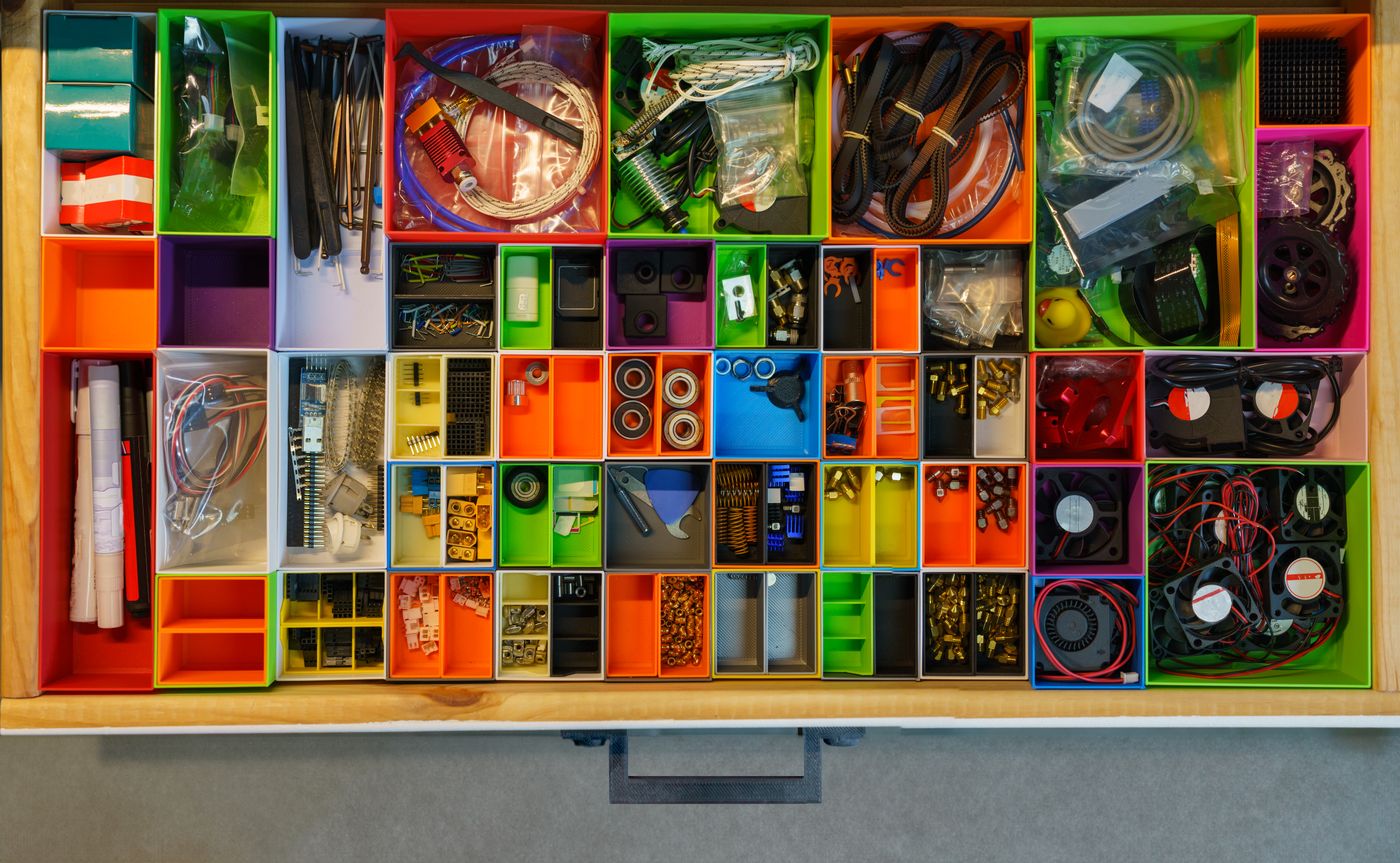 3d printed decorative box — Top view of a neatly organized drawer filled with colorful containers holding various tools and electronic parts
Photo: Jakub Zerdzicki / Pexels
What size should a 3D printed storage box with a lid be?
Searches for "3D printed storage box" almost always add with lid, stackable or drawers — and the lid is the right instinct. An open tray on a desk collects dust and pen crumbs; a lid turns the same footprint into storage you can actually leave out. A few sizing rules that hold up in practice:
- Measure the corner, not a catalogue. The best desk box is sized to the dead corner beside your monitor base or laptop stand. Printed boxes are dimensioned in software, so "15 mm wider to fit" costs nothing extra — try getting that from a store-bought acrylic organiser.
- Palm-size suits most clutter. A box roughly the width of a hand holds rings, studs, SIM trays, USB drives, collar pins and prayer beads — the exact items that otherwise migrate across the desk.
- Stackable lids need a recess. A shallow lip on the lid lets a second box sit on top without sliding. If you plan to stack two or three, say so when ordering so the recess is printed into the design.
- Lift-off beats hinged for small boxes. A printed hinge is charming but adds a failure point; a lift-off lid with a small finger notch is simpler, stronger and impossible to snap off in a bag.
If the desk itself is new territory, our guide to 3D printed desk accessories for home offices covers the rest of the desktop — pen holders, organisers and name plates that can share the box's colour.
How is a decorative box 3D printed, step by step?
- Model to the measurement. The box is drawn to your dimensions, with the lid, rails and any raised name or date modelled in from the start — lettering is geometry, not a sticker.
- Slice for solidity. Small decorative boxes are printed solid or near-solid, so the lid seats on real material instead of a thin shell, and the base does not flex when you press it.
- Print at about 215 °C. PLA+ extrudes at roughly 215 °C at Nuho India; each layer fuses into the one below as it cools. A palm-size box is a few hours on the machine; bigger desk boxes run longer.
- Clean up and check the fit. Supports come off, edges are cleaned, and the lid is seated and checked on the actual box — a lid that binds is re-sanded or re-printed, not forced.
- Finish and despatch from Coimbatore. Total time from confirmed order to dispatch is 24–48 hours, which is why a made-to-order printed box beats a "next month" import for a gift deadline.
One honest note on strength: fused layers make a real bond — that is why a continuous printed plate beats glued-on acrylic letters — but it is still a layered thermoplastic. A printed box is light desk storage for jewellery, keys and cables, not a bench vise or a shelf bracket.
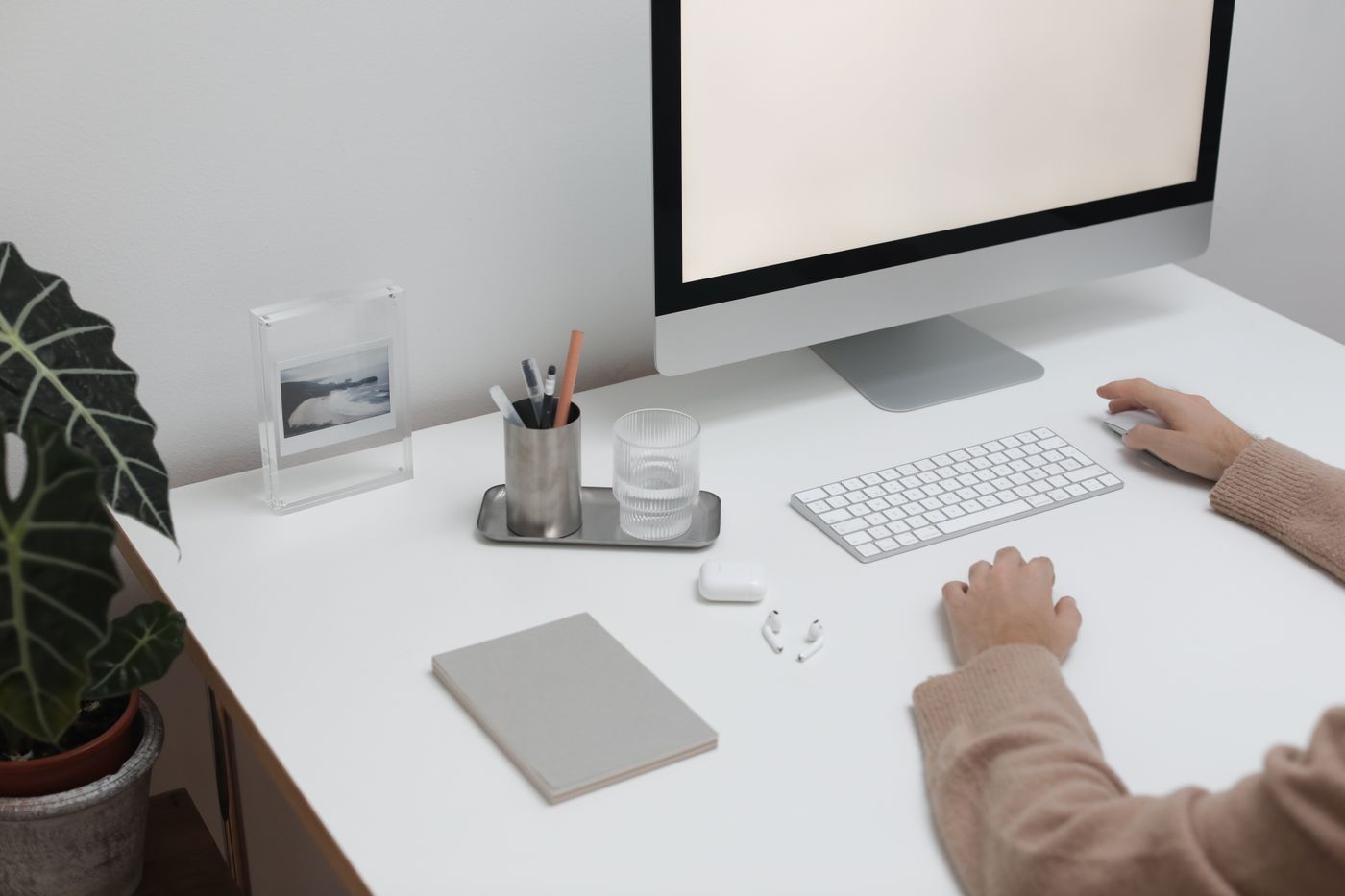 3d printed decorative box — High angle of crop faceless person sitting at table with wireless gadgets and computer
Photo: Cup of Couple / Pexels
Are 3D printed boxes waterproof — and where do they lose?
Water is where a printed PLA+ box quietly out-performs wood: the material does not take up moisture the way unfinished timber does, so monsoon humidity will not warp the base or swell the lid. A damp cloth wipe is all the cleaning it needs. It is storage, not a swimming pool — the lid is a lift-off fit, not a gasket — but a box left in a humid bathroom cabinet will not change shape the way a wooden one might.
Heat is the real limit, and it deserves a straight answer: PLA+ begins to soften around its 60–65 °C glass transition, a temperature a parked car's interior can reach easily in an Indian summer. Keep the box on a desk, shelf or cupboard — not a dashboard, not a sun-baked windowsill for months, not above a geyser or heater vent. Dishwashers and ovens are out for the same reason. Prolonged direct sunlight is best avoided less for the box's shape than for its colour, which ages fastest under constant UV.
Load is the third honest boundary. Jewellery, watch straps, earphones, keys, stamp-sized paperwork — all comfortably inside a printed box's remit. What does not belong: heavy tools, wet food, or anything you would stack a speaker on.
Personalising a decorative box: names, colours and keepsake gifts
This is where a printed box stops being storage and becomes a gift. Because the lettering is printed as part of the same part, a name, a date or a short line can sit raised on the lid in a contrasting colour — it will not peel like a vinyl label or scratch off like paint. A keepsake box for a baby's first hospital tag and bracelet, a wedding-date box for the rings, a graduation box for the first ID card — these are the three most common requests, and all three suit a lift-off-lid palm-size design.
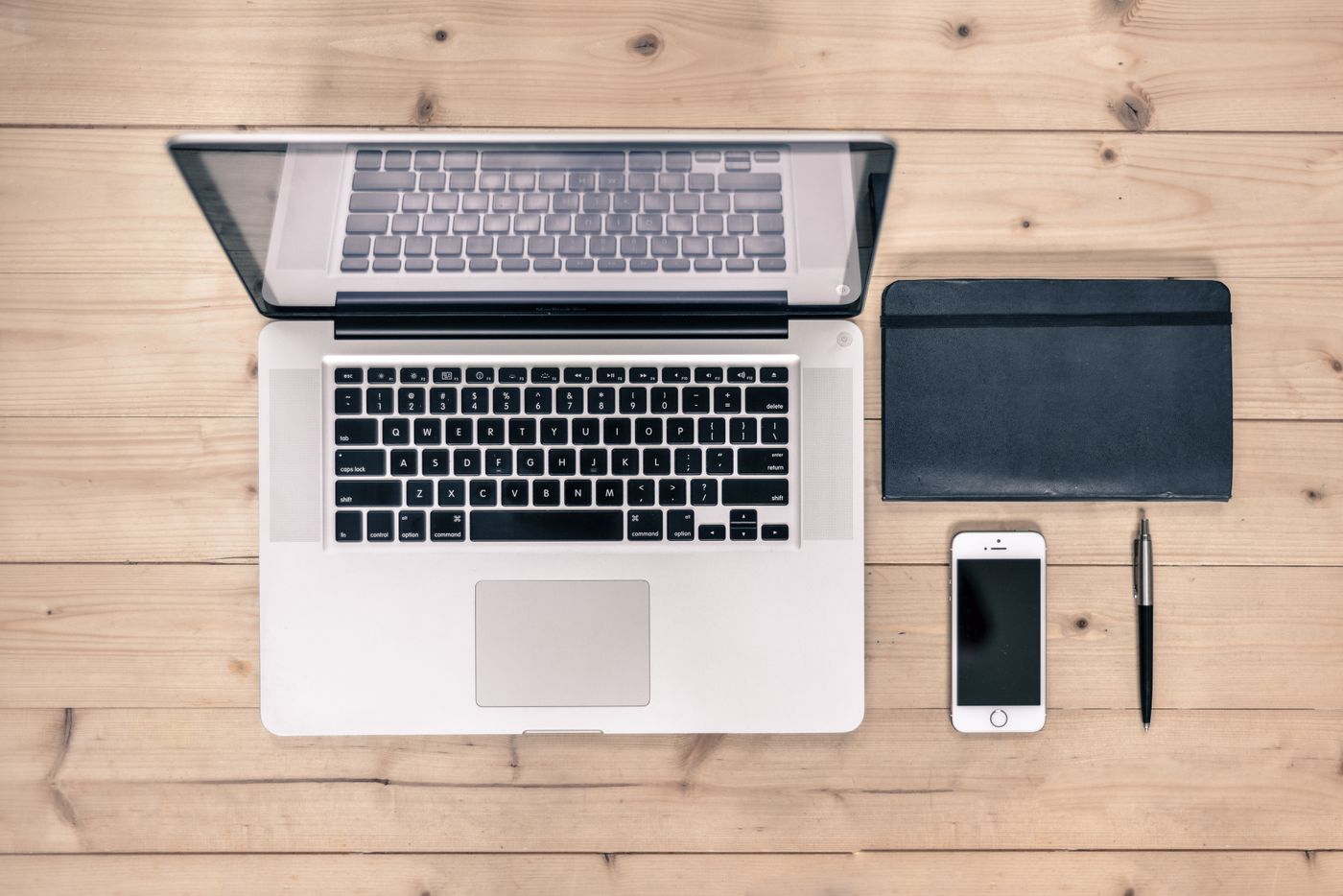 3d printed decorative box — Top view of a tidy workspace featuring a laptop, smartphone, notebook, and pen on a wooden desk
Photo: Pixabay / Pexels
Nuho India makes the whole decor and gift line in PLA+ in Coimbatore, Tamil Nadu, printed to order and despatched in 24–48 hours; the custom decor and gift range covers sizes, colours and name options, and support can quote a custom size directly. If a festival or birthday is the deadline, that 24–48 hour window is the difference between "ordered on time" and "explained in advance".
For makers who would rather print their own, our guide to 3D printed gift box STL files, fit and finishing covers lid tolerances and the finishing steps that make a box feel bought rather than built. And a box rarely travels alone — see 3D printed home decor ideas for desk, shelf and wall for pieces that can share its colour and lettering style.
Should you print your own, or order one ready-made?
Both routes are legitimate; they cost different things. Printing your own costs a printer, filament, and the learning curve — a first box usually teaches you that the lid tolerance was wrong, and filament prices and machine specs change often enough that you should verify current figures with the manufacturer before budgeting. It is the right route if you enjoy the process or need ten matching boxes.
Ordering costs money and removes the trial-and-error: you send a measurement and a name, and a made-to-order PLA+ box arrives instead of a spool of near-misses. Manufacturing runs 24–48 hours in Coimbatore, and custom sizing is the normal case rather than a special favour. Keychains from Nuho India sit in a published ₹129–₹149 band; box pricing follows size, material use and finish, so it is quoted per design — the products page and the support line (+91 90808 85390) are the honest places to check a current number.
For most people buying a gift on a deadline, ready-made wins. For a maker with a printer humming anyway, the STL route is genuinely satisfying — as long as the lid clears.
Frequently Asked Questions
More Articles You Might Like
3D Printed Houses: What the Hype Misses
3D printed house cons, honestly covered: reinforcement gaps, building-code delays, printer costs and the speed myth in construction 3D printing.
3D Printing Keychains: Settings, Strength and Batch Cost
Want to 3D print for keychains? Use these PLA+ slicer settings, strength limits and real batch costs to turn one spool into keychains that last long.
3D Printer Accessories as Gifts: What a Maker Actually Uses
Looking for 3D printer accessories as gifts? This maker-focused guide ranks calipers, dryers, cutters and filament by real daily use, with honest India price ranges.