
Personalised Keychain for House: Housewarming Tags for a New Home (2026)
Nuho India Team
Nuho Creative Team
Key Takeaways & TL;DR
- A personalised keychain for a house is usually 30–40 mm wide and costs ₹129–₹149 at Nuho India, with 24–48 hour manufacturing in Coimbatore, Tamil Nadu.
- Nuho's printed PLA+ house tags weigh roughly 14–18 g — light enough for a bunch carrying four to eight keys.
- About 8–12 characters stay crisp at a 30–40 mm tag width; a surname, door number or two initials fit best.
- Letters are fused to a continuous backing plate, so there is no glued joint to snap at a thin stroke.
- A full street address on a key tag is a security risk — use a surname and door number only.
What is a personalised keychain for a house?
A personalised keychain for a house is a small custom tag — usually 30–40 mm wide — printed with the family name, door number or a short phrase, and hung on the main door key. Nuho India prints them in PLA+ at about 215 °C in Coimbatore, Tamil Nadu, priced at ₹129–₹149 with a 24–48 hour manufacturing window.
The useful part is which key the tag belongs on, what fits on a 35 mm plate, and why most housewarming keychains end up in a drawer inside a month.
Why does a keychain work as a housewarming gift?
Because a new house creates one very specific problem on day one: every key in it is new at the same time. The main door, the gate, the back door, the bedroom, the cupboard, the bike, the car — they all arrive as identical-looking blanks on one ring, and for the first fortnight everyone in the family is grabbing the wrong one.
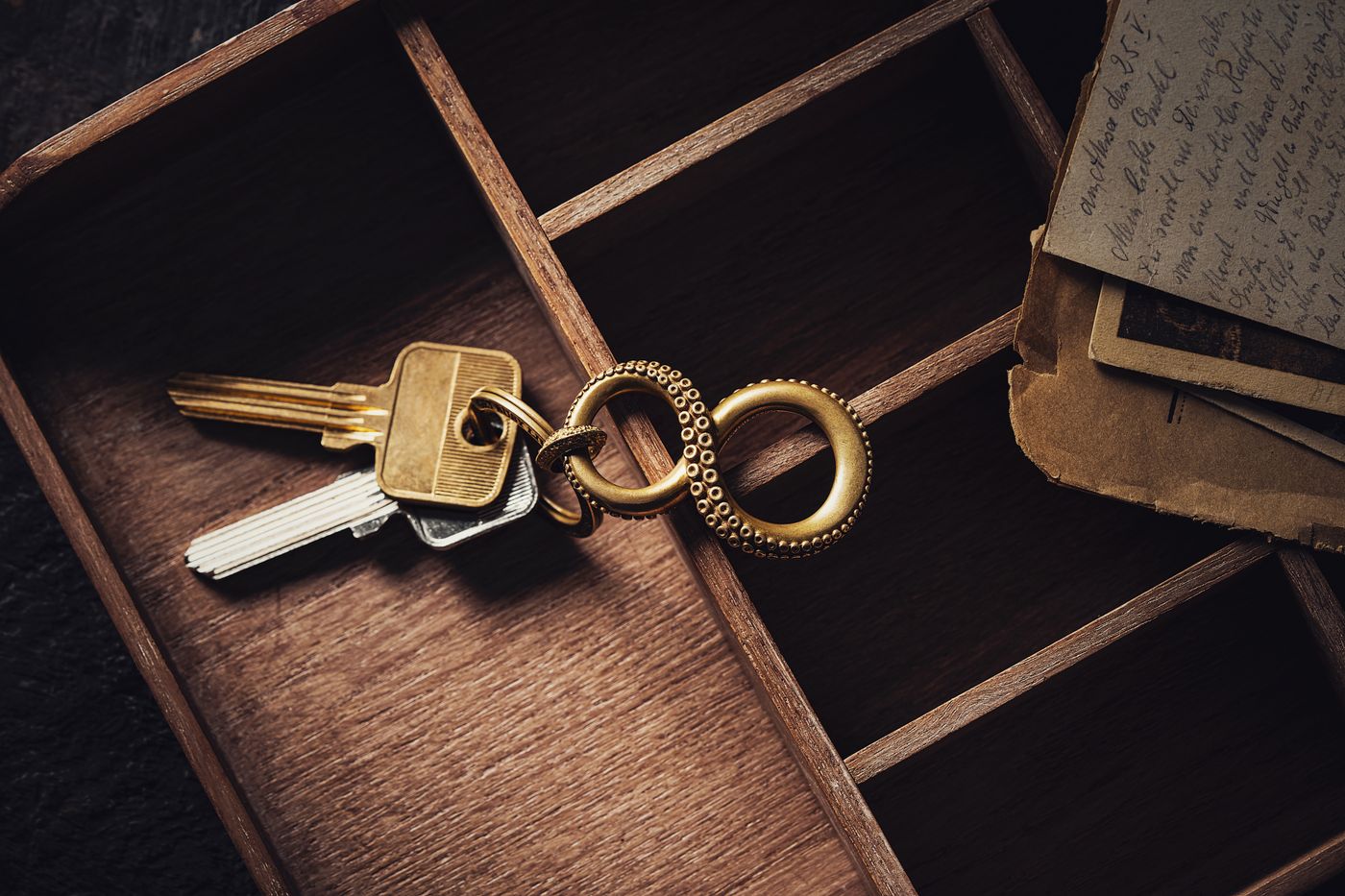 personalised keychain for house — A vintage keyring with brass keys in a wooden box next to old letters for a nostalgic feel
Photo: COPPERTIST WU / Pexels
A named, coloured tag solves an annoyance that exists in week one. That is the whole test for a housewarming gift: it should be useful before the novelty wears off. Sweets get eaten, plants get watered twice and then forgotten, and showpieces get assigned to a shelf. A key tag gets picked up forty times a day.
A second reason: a housewarming gift from a friend or colleague has to clear an awkward bar — expensive enough to be polite, cheap enough not to embarrass. A ₹129–₹149 custom tag with the family name on it sits in the safe zone: it looks considered rather than pricey, and personalisation is what carries the thought.
What does a grihapravesh gift traditionally mean in India?
In India the housewarming ceremony is grihapravesha, literally "entering the house", typically performed at an auspicious muhurta with a vastu shanti puja before the family moves in. The occasion is about purifying the house and inviting prosperity, and guests arrive with something for the home rather than something for the person.
One honest note before we go further: a keychain is not a traditional grihapravesh gift. The traditional set is sweets, fruit, utensils, cash, cloth, and increasingly plants or appliance vouchers. What a keychain does is fill the modern slot — the small, useful, personal add-on for a colleague, a cousin, a tenant moving into their first rented flat, or a friend whose housewarming you cannot attend in person.
That distinction matters when you are choosing. If the gift has to carry ritual weight, buy the steel tumbler set. If it has to be remembered, a name on a key tag does more work per rupee.
Which key in a house should get the tag?
Match the tag to the key that causes the most confusion, not the one that looks best on a listing photo. The hierarchy usually looks like this:
| Key | Tag that works | Why |
|---|---|---|
| Main door | Surname or house number, largest size | The key everyone handles daily, and the one guests are handed |
| Gate or compound lock | Short word or symbol, high-contrast colour | Often used in the dark; colour reads faster than text |
| Bedroom or cupboard | Initial of the person | Private keys stay sorted without labels that announce what they open |
| Bike or car | Number plate or two-letter monogram | Flat and light, so it does not swing against the tank or scuff the fob |
| Spare set | "Spare" plus a colour code | Keeps the emergency bunch instantly distinguishable |
| PG or hostel room | First name on a small split ring | Room keys get mixed up in shared flats constantly |
The common mistake is tagging every key in the same colour and font, which recreates the original problem in a prettier form. Colour is the fastest identifier — a red gate key and a black main door key get recognised before anyone reads a word.
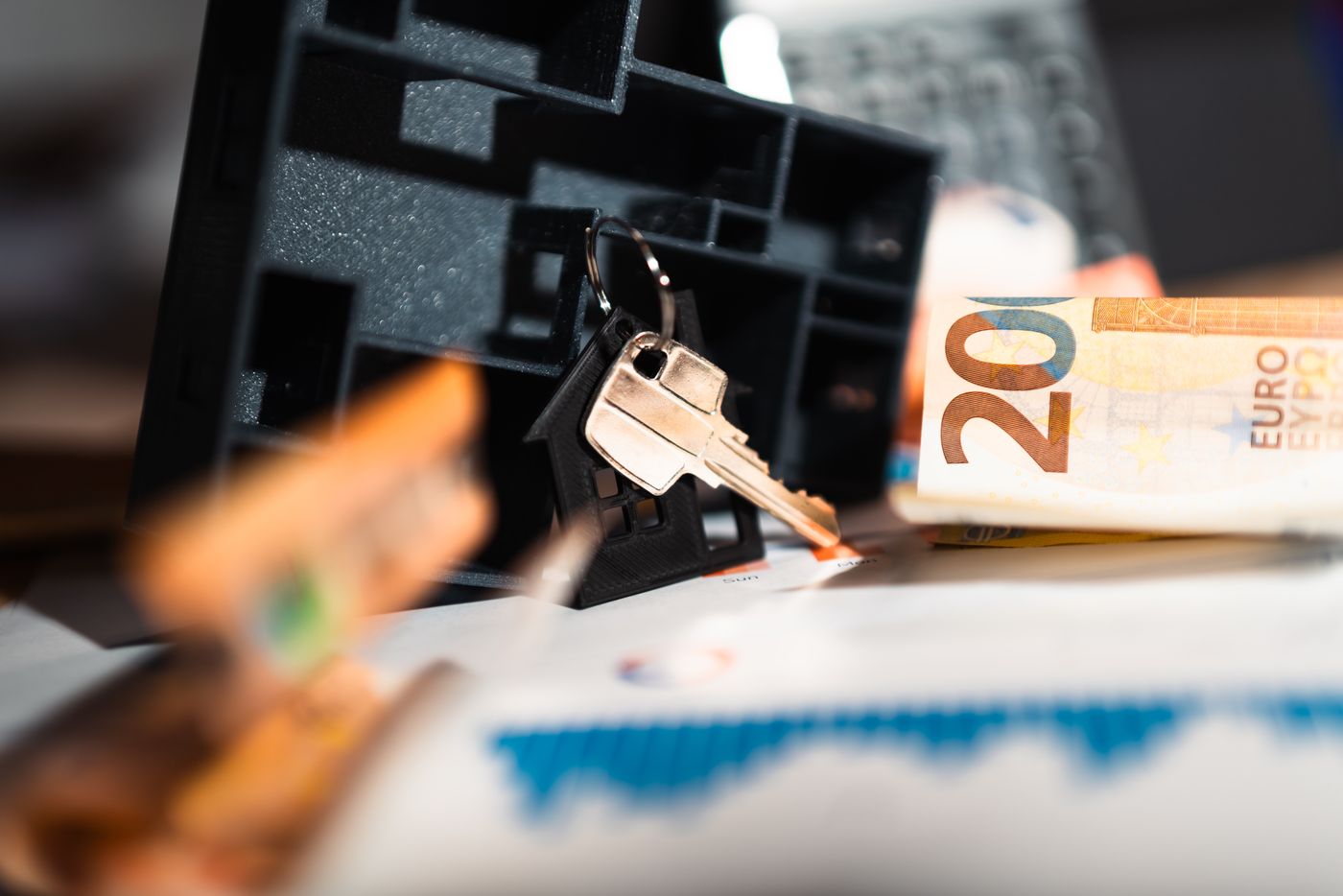 personalised keychain for house — Keys with a house model, Euro bills, and charts suggesting real estate and financial themes
Photo: Jakub Zerdzicki / Pexels
How much should a house keychain weigh?
A house keyring is usually heavier than a bike keyring, because it carries four to eight keys rather than two. That changes the maths: a tag that feels substantial on its own becomes a nuisance when it is the sixth object on the ring.
Nuho's printed PLA+ tags run about 14–18 g. That is light enough to disappear into a pocket and stiff enough to stay flat instead of folding around the other keys. Cast zinc or brass tags look premium in photos and typically weigh several times more, which is exactly why the heavy one gets quietly removed and the light one gets carried.
Ring size matters just as much. A small split ring — the type that needs a coin or a fingernail to open — holds better on a crowded bunch than a large spring clip, which tends to work loose and drop the tag. If the keyring already has a carabiner, order the tag with a plain hole and thread it on rather than doubling up on hardware.
What should be printed on a house keychain?
At a 30–40 mm tag width, roughly 8–12 characters stay crisp. Beyond that, letter strokes get thinner than the printer's nozzle and the text starts to look soft at the edges. Practically, that means:
- A surname alone: Sharma, Iyer, Fernandes
- A door number: No. 42, B-17
- A short phrase: Our Home, Home Sweet Home (the long version needs a wider tag)
- Two initials and a year: A&R 2026
Two design rules earn their keep. Put the text on one line if you can — stacked lines force a taller tag for the same character count. Keep punctuation minimal, too: ampersands and dots read well at this size, but thin hyphens vanish at a 0.4 mm nozzle.
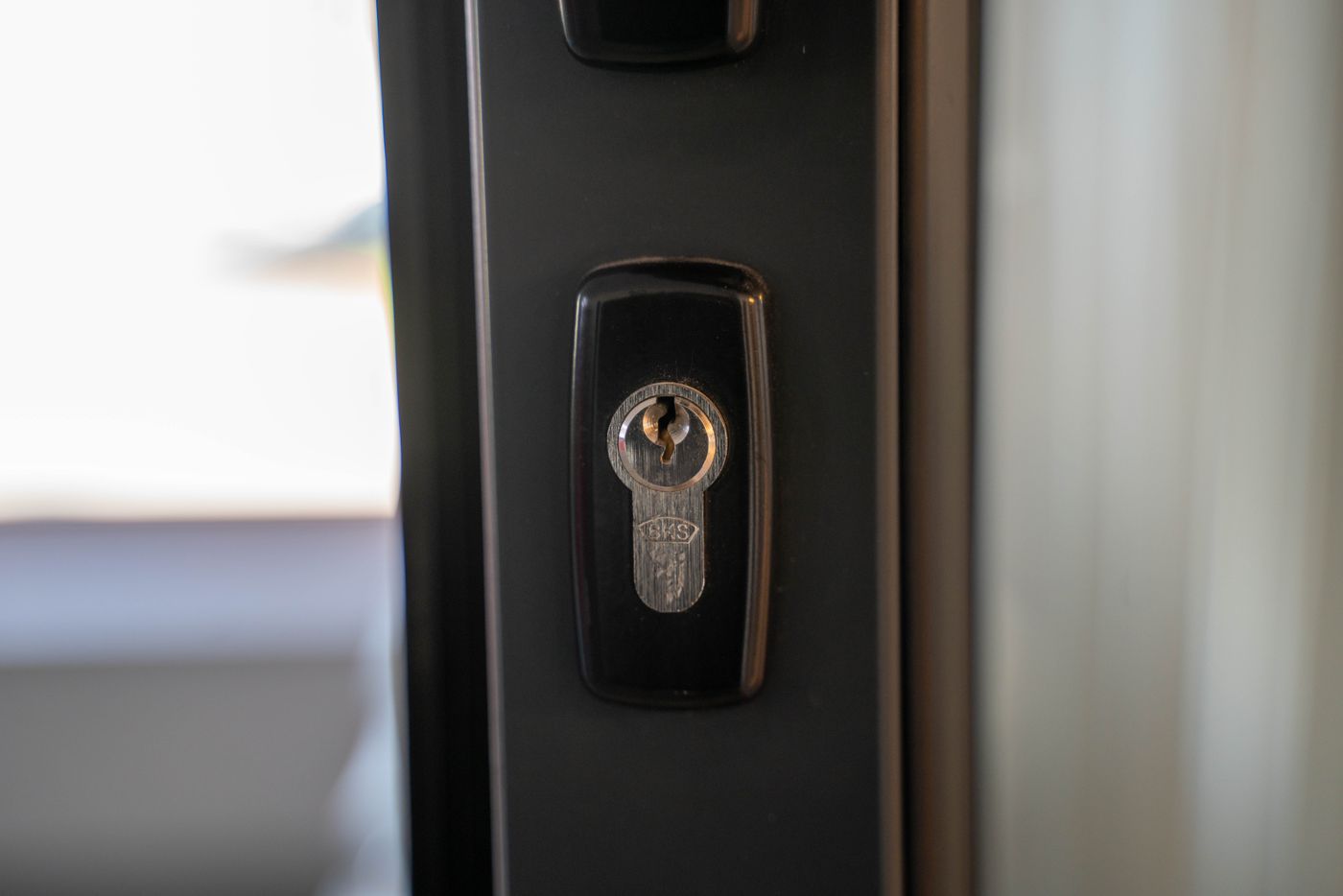 personalised keychain for house — Detailed view of a steel keyhole on a door ensuring security and privacy
Photo: Vladimir Srajber / Pexels
If you want the name in Tamil, Devanagari or another Indian script, ask the maker before ordering. Connected strokes and vowel marks need more vertical space than Latin capitals, and the honest answer is often "yes, but on a taller tag".
Is it safe to print your address on a keychain?
No — and this is the one limitation worth taking seriously. A keychain travels attached to keys. If the bunch is lost, a tag reading a full street address plus a flat number hands a stranger both the location and the means to open it.
The safer pattern is the one Indian nameplates already use: surname and door number, never the street. Or first names only. A tag that says "Iyer" is identifiable in a lost-and-found tray and useless to a stranger.
For a rental or a PG, use a first name and write a phone number on the back with permanent marker instead of printing it into the plastic.
PLA+ vs acrylic vs brass: which survives a keyring?
This is where housewarming keychains fail, because the cheapest listing is almost always acrylic and the most "premium" is usually brass. Both have a failure mode that a printed tag does not.
| Material | Weight | Where it fails | Honest verdict |
|---|---|---|---|
| 3D printed PLA+ | ~14–18 g | Softens in sustained direct heat | Best all-round for a crowded keyring |
| Acrylic | Light | Snaps at narrow cut-out letters and at the ring hole | Fine on a display board, poor in a pocket |
| Cast zinc / brass | Heavy | Scuffs, corrodes, drags the bunch sideways | Looks premium, gets removed for weight |
| Laser-engraved wood | Medium | Swells and warps with moisture | Good indoors, weak in a monsoon |
Polylactic acid has a density of 1,210–1,430 kg/m³ and a melting range of 150–160 °C, which is why it is the default material for fused filament printing: each layer is deposited hot enough to bond to the layer beneath it. The "plus" grades used for keychains are toughened blends of that same polymer, so the part flexes slightly under a thumb instead of cracking.
Nuho prints at ~215 °C and fuses the letters into the same piece as a continuous backing plate rather than gluing on separate cut-outs. That single decision is why a ₹140 printed tag outlasts a ₹90 acrylic one — there is no joint to fail at the thinnest stroke. For a deeper comparison of the four materials, our guide to the best material for keychains breaks down the trade-offs; the custom name keychain guide covers sizing and finish in more detail.
How is a custom house keychain made?
The process is short enough to explain in full:
- Text fit. The name or number is laid out at the ordered tag width and checked against the minimum stroke thickness the nozzle can hold.
- Slicing. The model is cut into layers, with the first layer pressed slightly flatter for grip on the bed.
- Printing. PLA+ is extruded at about 215 °C, layer on layer, which is what creates the bond between the text and the backing plate.
- Cooling and finishing. The tag is lifted, the ring hole is cleared, and edges are checked for stringing.
- Quality check and despatch. Manufacturing runs 24–48 hours in Coimbatore, Tamil Nadu, before the tag ships.
Because the text is geometry rather than ink, it does not fade or peel, which matters on something that rubs against coins all day.
How much does a personalised keychain for a house cost in India?
Nuho's custom tags sit in a ₹129–₹149 band per piece, including the name and colour choice. A set for a whole house — main door, gate, bedroom, spare — therefore lands under ₹750, which is roughly the price of one decent steel tumbler set and gets used far more often.
For grihapravesh return gifts, five to ten tags with the same surname and different colours is a clean, light parcel to hand out. For a single friend in a rented flat, one tag in their initial is enough. What makes the printed option cheaper is not the plastic — it is that no mould, die or engraving setup has to be paid for on a single piece.
If you are putting together a larger gift — a tag plus something for the shelf — our 3D printed home decor guide covers the pieces that survive an Indian living room. The Nuho India product range lists the current shapes, colours and finishes.
What should you order? A five-point checklist
Before ordering, run through this:
- Count the keys, not the people. One tag per key that causes confusion, not one per family member.
- Pick the width first. A surname needs 35–40 mm; two initials fit on 30 mm.
- Choose colour by function. Gate red, main door black, spare yellow — decide before you browse.
- Cut the address. Surname and door number only, never the street.
- Check the ring. Small split ring for a crowded bunch, plain hole if the ring already has a carabiner.
Get those five right and the tag does what a housewarming gift is supposed to do: it becomes part of the house instead of part of the clutter. The one thing to watch afterwards is heat — PLA+ softens well below its melting range, so a tag left on a dashboard in a Coimbatore summer is the only realistic way to ruin it.
Frequently Asked Questions
More Articles You Might Like
Keychain Gifts for Brother: Personalised Ideas That Get Used
A keychain gift for brother that actually gets carried: custom PLA+ tags from ₹129–₹149, 14–18 g, made in 24–48 hours in Coimbatore, Tamil Nadu.
Cartoon Wall Stickers in India: Surfaces, Sizes and Removal
Cartoon stickers for wall decor hold only on smooth, cured, clean paint. Real sizes, surface tests, application steps and paint-safe removal, from Coimbatore.
Name Keychain for Water Bottles: Sizing, Clips and Wear
How to size a name keychain for a water bottle: eyelet diameters, split rings vs carabiners, tag weight in grams, and where PLA+ tags actually wear out.