
New Cars Launched in India in 2026: Owner Accessory Guide
New car launches in India 2026, sourced by expected price and date — plus the key fob and keyless details that decide which car keychain suits your keys.
Nuho India Team
NUHO 3D CREATIVE TEAM
KEY TAKEAWAYS & TL;DR
- About 89 cars are expected to launch in India across 2026–2027, and ZigWheels' September 2026 list puts the Audi Q3 2026 at an expected ₹48 lakh against the Toyota Glanza facelift at ₹6.85 lakh.
- Of the models with firm dates, five are electric — Volvo EX90, VinFast VF3, Mahindra Thar E, Hyundai Inster and Tata Safari EV — and EVs are almost always keyless, so the keyring takes the daily wear.
- A PLA+ keychain from Nuho India weighs about 14–18 g and costs ₹129–₹149, adding roughly as much to a fob as a house key.
- Every price and date in the 2026 launch lists is an expected figure, not a confirmed announcement — verify with the manufacturer before buying.
- Keyless fobs should carry one flat tag on the ring, never taped across the fob body, because the transponder antenna sits inside the case.
What is new in cars launched in India in 2026?
About 89 cars are expected to launch in India across 2026–2027, and the September 2026 lists place the Audi Q3 2026 at an expected ₹48 lakh and the Toyota Glanza facelift at ₹6.85 lakh in the same month. For a buyer, the interesting part of a launch calendar is not the date — it is what ends up in your pocket afterwards: the key fob, whether it is keyless, and how much weight its keyring can sensibly carry.
This is an ownership and accessory guide, not a road test. Every price and date below is an expected figure published by an automotive listing or publication, not a confirmed factory announcement. Where a launch or price drives a buying decision, re-check it with the manufacturer or dealer before you commit.
New car launches in India 2026: the sourced calendar
Two publications maintain live launch trackers, and they do not always agree, which is itself useful information:
- ZigWheels' upcoming cars list, last updated 26 September 2026, counts 89 upcoming cars for 2026–2027 with expected prices and dates.
- Autocar India's upcoming cars page, last updated 25 September 2026, tracks the same window but groups entries by month and is more willing to say a car is "expected" without a firm date.
Here is what those two sources say as of late September 2026:
| Model | Expected launch | Expected price | Suits a keyring tag? |
|---|---|---|---|
| Kia new Seltos | January 2026 | Not listed | Likely keyless — check variant |
| Mahindra XUV 7XO | January 2026 | Not listed | Keyless expected on top trims |
| Renault Duster | January 2026 | Not listed | Mid-trim fobs are compact |
| Nissan Gravite | January 2026 | Not listed | Budget segment — often physical key |
| Skoda Slavia facelift | 6 Oct 2026 | ₹11.99 lakh | Physical key on lower trims |
| Honda Elevate facelift | 6 Oct 2026 | ₹11.91 lakh | Keyless on higher variants |
| Volvo EX90 | 12 Oct 2026 | ₹1.20 crore | Key card plus fob |
| Toyota Glanza facelift | 14 Oct 2026 | ₹6.85 lakh | Smart key on top trims |
| Audi Q3 2026 | 16 Oct 2026 | ₹48.00 lakh | Keyless fob, glossy shell |
| VinFast VF3 | 18 Oct 2026 | ₹10.00 lakh | EV — keyless expected |
| Volkswagen Virtus facelift | 25 Oct 2026 | ₹11.99 lakh | Physical key on base trim |
| Audi A6 2026 | 25 Oct 2026 | ₹70.00 lakh | Keyless fob |
| Mahindra Thar E | November 2026 | ₹25.00 lakh | EV — keyless expected |
| Hyundai Inster | November 2026 | ₹12.00 lakh | EV — keyless expected |
| Tata Safari EV | December 2026 | ₹32.00 lakh | EV — keyless expected |
| Renault Bigster | December 2026 | ₹12.00 lakh | Keyless on top trims |
Autocar India's page adds models that ZigWheels' price table does not date precisely: the Maruti Suzuki e-Vitara, Tata Sierra EV and Toyota Urban Cruiser EV are all listed as upcoming electric SUVs, and the Skoda Superb is flagged as an expected 2026 launch. Both pages carry the same warning in different words: these are projections, and manufacturers move dates. A car listed for October can slip to December without notice.
Does the 2026 launch list lean electric?
Yes, and more than any previous year's list. Of the 16 models with firm-ish dates in the table above, five are electric — the Volvo EX90, VinFast VF3, Mahindra Thar E, Hyundai Inster and Tata Safari EV — and Autocar India names three more EVs (Maruti Suzuki e-Vitara, Tata Sierra EV, Toyota Urban Cruiser EV) among its headline upcoming cars.
That matters for a keychain buyer for one unglamorous reason: electric cars are almost always keyless. There is no ignition barrel to turn, so the "key" is a fob with a battery, a transponder and buttons, or sometimes a credit-card-shaped tag you tap against a panel. When you never insert the key, the keyring becomes the object you see, hold and fiddle with every day — which means it is also the object that takes all the wear.
Do 2026 cars still come with a physical key?
Many do, particularly in the sub-₹12 lakh segment. A facelift is usually a styling, feature and safety update rather than a wholesale change of the locking system, so a 2026 Slavia, Virtus, Glanza or Elevate on a lower trim may well still start with a conventional chipped key, while a top trim of the same car gets keyless entry and push-button start.
The practical rule: the variant sheet decides, not the model name. Two cars with the same badge can have completely different keys. Ask the dealer to show you the actual key for the exact variant you are buying, and take a photograph of the fob with a ruler in frame. That single photo tells you more about which keychain will work than any brochure.
Which key fob types will 2026 cars actually use?
| Fob type | Typical 2026 example | What the ring carries well | What to avoid |
|---|---|---|---|
| Conventional chipped key | Base trims of Slavia, Virtus, Glanza | Anything — the metal bow takes load | Very thick tags that block the keyway |
| Smart keyless fob | Audi Q3 2026, top-trim Glanza | 14–18 g flat tag beside the fob | Bulk, heavy metal tags, tape across the shell |
| EV fob plus key card | Volvo EX90 class | One lightweight tag, kept separate from the card | Magnets or clips that grip the card |
| Phone-as-key or card | Some 2026 EVs | A tag is optional, for a spare mechanical key | Assuming the tag replaces the card |
The reason a light tag wins is mechanical, not aesthetic. A keyless fob already carries a battery and a transponder, and its shell is usually a glossy plastic that scuffs against coins and other keys. Adding a heavy brass or zinc tag turns the bundle into a lump in a trouser pocket and a clatter in a bag — and it is the fob shell that suffers first.
How do you choose a keychain for a car launching in 2026?
Work through this in order:
- Confirm the key type for your exact variant. Physical key, keyless fob, key card, or phone-as-key. If you are not sure, ask for the key before you sign.
- Weigh the existing bundle. A keyless fob with a remote and a house key is already 30–50 g in most cases. Decide how much more you actually want in a pocket.
- Choose flat and light over heavy and shiny. A 3D printed PLA+ tag at 14–18 g adds about as much as a house key, and a flat profile sits against the fob instead of poking it.
- Keep the antenna clear. On any keyless car, keep tags on the ring and beside the fob rather than taped flat across the fob body. This is sensible with any transponder key, and it also keeps the buttons pressable.
- Match the plate to the car, not to the trend. A number-plate tag reads best when the format matches the car's own registration style — a two-line plate for a car with a long number, a compact tag for a short one.
If you are comparing two specific cars rather than the whole calendar, the same logic applies one level down. The Audi Q3 2026 key fob guide walks through a compact keyless fob trim by trim, and the SUVs under ₹20 lakh key fob notes covers the mass-market end of the same question.
Which 2026 cars suit a number plate keychain?
Almost all of them — but for different reasons:
- Compact luxury fobs (Audi Q3 2026, Audi A6 2026). These are keyless, glossy and scuff easily. A flat 14–18 g tag protects the shell by separating it from other keys in the pocket, and it costs ₹129–₹149 rather than the several thousand a replacement fob shell usually does. A custom number plate keychain suits this best.
- Mass-market SUVs and sedans. Keyless on top trims, physical key below. The same tag works on both, but on the physical-key variants make sure the tag ring passes freely through the key's bow so it does not jam when you turn it.
- New EVs. The fob plus key card pairing means one tag maximum. Two heavy tags on a card-adjacent fob is a recipe for a lost card.
Do keyless EV fobs need a different keychain?
Not a different kind, but a stricter weight limit and a stricter position rule.
Keyless entry works by radio, and the transponder sits inside the fob case. A metal tag wrapped around the fob body, or a tag with a strong magnetic clasp, sits right where the antenna is trying to work. Keeping the tag on the ring and beside the fob — never across it — avoids the whole question. It also means the fob's buttons stay reachable, which matters on a cold morning when you want to unlock a specific door.
Weight is the other limit. A keyless fob plus a metal tag plus a house key plus a gate remote can easily clear 80 g, which is noticeable in a shirt pocket. A PLA+ tag keeps the bundle under 60 g in most setups and still carries your number.
For owners who want a matching pair — one tag for the car, one for the bike — the custom number plate keychain guide for bike and car explains how plate formats differ between the two and why a bike tag is usually the narrower of the pair.
What a keychain cannot do — honest limits
It is worth being plain about this, because accessory pages usually are not:
- A keychain is not an immobiliser. It does not add security, and it does not stop a keyless relay attack. If that worries you, ask about a signal-blocking pouch — not a tag.
- A keychain is not a tracker. There is no electronics in a PLA+ tag. Nothing about it can find your car.
- A keychain does not stop the fob wearing internally. It reduces pocket scuffing on the shell and moves the rub from the fob to the ring. Buttons still wear out with use.
- A heavy tag can be worse than no tag. If a tag makes you take the key out of your pocket less often, or snags on a bag zip, it is doing the opposite of its job.
Nuho India prints these tags in PLA+ at around 215 °C, with letters fused to a continuous backing plate rather than glued on as brittle cut-outs, which is what keeps narrow letterforms from snapping off in a pocket. Weight lands around 14–18 g, manufacturing takes 24–48 hours at Coimbatore, Tamil Nadu, and the band is ₹129–₹149.
What to check before you order a keychain for a 2026 car
Three numbers, in this order:
- Your variant's key type — keyless or physical. From the dealer, in writing if you can.
- The bundle weight you tolerate — weigh your current keys on a kitchen scale; anything above about 60 g starts to be noticeable.
- The plate format — match your own registration's layout so the tag reads as your car, not as generic automotive decoration.
Prices, specs and variant feature lists all change across a launch calendar, so verify both the car and its key type with the manufacturer before you buy.
FREQUENTLY ASKED QUESTIONS
MORE ARTICLES YOU MIGHT LIKE
 Automotive Design
Audi Q3 vs BMW X1: Which Key Fob Suits a Custom Keychain Better?
Audi Q3 vs BMW X1 compared on key fob bulk, dimensions, engines and 2026 India prices — plus which 3D printed keychain suits each keyless key.
 Automotive Design
Audi Q3 2026 Price in India: Launch, Variants and Its Key Fob
Audi Q3 2026 price in India runs from ₹43.67 lakh ex-showroom to about ₹53 lakh. Sourced variants, specs, new-gen launch status and the key fob explained.
 Automotive Design
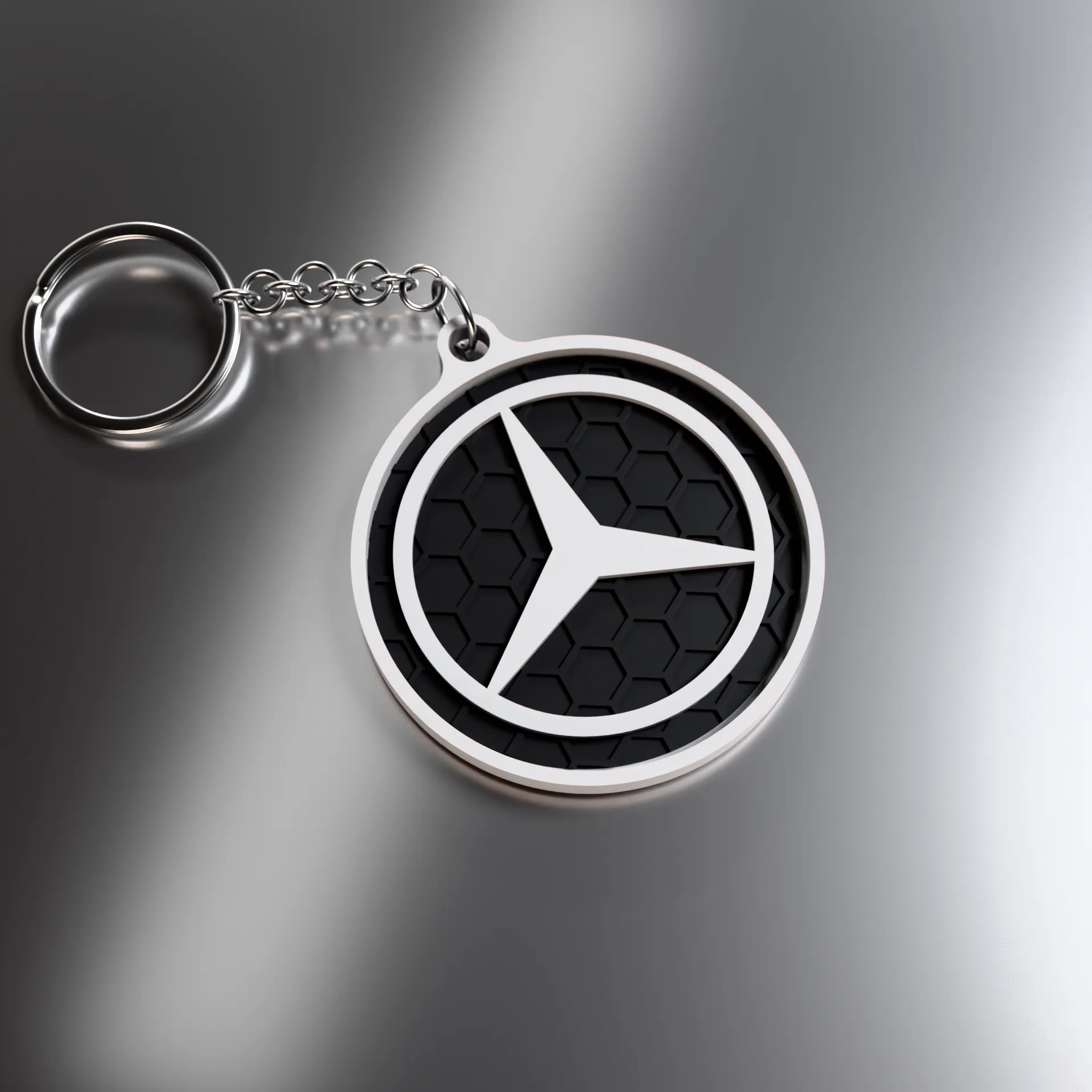
Mercedes & Luxury Car Keychains: 3D Printed Minimalist Keyrings for Automobile Lovers
Upgrade your luxury car key fob with lightweight, minimalist 3D printed keyrings. Discover why Mercedes, BMW, and Audi owners in India are choosing bespoke matte polymer keychains over heavy aftermarket metal.